


Listen to the article
Russia’s Lavrov Defies U.S. Position, Claims Iran Has “Inalienable” Right to Enrich Uranium
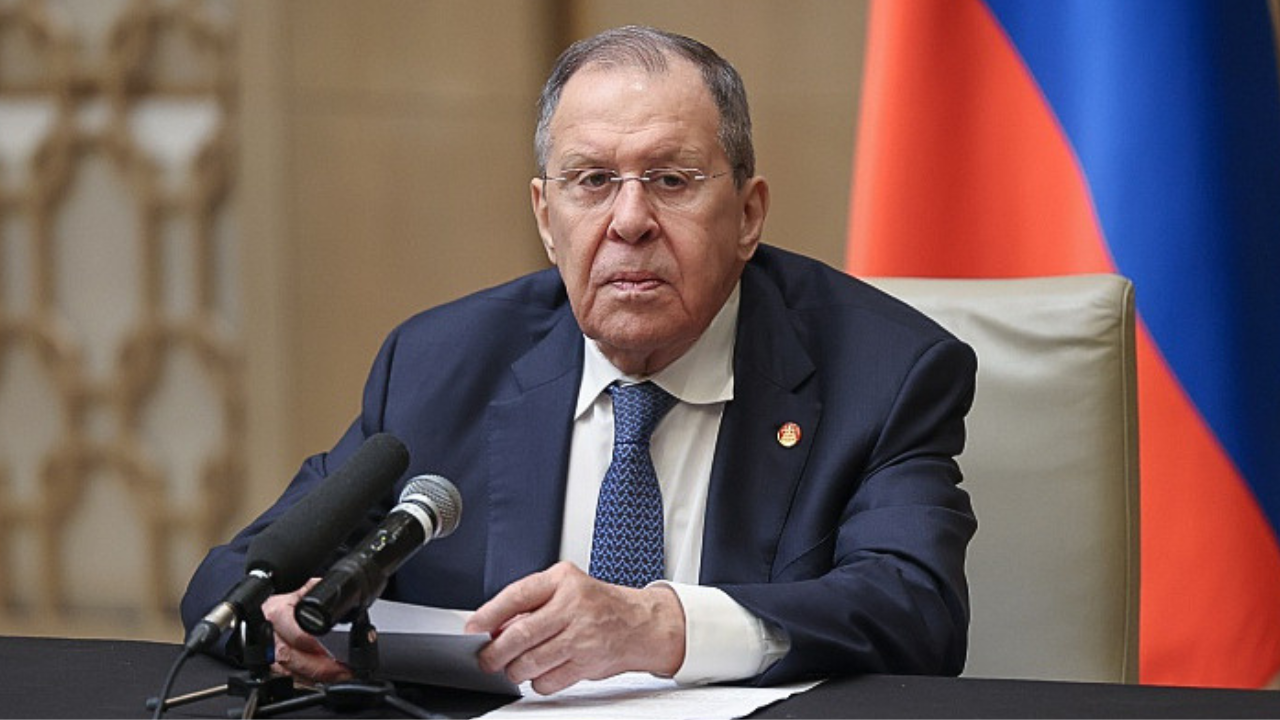
Russian Foreign Minister Sergey Lavrov has publicly challenged a key U.S. demand in ongoing negotiations with Iran, stating that Tehran has an “inalienable right” to enrich uranium for civilian purposes. The comments came during a press conference following Lavrov’s bilateral meeting with Chinese President Xi Jinping in Beijing on Wednesday.
“The right to enrich uranium for civilian purposes is an inalienable right of the Islamic Republic of Iran,” Lavrov declared, according to the Times of Israel. His statement directly contradicts the position taken by U.S. President Donald Trump’s administration in current diplomatic efforts with Iran.
The question of uranium enrichment has emerged as a critical sticking point in U.S.-Iran negotiations. President Trump has established a firm position on the matter, writing on his Truth Social platform in early April that “There will be no enrichment of Uranium.” Trump further stated that the U.S. would work with Iran to locate and remove all remaining nuclear materials from the country.
Vice President JD Vance, who headed the American delegation during negotiations with Iranian officials in Islamabad, Pakistan on Saturday, reinforced this stance in a subsequent interview with Fox News. “The enriched uranium that the Iranians currently possess, we have said that we want that to come out of their country, and we would like to take possession of it,” Vance told Fox’s Brett Baier on Monday.
The Vice President emphasized the administration’s long-term security concerns, adding, “The president doesn’t want to leave the next president or the president after that to be worrying about this program, so we would like to get that material out of the country completely so that the United States has control over it.”
Despite these clear American demands, Lavrov’s comments signal significant opposition from two of the world’s major powers. In statements published on a Russian state website, Lavrov broadened his criticism of the U.S. position: “Neither China nor Russia, nor the majority of countries throughout the world, can accept this approach.”
The public disagreement highlights the complex international dynamics surrounding Iran’s nuclear program. According to reports, the recent negotiations in Islamabad stalled precisely because of Iran’s refusal to surrender its nuclear program entirely – a development that nuclear security experts have actually praised.
Andrea Stricker, deputy director of the Foundation for Defense of Democracies’ nonproliferation program, told Fox News Digital, “The U.S. team was wise to walk away once it became clear the Iranians would not agree to Washington’s core nuclear demands. Tehran maintaining enriched uranium stocks and uranium enrichment capabilities provides it with a pathway to nuclear weapons, plain and simple.”
This diplomatic impasse comes at a time of heightened tensions in the Middle East. The Trump administration has taken an increasingly hard line on Iran’s nuclear ambitions, reflecting concerns shared by regional allies like Israel and Saudi Arabia about the potential for nuclear weapons development.
The confrontation between Russia and the United States over Iran’s nuclear rights also underscores the broader geopolitical competition between these powers. By hosting Lavrov and providing a platform for his comments supporting Iran’s position, China appears to be signaling its alignment with Russia in challenging U.S. influence in the Middle East.
International observers note that the dispute over Iran’s enrichment rights could complicate efforts to reach a comprehensive agreement on the country’s nuclear program. The previous Iran nuclear deal, from which the U.S. withdrew in 2018 during Trump’s first term, did allow for limited enrichment under strict monitoring protocols.
Neither the U.S. State Department nor the Russian Foreign Ministry immediately responded to requests for comment on Lavrov’s statements, leaving questions about how this public disagreement might affect the trajectory of negotiations moving forward.
Fact Checker
Verify the accuracy of this article using The Disinformation Commission analysis and real-time sources.

16 Comments
Uranium enrichment is a sensitive topic with significant security implications. While Iran claims an inalienable right, the US and its allies have longstanding concerns about Iran’s nuclear ambitions. Careful diplomacy and compromise will likely be required to find a workable solution.
Agreed. Navigating the complex geopolitics and national security concerns around Iran’s nuclear program will require nuanced diplomacy from all parties involved. I’m interested to see if they can find common ground.
Lavrov’s statement asserting Iran’s ‘inalienable right’ to enrich uranium is a clear rebuke of the US position. This highlights the continued geopolitical tensions between Russia and the West over Iran’s nuclear program and regional influence. Resolving this dispute will require nuanced diplomacy and a willingness to compromise from all sides.
Absolutely. The stark contrast between Russia and the US on this issue underscores the broader strategic rivalries at play. Navigating a path forward will require all parties to carefully balance their respective national interests and security concerns.
Lavrov’s statement aligns with Iran’s long-held position on its right to enrich uranium for peaceful purposes. However, the US and its allies remain concerned about the potential for Iran to develop nuclear weapons capabilities. Navigating this challenge will require nuanced diplomacy.
You’re right, this is a complex issue with valid concerns on both sides. Balancing Iran’s claimed rights with global security interests will be a delicate task for the negotiators involved.
This issue speaks to the broader geopolitical dynamics at play, with Russia and the US taking opposing stances. It will be interesting to see how this plays out and whether any common ground can be found on the question of Iran’s uranium enrichment rights.
Agreed. The disagreement between Russia and the US on this matter is symptomatic of their wider rivalry and competing interests in the region. Resolving this issue will require deft diplomatic maneuvering from all sides.
Lavrov’s comments underscore the ongoing disputes between Russia and the West over Iran’s nuclear program. While Iran claims an inalienable right to enrich uranium, the US and its allies remain wary of the potential proliferation risks. Resolving this impasse will require compromise and creative diplomacy.
Well said. The stakes are high, and the differing positions of Russia and the US add an additional layer of complexity to the negotiations. Ultimately, finding a solution that addresses the concerns of all parties will be critical.
The dispute over Iran’s uranium enrichment rights highlights the broader geopolitical tensions in the region. Russia’s stance in support of Iran’s position puts it at odds with the US and its allies, who have long-standing concerns about Iran’s nuclear ambitions.
Absolutely, this issue is deeply intertwined with the wider geopolitical dynamics in the Middle East. The negotiations will require all parties to carefully weigh national security interests against diplomatic realities.
This is a complex geopolitical issue with high stakes. It’s not surprising to see Russia take a different stance than the US on Iran’s nuclear program and uranium enrichment rights. I’m curious to hear more perspectives on the diplomatic dynamics at play here.
Yes, the disagreement between Russia and the US on this issue highlights the broader tensions and competing interests in the region. It will be important to see how this plays out in the ongoing negotiations.
Lavrov’s statement directly challenging the US position on Iran’s uranium enrichment rights is a bold move. It underscores the continuing tensions and disputes between Russia and the West over regional influence and the future of the Iran nuclear deal.
Yes, Lavrov’s comments are a clear attempt by Russia to assert its influence and counter the US stance. It will be critical to see how this plays out in the ongoing negotiations and whether any compromise can be reached.