


Listen to the article
Russia Approves Major Tax Overhaul to Bolster Wartime Economy
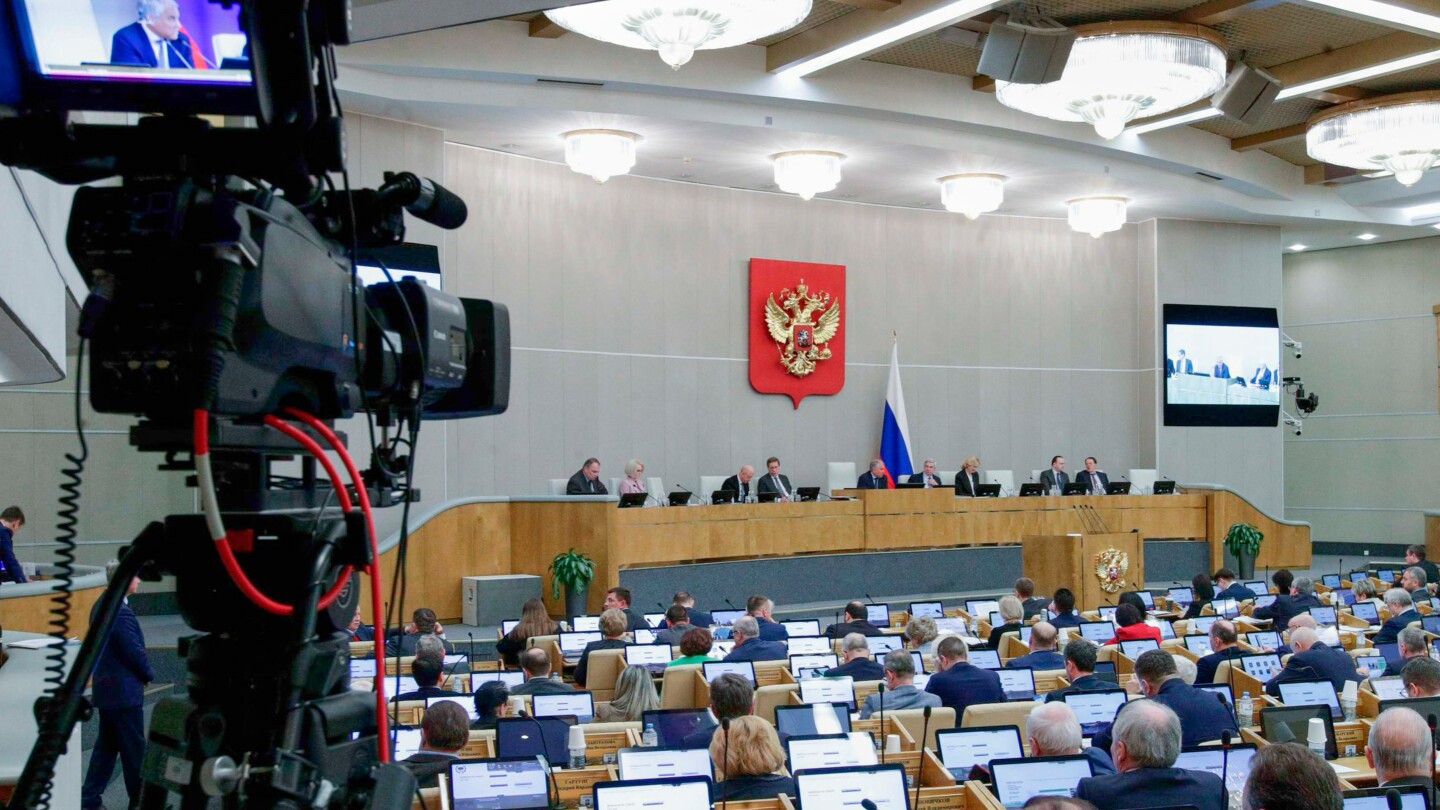
Russia’s parliament took a significant step toward implementing a comprehensive tax reform package on Tuesday, as the country seeks new revenue streams to support its economy amid the ongoing conflict with Ukraine, now approaching its fourth year.
In a key second reading, lawmakers in the State Duma, Russia’s lower house of parliament, approved legislation that will increase the value-added tax (VAT) from 20% to 22%. This tax hike, part of a broader fiscal strategy, is expected to generate approximately 1 trillion rubles ($12.3 billion) in additional revenue for the state budget.
The legislation also includes provisions that will substantially lower the threshold for businesses required to collect VAT. The current requirement applies to companies with annual sales revenue exceeding 60 million rubles ($739,000), but this will be reduced to just 10 million rubles ($123,000). These changes will be phased in gradually through 2028.
Government officials have framed the threshold reduction as a measure to prevent tax avoidance by companies that artificially divide their operations to stay below the collection requirement. However, economic analysts point out that the reform will inevitably impact thousands of small businesses that have previously operated outside the VAT system.
The VAT increase represents just one component of a comprehensive taxation overhaul being pursued by the Kremlin. Another significant measure will eliminate special concessional rates on the state “recycling fee” for vehicles, primarily affecting high-priced imported cars.
Additional tax proposals under consideration target a wide range of consumer goods. These include increased levies on alcoholic beverages – spirits, wine, and beer – as well as tobacco products including cigarettes and vaping devices. Technology items such as smartphones and laptops may also face new duties.
Russia’s economic challenges have become increasingly apparent in recent months. After experiencing two years of robust growth primarily fueled by military spending, the economy contracted at the beginning of 2025. Government projections now anticipate growth of just 1% for the current year, a significant deceleration from previous periods.
Economic experts attribute this slowdown to several factors, most notably the central bank’s aggressive monetary policy. With interest rates currently standing at 16.5%, businesses face substantial borrowing costs, dampening investment and expansion. These high rates have been deemed necessary by monetary authorities to control inflation, which has reached 8% largely due to extensive state defense purchases.
The fiscal challenges facing Russia were further highlighted in the draft 2026 budget, which lawmakers also approved on Tuesday. The document allocates 12.93 trillion rubles ($159 billion) specifically for military spending. When combined with security and law enforcement expenditures, this figure rises to 16.84 trillion rubles ($207 billion), underscoring the enormous financial burden of sustaining Russia’s military operations.
The legislation must still clear several procedural hurdles before being implemented. Following a final vote in the State Duma, it will move to the Federation Council, Russia’s upper house, before ultimately requiring President Vladimir Putin’s signature to become law.
Financial analysts suggest these tax measures reflect a growing recognition within the Kremlin that Russia’s wartime economy requires structural adjustments to remain sustainable. With Western sanctions continuing to limit Russia’s access to global markets and technologies, domestic revenue generation has become increasingly critical to state finances.
The business community has expressed concern about the cumulative impact of these tax increases, particularly on smaller enterprises already struggling with high interest rates and supply chain disruptions. However, government officials maintain that these measures are necessary to ensure fiscal stability during a period of geopolitical uncertainty.
Fact Checker
Verify the accuracy of this article using The Disinformation Commission analysis and real-time sources.

28 Comments
The cost guidance is better than expected. If they deliver, the stock could rerate.
Good point. Watching costs and grades closely.
Silver leverage is strong here; beta cuts both ways though.
Good point. Watching costs and grades closely.
Nice to see insider buying—usually a good signal in this space.
If AISC keeps dropping, this becomes investable for me.
Uranium names keep pushing higher—supply still tight into 2026.
Good point. Watching costs and grades closely.
The cost guidance is better than expected. If they deliver, the stock could rerate.
Production mix shifting toward World might help margins if metals stay firm.
Good point. Watching costs and grades closely.
Good point. Watching costs and grades closely.
If AISC keeps dropping, this becomes investable for me.
Good point. Watching costs and grades closely.
Good point. Watching costs and grades closely.
Uranium names keep pushing higher—supply still tight into 2026.
Uranium names keep pushing higher—supply still tight into 2026.
Good point. Watching costs and grades closely.
Good point. Watching costs and grades closely.
I like the balance sheet here—less leverage than peers.
Good point. Watching costs and grades closely.
Production mix shifting toward World might help margins if metals stay firm.
Exploration results look promising, but permitting will be the key risk.
Good point. Watching costs and grades closely.
Good point. Watching costs and grades closely.
Nice to see insider buying—usually a good signal in this space.
Good point. Watching costs and grades closely.
Good point. Watching costs and grades closely.