


Listen to the article
Rescue teams in Southeast Asia are racing against time to reach communities cut off by devastating floods and landslides that have killed over 1,400 people across Indonesia, Sri Lanka, and Thailand. With more than 800 people still missing, the full scale of the disaster continues to unfold as workers battle damaged infrastructure to deliver vital supplies and assistance.
The catastrophic floods have claimed at least 770 lives in Indonesia, 465 in Sri Lanka, and 185 in Thailand, with an additional three deaths reported in Malaysia. Numerous villages remain buried under mud and debris, with power outages and telecommunications failures hampering rescue efforts.
The disaster response has varied significantly across the affected countries based on their economic situations. Indonesia and Thailand, both middle-income economies, have mobilized substantial rescue operations, deploying military assets and allocating emergency funds to affected regions.
Sri Lanka, however, faces a more challenging recovery path. Still struggling to overcome a severe economic crisis that has depleted foreign exchange reserves and weakened public services, the island nation is operating with limited resources. Prime Minister Harini Amarasuriya has actively sought international support, meeting with foreign diplomats to request assistance for relief and reconstruction efforts. Countries including India, Pakistan, and the United Arab Emirates have already initiated relief operations to support Sri Lanka’s recovery.
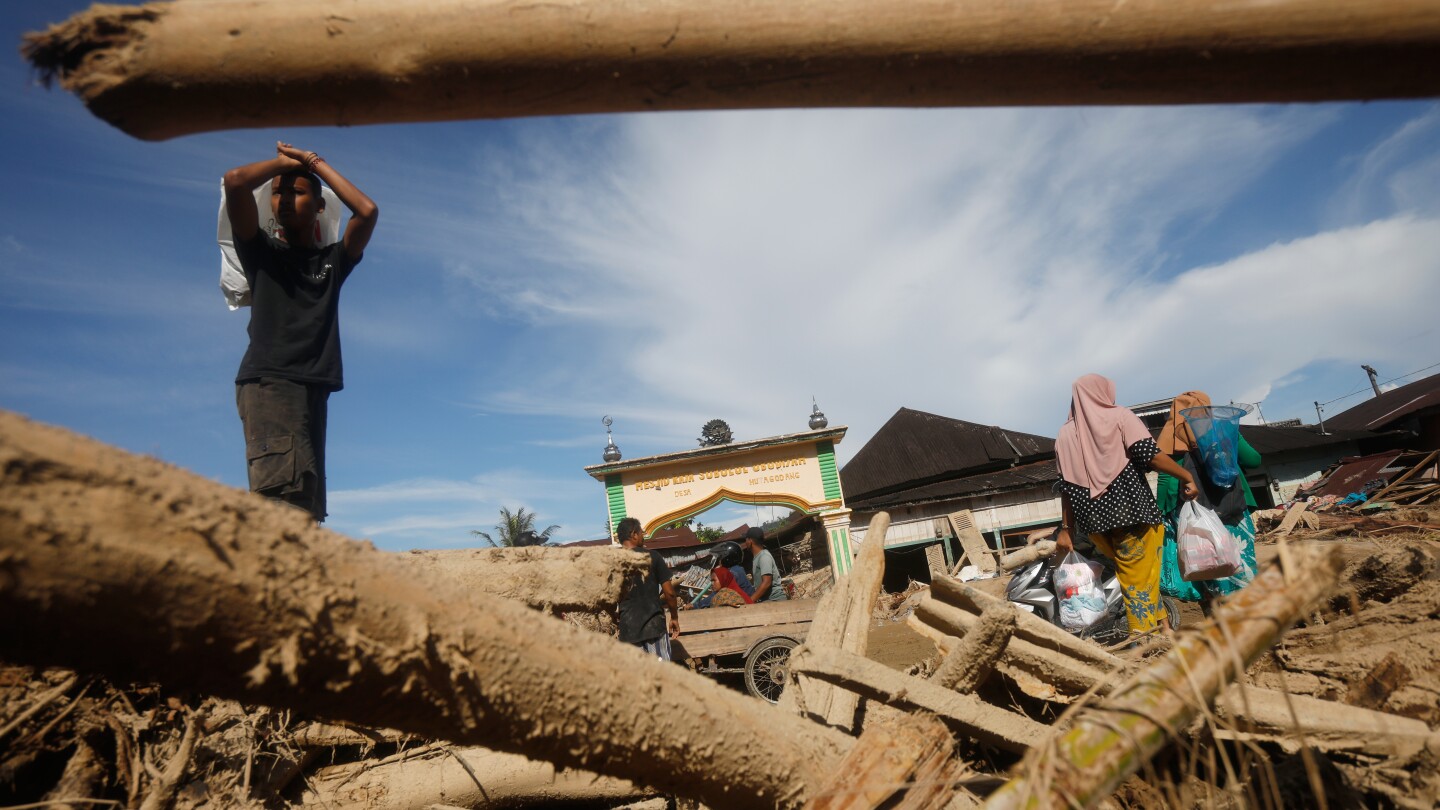
In Indonesia, the hardest-hit nation, rescue workers face significant logistical challenges. Washed-out roads and collapsed bridges have isolated many communities in North Sumatra, West Sumatra, and Aceh provinces, according to the National Disaster Management Agency. Emergency teams must navigate treacherous terrain to deliver aid to remote areas where survivors desperately await assistance.
Environmental factors may have amplified the disaster’s severity. Residents and emergency workers in Padang, West Sumatra’s capital, reported discovering large piles of neatly cut timber among the flood debris, raising concerns about illegal logging operations in watershed areas.
“From their shape, it was clear these were not just trees torn out naturally by the flood, but timber that had been deliberately cut,” said Neviana, a cleanup crew member who goes by a single name.
Local resident Ria Wati, 38, shared similar observations: “The logs carried by the floods weren’t the kind you get from a flash flood. If old trees were uprooted, you would see roots and fragile bark. But these were clean, neatly cut pieces of wood… they looked like the result of illegal logging.”
While local authorities have not officially confirmed the source of the timber, environmental groups suggest that deforestation and forest degradation likely exacerbated the flooding by reducing the landscape’s natural ability to absorb and slow floodwaters. Cabinet Secretary Minister Teddy Indra Wijaya acknowledged these concerns, stating that the government is investigating alleged illegal logging operations in affected watersheds.
“Beyond extreme weather, environmental degradation has worsened the impact,” Wijaya said, indicating the government recognizes that human factors may have contributed to the disaster’s severity.
In Thailand, recovery efforts are showing promising progress. Government spokesperson Rachada Dhnadirek announced Wednesday that water and electricity have been restored to nearly all affected areas in the country’s southern region. The Thai government has distributed over 1 billion baht ($31.3 million) in compensation to more than 120,000 flood-affected households, demonstrating a robust financial response to the disaster.
As rescue operations continue across the region, international aid organizations have mobilized to provide emergency supplies, medical assistance, and technical support. The disaster highlights the increasing vulnerability of Southeast Asian countries to extreme weather events, which climate scientists warn may become more frequent and intense due to climate change.
The economic impact of the floods is expected to be substantial, with damage to infrastructure, agriculture, and local industries likely to affect regional economies for months or years to come. Rebuilding efforts will require significant investment, particularly in improving flood defenses and watershed management to mitigate the effects of future extreme weather events.
Fact Checker
Verify the accuracy of this article using The Disinformation Commission analysis and real-time sources.

8 Comments
This is a tragic situation. My heart goes out to the communities affected by these devastating floods across Southeast Asia. I hope the rescue teams are able to reach and assist those in need as quickly as possible.
Agreed. It’s crucial that aid and relief efforts are prioritized to save lives and support recovery in these areas. The scale of the disaster is truly heartbreaking.
This incident highlights the importance of improving infrastructure and disaster preparedness in vulnerable regions. While the immediate focus is on rescue and relief, long-term investments in resilience should be a priority going forward.
I’m curious to learn more about how the different economic situations of the affected countries have impacted their disaster response capabilities. It’s concerning to hear about Sri Lanka’s limited resources, and I hope the international community steps up to support them.
It’s encouraging to see the mobilization of substantial rescue operations in Indonesia and Thailand. However, I’m concerned about Sri Lanka’s limited resources to handle this crisis on top of their economic challenges. International support may be crucial for their recovery.
That’s a good point. Sri Lanka’s economic situation will likely make it much harder for them to bounce back from this disaster. Coordinated international aid and assistance will be vital.
The death toll is staggering. My condolences to the families and communities who have lost loved ones. I hope the missing people can be located safely, and that the affected areas receive the support they need to recover.
Agreed, the loss of life is truly devastating. Restoring essential services and infrastructure will be crucial to help these communities get back on their feet.