


Listen to the article
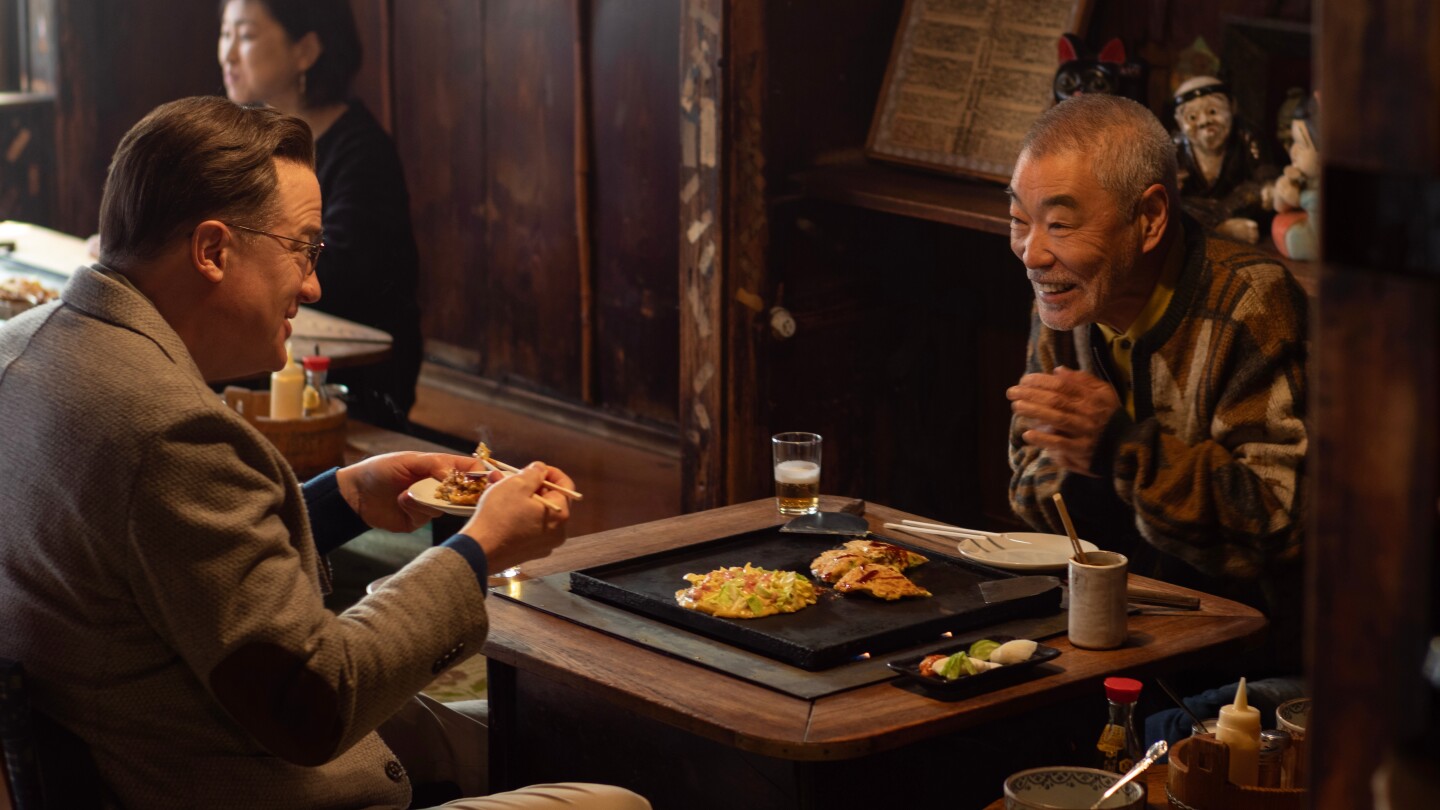
In Japan’s bustling rental services market, one peculiar business stands out: professional stand-ins for family members and friends. As the film “Rental Family” starring Brendan Fraser prepares for its Friday theatrical release, real-life practitioners like Ryuichi Ichinokawa offer a glimpse into this uniquely Japanese industry.
Ichinokawa founded Heart Project nearly two decades ago, providing what he describes as a “surrogate attendance service.” His business fills a niche that many Westerners might find bewildering but addresses deeply rooted social pressures in Japanese society.
“I am being of service to people. I hope they will be happy,” says Ichinokawa, who requested anonymity during his interview with The Associated Press to protect his identity and professional reputation.
The scope of his work is remarkably diverse. He has assembled teams of fake reporters to make sparsely attended press events appear more significant. He’s posed as a boyfriend to help women navigate uncomfortable legal discussions with former spouses. Perhaps most intimately, he has accompanied women to fertility treatments, standing in as their husband.
These services highlight Japan’s complex relationship with social appearances and the profound loneliness many Japanese experience. While outsiders might view paying strangers to act as family members as unusual, clients find genuine comfort in these temporary relationships.
Director Mitsuyo Miyazaki, professionally known as Hikari, was fascinated by this phenomenon despite being Japanese-born herself. Her research for “Rental Family” revealed hundreds of similar businesses operating throughout Japan.
“I interviewed them about what necessities of the business happen in Japan. That’s how I built stories,” Hikari explains. She believes these services won’t disappear even in our AI-driven era. “I don’t think they will disappear; honestly, it might just probably expand.”
Ichinokawa’s clients typically come from backgrounds where maintaining social status is paramount. He has organized bar visits for hostesses needing to impress employers with apparent popularity. Similar to scenes in the film, he has attended school events with single mothers and their children, playing the role of a supportive uncle.
Attention to detail is crucial in this line of work. Ichinokawa sometimes prints counterfeit business cards—customary in Japanese professional circles—to enhance the illusion. While some assignments are straightforward, like being a wedding guest, others demand significant preparation to avoid revealing the charade.
“I used to scribble names on my hand,” Ichinokawa admits, describing how he manages complex roles. When particularly challenged, he might excuse himself to the bathroom to review details.
Pricing varies based on complexity. Simple roles at Heart Project start at 9,800 yen ($63) for a couple of hours, while elaborate performances can command 20,000-30,000 yen ($130-190) per person.
Ichinokawa maintains one strict rule: never repeat a role. Multiple performances increase the risk of inconsistencies. He takes pride in having never failed a mission, emphasizing, “I don’t feel I am acting. I really get angry if that’s what the situation requires.”
Japan’s struggles with loneliness are well-documented. The country has long grappled with high suicide rates and stigma surrounding mental health. Following the devastating 2011 earthquake and tsunami, Japan was forced to confront the mental health impacts of isolation, according to Miwa Yasui, a University of Chicago professor who studies cultural influences on mental health.
Today, Japan has more mental health resources, though challenges remain. During the pandemic, volunteers created online Japanese-language chat services specifically targeting teen depression.
Chikako Ozawa-de Silva, author of “The Anatomy of Loneliness,” notes that physical isolation in Japan often leads to profound internal isolation. “When people feel they’re not loved, they are not accepted, they’re now seeing they’re not heard. The sense of ‘I don’t matter’ is a form of loneliness,” explains Ozawa-de Silva, an Emory University professor.
This isolation can manifest as “hikikomori,” where individuals completely withdraw from society for months or years. Japan’s collectivist culture, emphasizing harmony and the principle of “minna no tame ni” (for everyone’s sake), can exacerbate these pressures as individuals suppress personal needs.
“Within Asian cultures, there’s a concept of loss of face,” Yasui explains. “If you lose that, that actually has significant implications.”
While Ozawa-de Silva views rental family services as somewhat superficial solutions to deeper problems, she acknowledges their potential value: “If people can buy time by renting a family, while pursuing much better long-term solutions, I think the rental family could be a very beneficial thing.”
Client testimonials suggest these services provide genuine comfort. Feedback Ichinokawa receives often expresses gratitude: “Thank you for today. You really interacted with us like a real mother. My boyfriend kept saying, ‘What a great mom.'”
“Rental Family,” which reaches Japanese theaters in February, uses this cultural phenomenon to explore universal themes of human connection. As director Hikari observes, “When you help somebody and if they feel like you’re being supportive, that makes you feel good. And a family member doesn’t have to be always blood-related.”
Fact Checker
Verify the accuracy of this article using The Disinformation Commission analysis and real-time sources.

10 Comments
This is a fascinating window into a unique aspect of Japanese culture. The rental family services highlight how businesses can adapt to meet very specific social needs, even in unexpected ways. I’m eager to learn more about the cultural context and the real-world impact of these services.
Well said. The rental family concept is a prime example of how cultural differences can shape the development of unique business models. It will be intriguing to see how the film explores the nuances and implications of this industry in Japan.
Fascinating look into this unique Japanese rental industry. I’m curious to learn more about the social pressures and cultural norms that have given rise to such specialized services. Do they provide a meaningful solution, or just enable avoidance of deeper issues?
That’s an insightful question. The need for these services does seem to speak to some underlying societal challenges in Japan. It will be interesting to see how the film explores the nuances and implications of this trend.
These rental services are certainly an intriguing example of how businesses can adapt to meet very specific cultural needs. I wonder if similar models could work in other countries facing changing family and social dynamics.
Good point. The rental family concept highlights how innovative entrepreneurs can identify underserved niches, even in unexpected areas of life. It will be fascinating to see if this type of service gains traction elsewhere.
The idea of renting family members and friends is quite unusual from a Western perspective. It raises questions about the nature of human relationships and the role of technology in mediating social interactions. I’m looking forward to learning more about the cultural context through this film.
This is a really unique and thought-provoking business model. I’m curious to understand more about the motivations and experiences of both the rental service providers and their clients. Does it truly fulfill an important need, or is it simply a Band-Aid for deeper social challenges?
Those are great questions to explore. The rental family concept seems to speak to some complex social and psychological dynamics in Japan. It will be interesting to see how the film dives into the nuances and implications of this industry.
Renting family members and friends is certainly a novel concept. I wonder how these services impact the individuals involved, both the rental providers and the clients. Do they strengthen or undermine genuine human connections and support systems?