


Listen to the article
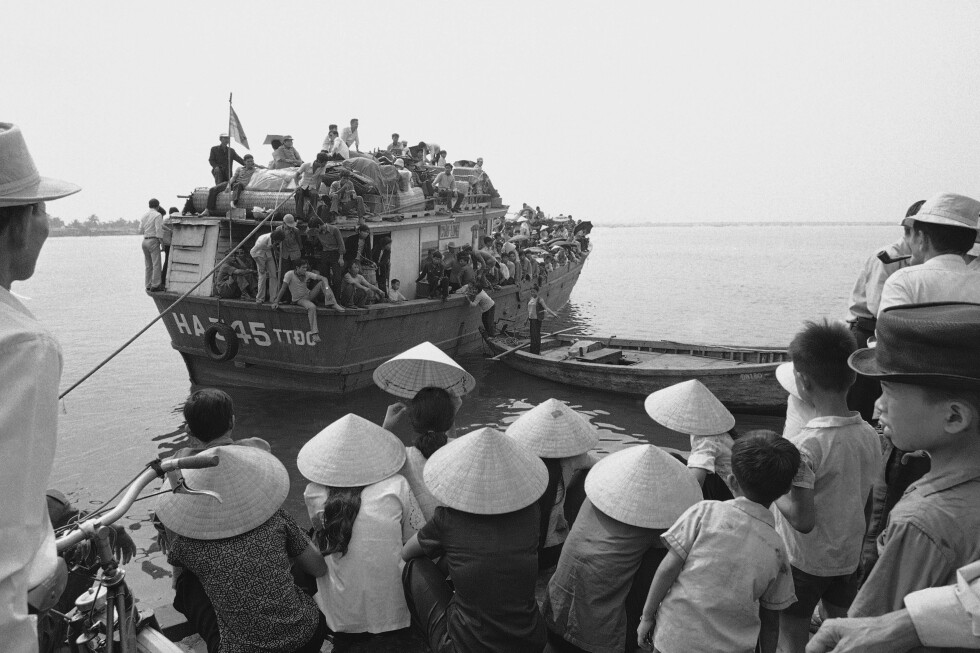
Lionel Rosenblatt, a former U.S. Foreign Service officer who orchestrated an unauthorized evacuation that saved hundreds of Vietnamese citizens before the fall of Saigon in 1975, died Saturday at age 82 after battling cancer. His passing in the Washington area marks the end of a remarkable career dedicated to refugee advocacy.
Rosenblatt’s legacy extends far beyond his diplomatic service, as he became one of the world’s most influential voices for displaced people during his tenure as president of Refugees International from 1990 to 2001. During those years, he campaigned tirelessly for stronger humanitarian interventions in global crisis zones, particularly in Bosnia and Rwanda where civilian populations faced grave threats.
“He was a fierce, creative, passionate champion for refugees,” said Jeremy Konyndyk, current president of Refugees International, adding that Rosenblatt “helped to shape a generation of humanitarian leaders.”
Born in New York in 1943, Rosenblatt joined the State Department in 1966 and served in early postings across Sri Lanka, Vietnam, Thailand, and Washington. However, it was his actions during the final days of the Vietnam War that would define much of his career and humanitarian outlook.
As North Vietnamese forces advanced toward Saigon in early 1975, Rosenblatt grew increasingly concerned about the safety of Vietnamese citizens who had worked alongside Americans. When U.S. Ambassador Graham Martin hesitated to implement a decisive evacuation plan, Rosenblatt and colleague Craig Johnstone took extraordinary measures. They defied State Department regulations, took personal leave, and traveled privately to Saigon, where they arranged escape flights for between 200 and 400 at-risk Vietnamese.
Upon returning to Washington, Secretary of State Henry Kissinger reportedly delivered what amounted to a symbolic reprimand accompanied by private praise for their initiative. Neither diplomat faced formal consequences for their unauthorized mission.
Following the Vietnam War, Rosenblatt served as the refugee coordinator at the U.S. Embassy in Bangkok from 1976 to 1981. This critical period saw massive refugee crises unfold across Southeast Asia, including the Vietnamese “boat people” and Cambodians fleeing famine in the aftermath of the Vietnamese invasion that ousted the genocidal Khmer Rouge regime in 1979.
Throughout his career, Rosenblatt demonstrated particular compassion for ethnic minorities caught in geopolitical conflicts. His work with the Hmong hill tribes of Laos exemplifies this commitment. The Hmong had served as proxy soldiers for American forces during the “Secret War” in Laos, fighting against communist Pathet Lao forces. When the Pathet Lao took power in 1975, thousands of Hmong fled to Thailand fearing retribution.
Recognizing that the tribal Hmong faced significant prejudice and potential barriers to resettlement in America, Rosenblatt and his team took the extraordinary step of obscuring their ethnic identity on official documentation to ensure their acceptance into the United States.
“It was always a mystery to me why they were good enough to fight for us but not good enough to consider for resettlement,” Rosenblatt reflected in a 2022 television interview, highlighting the moral contradictions he often confronted in his work.
His leadership at Refugees International in the 1990s coincided with several major humanitarian crises that challenged the international community’s response mechanisms. Under his guidance, the organization advocated for more robust protection for civilians caught in conflicts from the Balkans to Central Africa, helping to shape modern humanitarian intervention principles.
Rosenblatt’s passing comes at a time when global displacement has reached unprecedented levels, with over 100 million people forcibly displaced worldwide. His legacy serves as a reminder of the impact that principled action by individual public servants can have, even when it means challenging institutional limitations in service of humanitarian ideals.
Fact Checker
Verify the accuracy of this article using The Disinformation Commission analysis and real-time sources.

10 Comments
It’s remarkable how one person’s actions can have such a profound and far-reaching impact. Rosenblatt’s legacy as a refugee advocate will undoubtedly continue to inspire others to fight for the displaced and marginalized.
While his passing is a loss, we can take comfort in knowing that his work and ideals live on through the humanitarian leaders he mentored and the lives he touched.
While saddened by his passing, we can take solace in the fact that Rosenblatt’s work had a profound and lasting impact. His dedication to refugee causes is a shining example of the difference one person can make.
I hope that Rosenblatt’s story will inspire others to take up the mantle of refugee advocacy and continue the fight for the displaced and marginalized around the world.
The loss of such a tireless champion for displaced people is deeply felt. Rosenblatt’s pioneering advocacy likely saved countless lives and paved the way for others to follow in his footsteps.
It’s a testament to his character that he was able to inspire future generations of humanitarian leaders. His legacy will undoubtedly live on through their continued efforts.
Rosenblatt’s unauthorized evacuation of Vietnamese citizens before the fall of Saigon was a gutsy and heroic act. It’s a shame that more diplomats don’t take such bold and principled stands in the face of crisis.
Nonetheless, Rosenblatt’s subsequent work in shaping humanitarian policy and advocacy is equally, if not more, impressive. He truly left an indelible mark on the world.
Lionel Rosenblatt’s legacy as a refugee advocate is truly inspiring. His unauthorized evacuation of Vietnamese citizens before the fall of Saigon exemplifies the power of compassion and the difference one person can make.
It’s heartening to see that his work continued to make a tangible impact on humanitarian efforts around the world, even after his diplomatic service.