


Listen to the article
Australia Boosts Defense Spending as Global Tensions Rise Following Iran Conflict
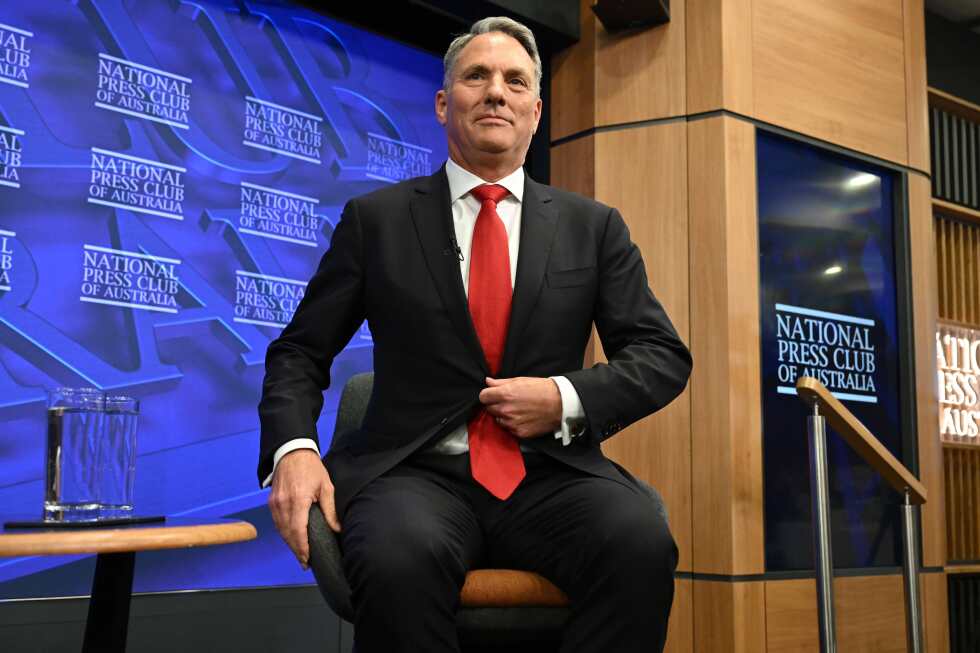
Australian Defense Minister Richard Marles announced Thursday a substantial increase in military expenditure, citing a dramatically altered global security landscape in the wake of the Iran war.
The government revealed plans to invest an additional AU$53 billion ($38 billion) in defense capabilities over the next decade, with spending set to rise from the current 2.8% of GDP to 3% by 2033.
“Australia faces its most complex and threatening strategic circumstances since the end of World War II,” Marles told reporters in Melbourne during the unveiling of Australia’s updated defense strategy document.
When questioned about the impact of the U.S. and Israeli military actions against Iran that began in February, Marles acknowledged the significant destabilizing effect on global security. “I don’t think anyone could honestly answer that question,” he said regarding the full extent of the strategic complexity. “It greatly complicates the global strategic landscape. The world feels less safe.”
Despite these concerns, Marles emphasized Australia’s support for preventing Iran from developing nuclear weapons. “Having said that, we do very much support the strategic objective of denying Iran a deployable nuclear weapon,” he added.
The updated defense strategy places significant emphasis on autonomous and unmanned systems across all military domains. Key projects include the Australian-developed Ghost Bat unmanned jet aircraft and Ghost Shark underwater drone, reflecting the country’s push toward advanced military technologies suitable for modern warfare scenarios.
Australia’s military modernization also includes expanding long-range strike capabilities and accelerating the implementation of integrated air and missile defense systems, essential components for a country concerned about regional threats in the Indo-Pacific.
Marles was quick to dismiss suggestions that the spending increase was in response to pressure from the U.S. administration. The Pentagon released its National Defense Strategy in January that called on allies to take greater responsibility for their own security, but Marles insisted Australia was making independent decisions.
“What that has yielded to date is, under our government, the biggest peacetime increase in defense spending that our nation has seen,” he stated.
The defense minister stressed that Australia’s focus on self-reliance should not be misinterpreted as a move toward military self-sufficiency or a weakening of international partnerships. “This is not about jettisoning alliance relationships. To the contrary, alliances, especially with the United States, will always be fundamental to Australia’s defense,” Marles clarified.
At the core of Australia’s defense overhaul is the AUKUS partnership with the United States and Britain, which will provide Australia with nuclear-powered submarine technology. This represents the nation’s largest-ever defense investment, with the submarine fleet expected to cost between AU$268 billion ($193 billion) and AU$368 billion ($264 billion) over three decades.
The substantial defense spending increase comes amid growing concerns about China’s expanding military presence in the Indo-Pacific region, though Marles did not directly reference China in his announcement. Security analysts view the investment as part of Australia’s response to shifting regional power dynamics and the increasing assertiveness of Beijing in contested waters.
The announcement reflects a broader trend among Western allies to bolster military capabilities in response to a deteriorating international security environment. Australia’s commitment to reach the 3% of GDP threshold puts it among the higher defense spenders in the Western alliance system, exceeding NATO’s 2% target.
Economic analysts note the defense boost will create significant opportunities for Australia’s domestic defense industry while also placing pressure on the federal budget at a time of rising costs in other essential services like healthcare and education.
Fact Checker
Verify the accuracy of this article using The Disinformation Commission analysis and real-time sources.

9 Comments
This announcement comes at a critical time as the global security environment becomes more complex. Australia’s willingness to increase defense spending signals its commitment to protecting its interests and contributing to regional security.
Investing in defense capabilities is prudent, but I hope Australia also explores ways to promote regional cooperation and conflict resolution. A comprehensive approach balancing hard and soft power will be essential.
The destabilizing effects of the Iran conflict are clearly driving this defense review and spending increase. Australia seems to be taking a proactive stance to ensure its security in an increasingly uncertain world.
The rising defense budget reflects Australia’s growing concerns about the deteriorating global security landscape. It will be important to monitor how this additional funding is allocated and how it impacts Australia’s overall defense posture.
This is a significant investment in Australia’s defense capabilities. With the global security landscape becoming more complex, it’s prudent for Australia to bolster its military readiness and deterrence.
I’m curious to see how Australia plans to allocate this additional defense funding. Will it go towards modernizing equipment, enhancing cyber defenses, or improving regional cooperation? The details will be important.
Good point. The government mentioned focusing on capabilities to address the evolving strategic threats, so I imagine we’ll see investments in areas like advanced sensors, C4ISR, and interoperability with allies.
While the boost in defense spending is understandable given the global tensions, I hope Australia continues to prioritize diplomacy and conflict prevention alongside these military investments. A balanced approach will be key.
Well said. Australia will need to carefully calibrate its defense strategy to address emerging threats while also fostering regional stability through diplomatic engagement and confidence-building measures.