


Listen to the article
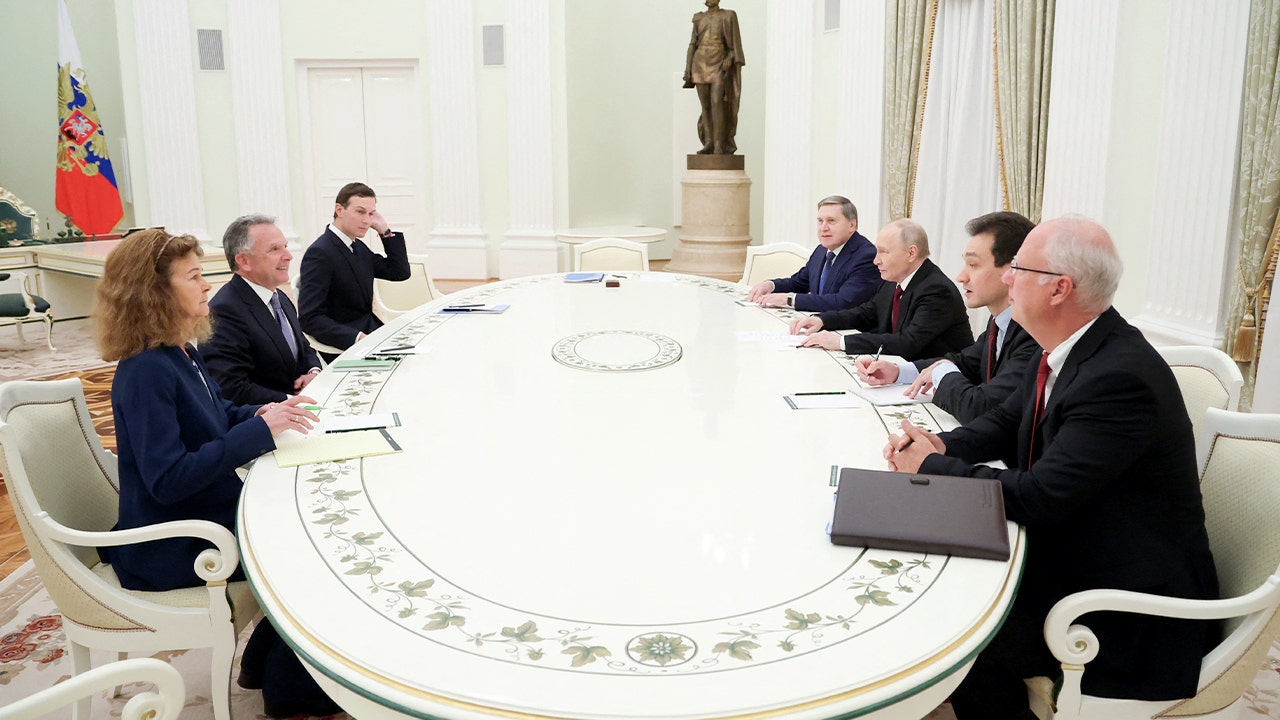
In a marathon five-hour meeting in Moscow on Tuesday, U.S. Special Envoy Steve Witkoff and former presidential adviser Jared Kushner met with Russian President Vladimir Putin but failed to achieve any major breakthroughs in efforts to end Russia’s war in Ukraine.
The high-level talks, which took place at the Kremlin’s Senate Palace, followed Witkoff and Kushner’s meeting with Ukrainian officials in New York on Sunday, where they discussed a revised peace proposal. The diplomatic push represents one of the most significant U.S.-led efforts to mediate the conflict since Russia’s full-scale invasion began nearly four years ago.
Putin’s foreign policy aide Yuri Ushakov, who attended the meeting alongside Russian Direct Investment Fund CEO Kirill Dmitriev, described the discussions as “extremely useful, constructive and substantive.” According to a Kremlin readout, the parties specifically addressed territorial issues, which Russia views as critical to resolving the conflict.
“We specifically discussed territorial issues, without which the crisis cannot be settled, as we see it. Of course, we also talked about the broad prospects for future economic interaction between our countries,” Ushakov told reporters after the meeting.
The U.S. delegation presented four documents to the Russian side, including one containing 27 points. This appears to be a revised version of an earlier 28-point plan that had drawn criticism from European leaders for reportedly being too favorable to Moscow. Ushakov declined to provide specific details about the contents of these documents.
Territorial concessions remain a major sticking point in the negotiations. Russia has demanded that Ukraine relinquish control of the entire Donbas region, including areas not currently under Russian military control. Ushakov acknowledged that no compromise has been reached on this issue.
“Some of the American proposals appear more or less acceptable. They do, nevertheless, require further discussion. Certain wording we have been offered is not suitable for us. In other words, the work will continue,” the Russian diplomat explained.
The meeting comes against a backdrop of continued Russian military advances in several areas of Ukraine. The Institute for the Study of War, a nonpartisan research organization tracking the conflict, reports that Russian forces have recently made gains in Sumy Oblast and near the settlements of Kostiantynivka, Pokrovsk and Huliaipole.
Ukraine’s Joint Forces Task Force maintains that its forces still control most of the strategic city of Kupiansk, though Russian forces have established a presence in northern districts. The frontline city has suffered extensive damage during months of intense fighting.
Following the Moscow talks, Ukrainian President Volodymyr Zelenskyy announced that Rustem Umerov, secretary of Ukraine’s National Security and Defense Council, was heading to Brussels to brief European security officials on the outcome of the Witkoff-Kushner meeting with Putin.
“After Brussels, Rustem Umerov and Andrii Hnatov will begin preparations for a meeting with envoys of President Trump in the United States,” Zelenskyy said in a statement. “As always, Ukraine will work constructively in pursuit of a real peace.”
The diplomatic initiative comes as the Trump administration prepares to take office in January, with the president-elect having repeatedly stated his intention to quickly end the conflict. European allies have expressed concern about the terms of any potential peace deal, particularly regarding territorial concessions that might reward Russia’s aggression.
While the Moscow meeting did not produce immediate results, it signals a shift in diplomatic engagement and suggests that negotiations may continue, albeit with significant hurdles still to overcome. The U.S. envoys’ direct engagement with Putin marks a notable departure from the previous administration’s approach and indicates the incoming Trump team’s prioritization of seeking a negotiated end to the conflict.
Fact Checker
Verify the accuracy of this article using The Disinformation Commission analysis and real-time sources.

17 Comments
Interesting to see high-level diplomatic efforts continue despite the challenges. Resolving the conflict in Ukraine will require tough negotiations on complex issues like territorial disputes. It remains to be seen if any real progress can be made through this channel.
You’re right, territorial disputes are a major sticking point. Both sides will need to show flexibility and compromise to find a lasting solution.
While the lack of breakthroughs is disappointing, the fact that high-level talks are continuing is a positive sign. Resolving the Ukraine conflict through diplomacy remains crucial, even if the path forward is long and arduous. Addressing the complex territorial disputes will be key to any comprehensive peace deal.
It’s good to see continued diplomatic engagement, even if no major breakthroughs were achieved. Ending the war in Ukraine remains a top priority, and all avenues for negotiation should be explored. Hopefully future talks can make more substantive progress.
The continued involvement of figures like Witkoff and Kushner shows the U.S. is still actively engaged in trying to mediate the Ukraine conflict. However, the lack of breakthroughs in these latest talks underscores just how entrenched the positions are on both sides. Resolving the territorial disputes will be the key challenge.
The involvement of figures like Witkoff and Kushner suggests the U.S. is still actively seeking a diplomatic solution to the Ukraine conflict. But the entrenched positions and high stakes make this an extremely challenging negotiation process. Incremental progress may be the best that can be achieved for now.
Incremental progress is better than no progress at all. Even small steps towards a diplomatic resolution could help reduce the devastating human toll of this war.
Resolving the Ukraine conflict through diplomacy is critical, but the territorial disputes seem to be a major sticking point. Both Russia and Ukraine will likely need to make difficult concessions to reach a comprehensive peace agreement. Incremental progress is better than no progress at all.
You’re absolutely right. Compromise and flexibility will be essential if the parties want to find a lasting solution. Small steps in the right direction are better than no movement at all.
The involvement of figures like Witkoff and Kushner demonstrates the U.S. is still actively engaged in seeking a diplomatic solution to the Ukraine war. However, the entrenched positions on both sides make this an extremely challenging negotiation process. Incremental progress may be the best that can be achieved for now.
You’re right, incremental progress is better than no progress at all. Even small steps towards a peaceful resolution could help reduce the devastating human toll of this conflict.
It’s good to see continued high-level diplomatic engagement on the Ukraine issue, even if no major breakthroughs were achieved. Resolving this conflict through negotiation remains crucial, but the territorial disputes appear to be a major stumbling block. Both sides will need to show flexibility and compromise to find a lasting solution.
The fact that Putin, Witkoff, and Kushner met for 5 hours suggests there is a sincere effort to find a diplomatic solution. However, the lack of breakthroughs indicates just how entrenched the positions are on both sides. Resolving this conflict will be extremely challenging.
Agreed, the long meeting duration shows the parties are trying, but the lack of results underscores the difficulty. Bridging the divides on territorial control will be crucial but highly complex.
It’s good to see diplomatic efforts ongoing, even if no major progress was made. Ending the war in Ukraine has to remain a priority, and all avenues for negotiation should be explored. The territorial issues seem to be a major stumbling block, but both sides will need to show flexibility to find a path forward.
Absolutely. Compromise and a willingness to make difficult concessions will be essential if the parties want to reach a lasting peace agreement. Small steps in the right direction are better than no progress at all.
While the lack of major breakthroughs is disappointing, it’s encouraging to see continued high-level diplomacy on the Ukraine issue. Finding a negotiated settlement to end the fighting will require immense patience and flexibility from all sides. The road ahead remains long and difficult.