


Listen to the article
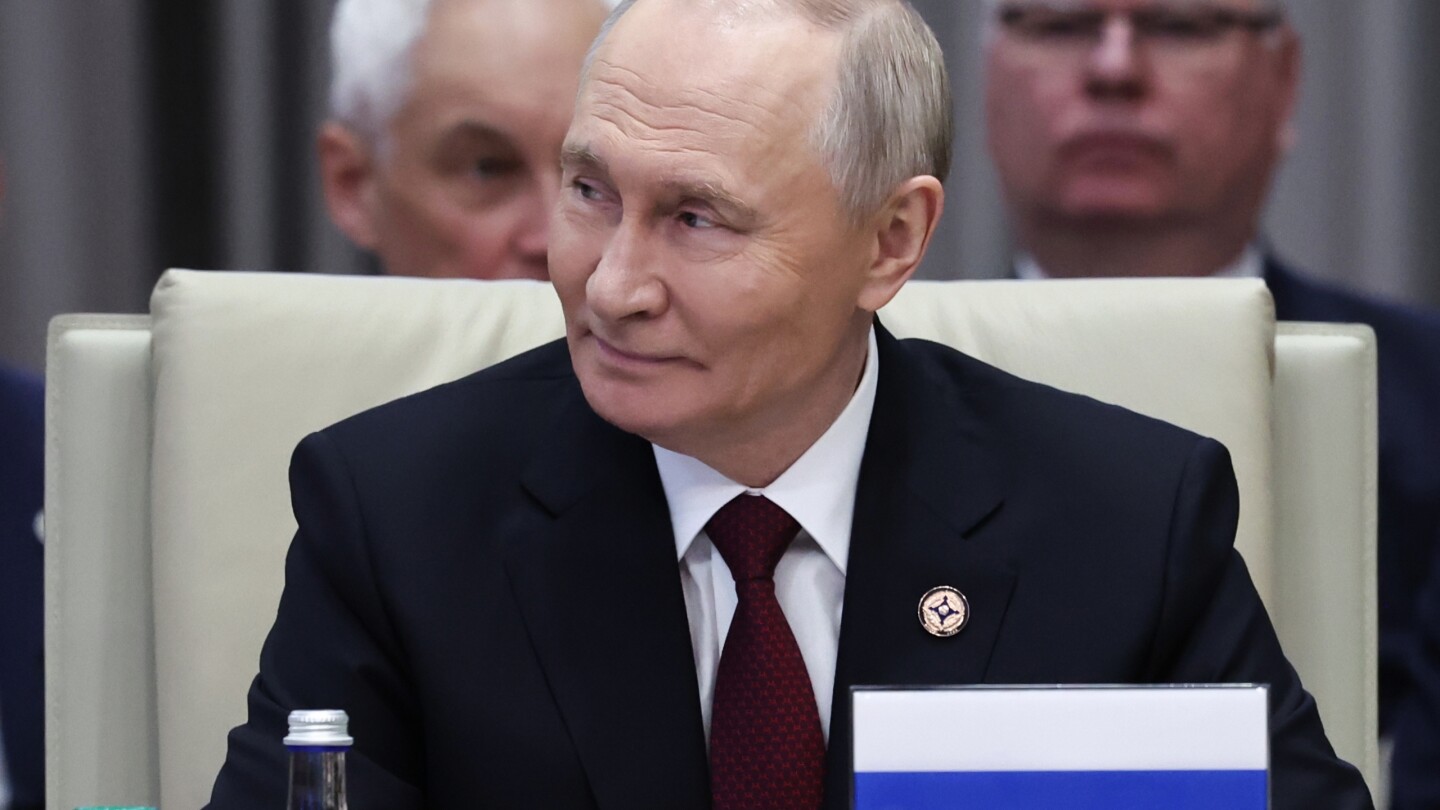
Russian President Vladimir Putin signaled a potential opening for peace talks on Thursday, describing recent U.S. proposals to end the Ukraine war as “a starting point for discussion” while simultaneously issuing stark warnings to Ukrainian forces.
“We need to sit down and discuss this seriously,” Putin told reporters during a press conference concluding his three-day visit to Kyrgyzstan. “Every word matters.”
The Russian leader characterized former U.S. President Donald Trump’s peace plan as “a set of issues put forward for discussion” rather than a finalized agreement. However, Putin’s remarks were accompanied by an ultimatum to Ukrainian forces: withdraw from contested territories or face military defeat.
“If Ukrainian troops withdraw from the territories they occupy, hostilities will cease. If they don’t withdraw, we will achieve this by force,” Putin stated, reflecting his longstanding position that Russia’s military advantage would eventually prevail.
The Kremlin has remained relatively quiet about Trump’s peace proposal unveiled last week. Despite the diplomatic overtures, Putin has shown little indication he would compromise on his core demands in Ukraine, which include complete Ukrainian withdrawal from the Donetsk, Luhansk, Kherson, and Zaporizhia regions—including areas Russia does not currently control. He also insists Ukraine remain outside NATO and host no Western troops, conditions that would effectively bring the country back under Moscow’s influence.
Diplomatic efforts are intensifying, with U.S. special envoy Steve Witkoff expected in Moscow next week, according to the Kremlin. U.S. Army Secretary Dan Driscoll, who has recently taken a prominent role in peace negotiations, may soon visit Kyiv.
The initial American peace proposals appeared to heavily favor Russian demands, though an amended version emerged following Sunday talks in Geneva between American and Ukrainian officials. European leaders, increasingly concerned about their own security amid Russian aggression, are pushing for greater involvement in the peace process after feeling sidelined.
Security analysts suggest Putin is employing a strategy of patience, aiming to outlast Western commitment to Ukraine’s defense. Trump has previously indicated he might abandon peace efforts without quick progress, while European officials believe Putin is deliberately stalling to capture more Ukrainian territory before agreeing to any settlement.
Despite Kremlin claims of “battlefield momentum,” the Institute for the Study of War questioned Russian assertions of inevitable victory on Wednesday. The Washington-based think tank noted, “Data on Russian forces’ rate of advance indicates that a Russian military victory in Ukraine is not inevitable, and a rapid Russian seizure of the rest of Donetsk Oblast is not imminent.” The report added that recent Russian advances “have largely been opportunistic and exploited seasonal weather conditions.”
Diplomatic tensions between Russia and European nations continue to escalate. On Thursday, Russia’s Foreign Ministry announced the closure of Poland’s Consulate General in Irkutsk, a retaliatory measure following Poland’s closure of Russia’s consulate in Gdansk last November. Poland had shut down the Russian facility after a railway sabotage incident near Warsaw, allegedly carried out by Ukrainian citizens working for Russia.
Fighting persists despite diplomatic developments. A 53-year-old man was killed in a Russian drone attack in Ukraine’s northern Sumy region on Friday. Russia also targeted Ukraine’s Odesa and Dnipropetrovsk regions on Thursday, injuring three people and causing fires. Ukraine’s air force reported Russia launched 142 drones overnight, while Russian defense officials claimed to have downed 118 Ukrainian drones over various Russian regions and the Black Sea.
Beyond military challenges, Ukraine faces severe economic pressures and political turmoil. President Volodymyr Zelenskyy’s government is battling a major corruption scandal while struggling with financial shortfalls. The International Monetary Fund has agreed to provide $8.1 billion over four years, offering some relief, though Ukraine’s projected state budget and military needs for 2026-2027 total an estimated $153 billion—highlighting the enormous economic strain of the ongoing conflict.
The combination of battlefield pressure, financial constraints, and diplomatic maneuvering sets the stage for a complex and potentially pivotal period in a war now approaching its third year with no clear resolution in sight.
Fact Checker
Verify the accuracy of this article using The Disinformation Commission analysis and real-time sources.

28 Comments
Interesting update on Putin sees US peace plan as a starting point as he warns Ukraine’s army to withdraw. Curious how the grades will trend next quarter.
Good point. Watching costs and grades closely.
If AISC keeps dropping, this becomes investable for me.
Good point. Watching costs and grades closely.
Silver leverage is strong here; beta cuts both ways though.
Good point. Watching costs and grades closely.
If AISC keeps dropping, this becomes investable for me.
Good point. Watching costs and grades closely.
I like the balance sheet here—less leverage than peers.
If AISC keeps dropping, this becomes investable for me.
Good point. Watching costs and grades closely.
Nice to see insider buying—usually a good signal in this space.
Good point. Watching costs and grades closely.
Good point. Watching costs and grades closely.
Uranium names keep pushing higher—supply still tight into 2026.
The cost guidance is better than expected. If they deliver, the stock could rerate.
Good point. Watching costs and grades closely.
Good point. Watching costs and grades closely.
I like the balance sheet here—less leverage than peers.
Good point. Watching costs and grades closely.
Production mix shifting toward World might help margins if metals stay firm.
Good point. Watching costs and grades closely.
Good point. Watching costs and grades closely.
Production mix shifting toward World might help margins if metals stay firm.
Good point. Watching costs and grades closely.
Good point. Watching costs and grades closely.
Uranium names keep pushing higher—supply still tight into 2026.
Good point. Watching costs and grades closely.