


Listen to the article
Putin Signals Openness to Trump’s Ukraine Peace Plan Amid Ongoing Conflict
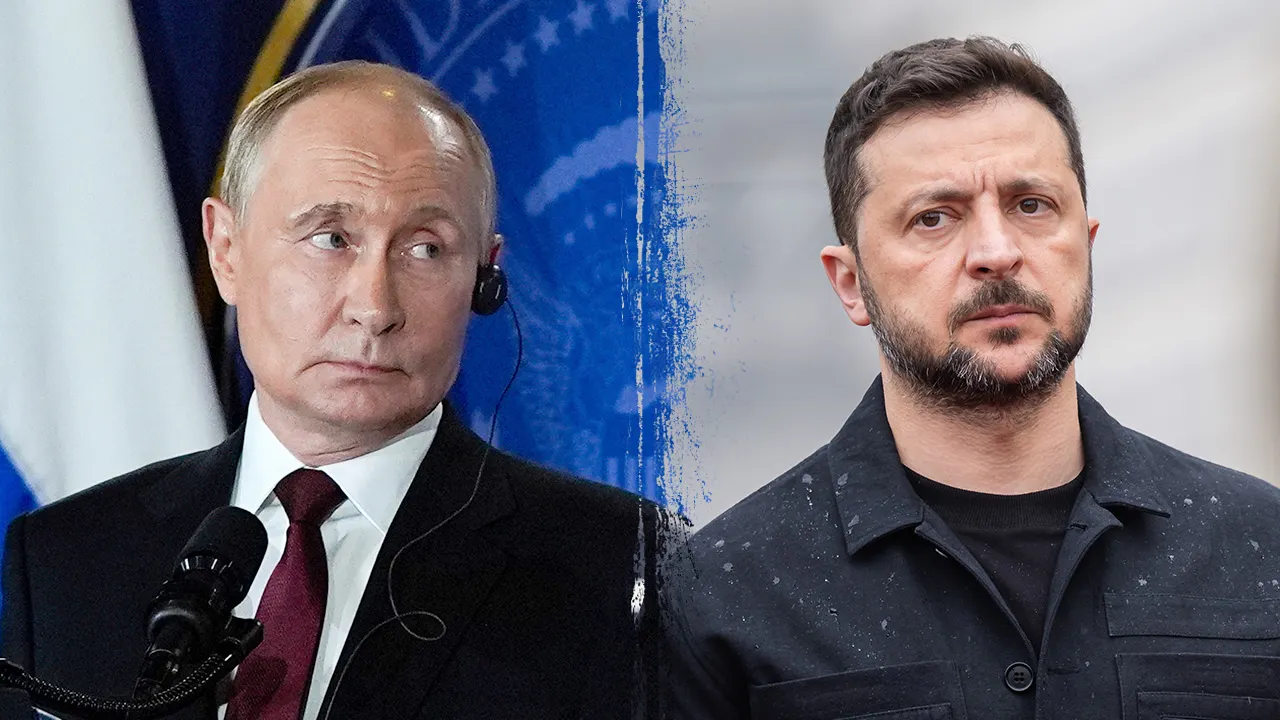
Vladimir Putin expressed willingness Thursday to consider President Trump’s peace proposal as a starting point for negotiations to end the nearly four-year war between Russia and Ukraine. Speaking to reporters during a three-day diplomatic visit to Kyrgyzstan, the Russian president described Trump’s plan as “a set of issues put forward for discussion” rather than a definitive draft agreement.
“We need to sit down and discuss this seriously,” Putin told journalists at the conclusion of the summit. “Every word matters.”
The Russian leader maintained a firm stance on his conditions, however, stating bluntly: “If Ukrainian troops withdraw from the territories they occupy, hostilities will cease. If they don’t withdraw, we will achieve this by force.” This ultimatum underscores the significant gap that remains between the warring parties despite renewed diplomatic efforts.
Kremlin officials have been notably reserved regarding the peace plan presented by the Trump administration last week. Previously, Putin has demanded Ukraine’s complete withdrawal from the entirety of four eastern regions – Donetsk, Luhansk, Kherson, and Zaporizhia – including areas Russia does not currently control. His demands also include preventing Ukraine from joining NATO or hosting Western troops, conditions many analysts believe would effectively bring Ukraine back into Moscow’s sphere of influence.
U.S. Representative Andy Barr (R-Ky.), a House Foreign Affairs Committee member, told Fox News Digital that the situation highlights the importance of American leadership on the world stage. “Russia invaded Ukraine because Joe Biden was the weakest president in American history,” Barr claimed, adding that “President Trump’s peace-through-strength leadership kept Putin fully contained.”
Critics of Putin, however, remain deeply skeptical of the Russian leader’s intentions. Former world chess champion Garry Kasparov, who predicted Putin’s military aggression toward Ukraine, told Polish news network TVP that “Peace under Putin is unachievable for one simple reason: Putin is war — and Russia is gearing up for even more.”
Kasparov has been critical of NATO, Trump, and the European Union for failing to defend Ukraine adequately and remove Russian forces from Ukrainian territory. “We owe them everything,” he recently said about Ukraine at the Halifax International Security Forum.
The Institute for the Study of War challenged Russia’s claims of inevitable victory, noting in a Wednesday report that “Data on Russian forces’ rate of advance indicates that a Russian military victory in Ukraine is not inevitable, and a rapid Russian seizure of the rest of Donetsk Oblast is not imminent.” The Washington-based think tank added that “Recent Russian advances elsewhere on the front line have largely been opportunistic and exploited seasonal weather conditions.”
Diplomatic efforts continue to evolve, with U.S. special envoy Steve Witkoff scheduled to visit Moscow next week, according to the Kremlin. U.S. Army Secretary Dan Driscoll, who has recently taken a prominent role in peace negotiations, may be heading to Kyiv.
The initial U.S. peace proposal faced criticism for appearing to favor Russian demands, but an amended version emerged following talks in Geneva on Sunday between American and Ukrainian officials. European leaders, concerned about their own security amid Russian aggression, are seeking greater involvement in the negotiation process.
As diplomatic maneuvering intensifies, the conflict on the ground continues. Russian forces are still struggling to capture key cities in eastern Ukraine despite their claims of imminent victory, suggesting that the military situation remains fluid even as peace talks gain momentum.
The coming weeks will prove critical as Witkoff’s Moscow visit and potential diplomatic engagements in Kyiv may determine whether substantive progress toward ending the conflict is possible or if Putin’s latest statements are merely tactical positioning in a longer strategic game.
Fact Checker
Verify the accuracy of this article using The Disinformation Commission analysis and real-time sources.

9 Comments
This is a pivotal moment in the Ukraine conflict. Putin’s openness to discussing Trump’s plan, coupled with his threat of force, shows he’s trying to project strength and control the narrative. It remains to be seen whether this leads to a negotiated settlement or further escalation of hostilities.
It’s concerning to see Putin doubling down on his demands for Ukraine to withdraw from occupied territories, even as he says he’s open to considering Trump’s peace plan. This suggests the gap between the two sides remains quite wide, raising the specter of further conflict.
This is an important geopolitical development that could have major implications for global energy and commodity markets. Putin’s stance suggests he still has significant leverage over the situation in Ukraine, despite diplomatic efforts to find a resolution. I’ll be watching closely to see how this unfolds.
Putin’s endorsement of Trump’s peace plan as a ‘starting point’ is interesting, but his threat of force if Ukraine doesn’t withdraw from occupied territories shows he’s still taking a hardline approach. This conflict remains highly volatile and the risk of further escalation is concerning.
Interesting to see Putin’s response to Trump’s peace plan for Ukraine. It seems like he’s willing to consider it as a starting point, but still has firm conditions that Ukraine must withdraw from occupied territories. This conflict remains very complex and contentious.
Putin’s response to Trump’s peace plan for Ukraine is a complex mix of diplomacy and coercion. While he’s willing to consider it as a starting point, his threat of force if Ukraine doesn’t withdraw is a concerning signal. This conflict continues to be a major geopolitical flashpoint with high stakes for global energy and commodity markets.
Putin’s ultimatum to Ukraine is concerning – he’s clearly willing to use force if they don’t comply with his demands. This could further escalate the ongoing conflict in the region. It will be critical to see how Ukraine and the international community respond to these latest developments.
Putin’s response to Trump’s peace plan highlights the complex geopolitical dynamics at play in this conflict. His willingness to consider it as a starting point, while still issuing ultimatums, suggests he’s trying to maintain leverage. It will be crucial to see if any meaningful progress can be made.
Putin’s endorsement of Trump’s peace plan as a ‘starting point’ is intriguing, but his ultimatum to Ukraine is deeply troubling. This conflict remains highly volatile, and the threat of force from Russia is a major concern. Careful diplomatic maneuvering will be crucial to try to de-escalate the situation and find a peaceful resolution.