


Listen to the article
Pro-Palestinian Group Challenges UK Terror Classification in High Court
Lawyers representing Palestine Action appeared before the British High Court on Wednesday to contest the government’s decision to classify the pro-Palestinian protest group as a terrorist organization, placing it alongside groups such as al-Qaida and Hamas.
The legal challenge comes after the UK government’s controversial ban on the group, which has conducted direct action protests at military and industrial sites since its formation in 2020. The ban makes membership or support of the organization punishable by up to 14 years imprisonment.
Raza Husain, representing Palestine Action co-founder Huda Ammori, delivered a scathing critique of the government’s decision during the hearing, calling it an “ill-considered, discriminatory, due process-lacking, authoritarian abuse of statutory power.”
The government’s decision to outlaw the group followed a June incident where activists broke into a Royal Air Force base to protest British military support for Israel’s military operations in Gaza. During the break-in, protesters sprayed red paint into aircraft engines and caused additional damage with crowbars.
British officials have justified the ban by pointing to Palestine Action’s history of direct action protests, particularly those targeting facilities owned by Israeli weapons manufacturer Elbit Systems UK. According to government statements, these actions have resulted in millions of pounds in damage and potentially compromised national security interests.
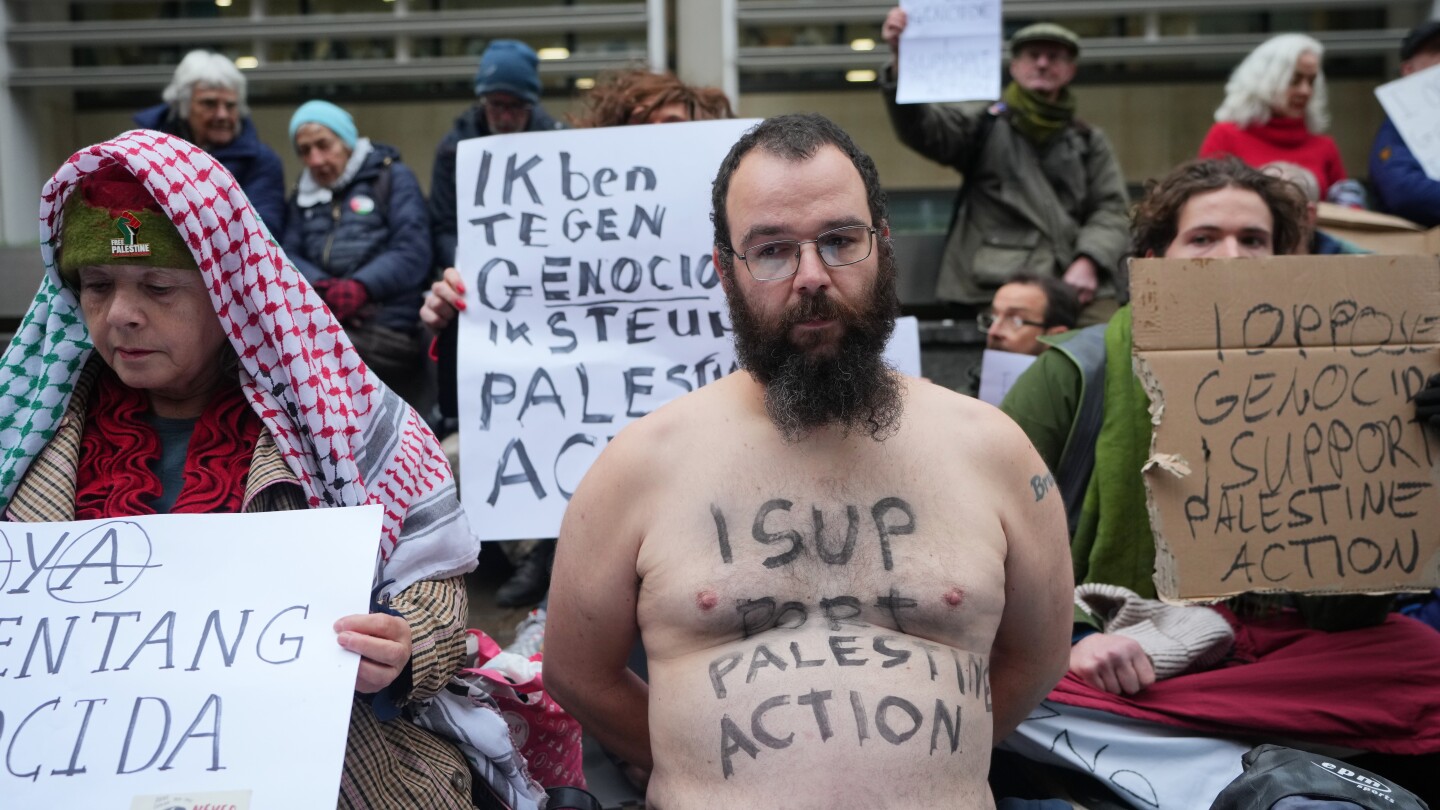
The consequences of the ban have been far-reaching. More than 2,000 individuals across the United Kingdom have been arrested for displaying signs at protests stating “I support Palestine Action,” with over 130 facing charges under the Terrorism Act. These arrests have sparked significant controversy regarding freedom of expression and the right to protest.
As the three-day hearing commenced on Wednesday, dozens of Palestine Action supporters gathered outside the High Court in London. The demonstration resulted in several arrests, further highlighting tensions surrounding the case.
Civil liberties organizations have expressed alarm at the government’s approach, arguing that peaceful protesters are being subjected to counter-terrorism measures that infringe upon fundamental democratic rights.
“Direct action and civil disobedience are not simply to be tolerated, but valued,” Husain argued during Wednesday’s proceedings. “It is an honorable tradition, both in our common law and in any liberal democracy with a developed understanding of the rule of law.”
Drawing a historical parallel to emphasize his point, Husain added, “The suffragettes would have been liable to proscription if the Terrorism Act 2000 regime had been in force at the turn of the 20th century.”
The case highlights growing tensions between security concerns and civil liberties in the UK against the backdrop of the ongoing conflict in Gaza. Since the October 7 Hamas attack on Israel and the subsequent Israeli military response, demonstrations supporting Palestinians have become common throughout Britain and much of Europe.
Legal experts suggest the outcome of this case could have significant implications for how the UK balances national security considerations with protected rights to political expression and protest. The High Court’s ruling, expected after the conclusion of the three-day hearing, may establish important precedent regarding the government’s powers to classify domestic activist groups under counter-terrorism legislation.
The government maintains that Palestine Action’s tactics go beyond legitimate protest into territory that threatens public safety and national interests, while critics argue that applying terrorism laws to political activists represents a dangerous expansion of state power against dissent.
Fact Checker
Verify the accuracy of this article using The Disinformation Commission analysis and real-time sources.

13 Comments
Designating a domestic protest group as a terrorist organization seems like a drastic measure that could have far-reaching implications. I’ll be watching this case closely.
While the group’s actions may have been disruptive, equating them with groups like al-Qaida and Hamas seems like a major overreach by the UK government. This bears close scrutiny.
I’m curious to see if the High Court will find the government’s terrorist designation of Palestine Action to be legally justified and proportionate. This could set an important precedent.
The government’s decision to ban Palestine Action raises thorny questions about the line between legitimate protest and activities deemed to be terrorist in nature. The courts will have their work cut out for them.
This case touches on the delicate balance between security concerns and protecting fundamental rights like freedom of expression and association. I’ll be interested to see how the High Court navigates these complex issues.
The government’s move to ban Palestine Action as a terrorist group is a concerning development that could have a chilling effect on political activism in the UK. I hope the courts provide a careful and impartial review.
This case highlights the ongoing tensions around the Israeli-Palestinian conflict and the UK’s handling of related activism and protests. I’ll be following the court proceedings with great interest.
While the group’s protest tactics may have been disruptive, labeling them as terrorists seems like an extreme step that could have a chilling effect on free expression and political dissent.
Absolutely. The government should be very cautious about applying such weighty designations, especially against domestic activist groups.
The government’s decision to ban this group raises important questions about the balance between security concerns and civil liberties. I hope the courts can provide some much-needed clarity.
Classifying a protest group as a terrorist organization seems like a very heavy-handed approach. I hope the courts carefully examine the government’s justification and decision-making process here.
Agreed. The government’s actions seem overly broad and may be more about stifling criticism than addressing legitimate security concerns.
This is a concerning case of the UK government potentially overreaching in its efforts to crack down on pro-Palestinian activism. I’ll be interested to see how the High Court rules on the group’s legal challenge.