


Listen to the article
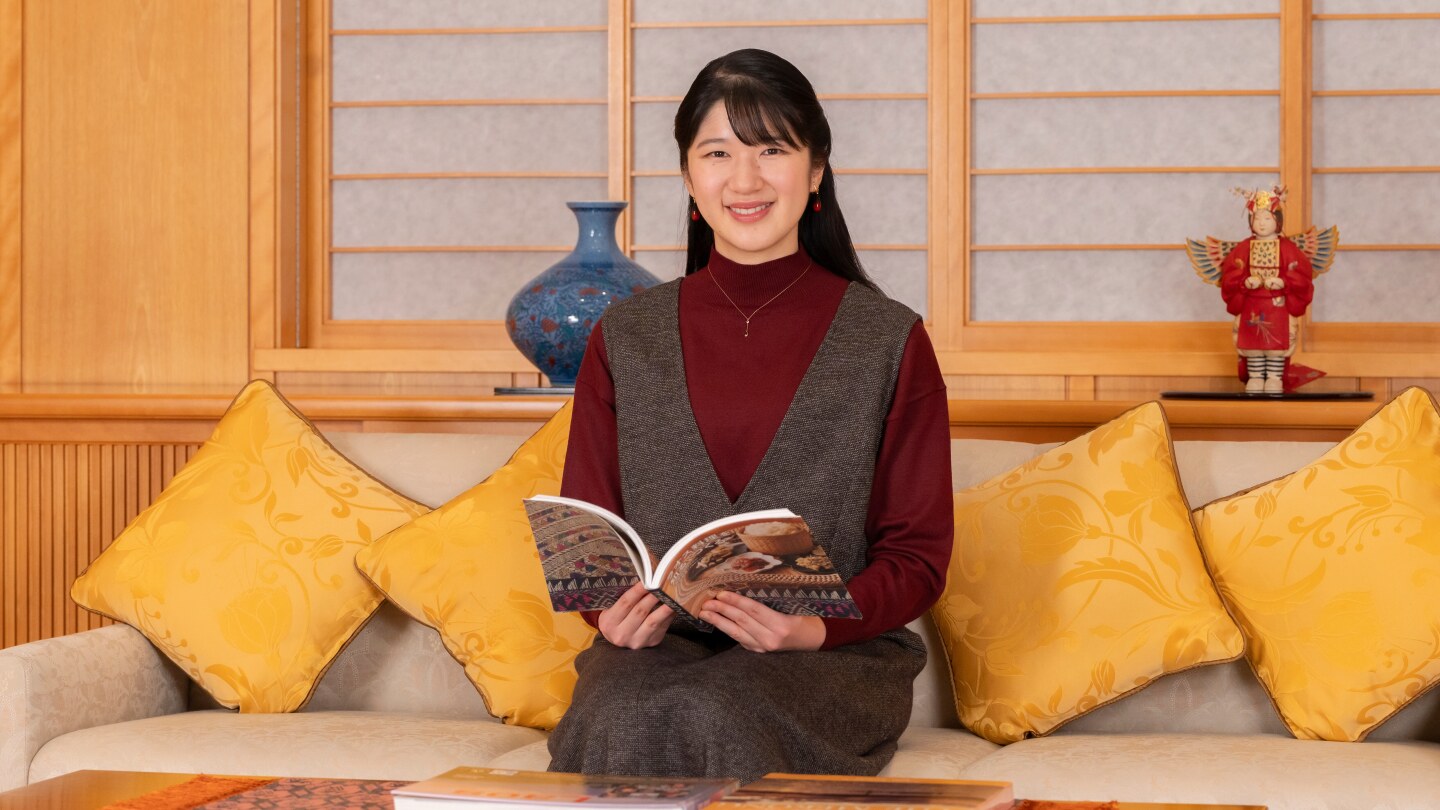
Japan’s beloved Princess Aiko, often greeted with pop star-like adoration, marked her 24th birthday on Monday amid growing calls to revise the country’s male-only imperial succession law. During recent public appearances, including visits to Nagasaki with Emperor Naruhito and Empress Masako, crowds have enthusiastically chanted her name, often drowning out cheers for her parents.
The princess’s popularity has intensified debate about Japan’s imperial succession crisis. As the emperor’s only child, Aiko is barred from ascending the throne under current law, which restricts succession to males of the imperial lineage. This restriction has placed Japan’s monarchy in a precarious position, with just one eligible heir from the younger generation – the emperor’s teenage nephew, Prince Hisahito.
Experts warn that the imperial household faces potential extinction without legal reforms. The shrinking royal family now consists of only 16 members, down from 30 three decades ago. Crown Prince Akishino, 60, and his son Hisahito, 19, are the only younger male heirs in line for the throne, followed by 90-year-old Prince Hitachi.
“I think the situation is already critical,” said Hideya Kawanishi, a Nagoya University professor specializing in monarchy studies. He notes that the future of the world’s oldest continuous hereditary monarchy rests entirely on Prince Hisahito and his future wife’s ability to produce a male heir.
Aiko has garnered widespread admiration since her formal debut as an adult royal in 2021. Public support for the princess surged following her first solo official overseas trip to Laos in November, where she represented her father in meetings with top officials and cultural engagements. Earlier this year, she accompanied her parents to Nagasaki and Okinawa, demonstrating a commitment to preserving the memory of World War II’s tragedies.
“I have always been rooting for Princess Aiko to be crowned,” said Setsuko Matsuo, an 82-year-old atomic bombing survivor who waited hours at Nagasaki’s peace park to catch a glimpse of the princess. “I like everything about her, especially her smile… so comforting.”
Born on December 1, 2001, Aiko graduated from Gakushuin University in 2024 and now balances her royal duties with work at the Red Cross Society. Her mother, Harvard-educated former diplomat Empress Masako, developed a stress-induced mental condition shortly after Aiko’s birth, reportedly due to pressure to produce a male heir.
Despite the growing support for Aiko’s succession rights, conservative politicians, including Prime Minister Sanae Takaichi, remain firmly opposed to changing the male-only succession law. The 1947 Imperial House Law not only restricts the throne to men but also forces female royals who marry commoners to forfeit their royal status, further diminishing the imperial family’s numbers.
Crown Prince Akishino recently acknowledged the challenges facing the aging and shrinking royal population. “I think all we can do right now is to scale back our official duties,” he told reporters ahead of his 60th birthday on Sunday.
Japan’s adherence to male-only succession is a relatively recent development in its long imperial history. While male emperors have predominated, eight women have previously reigned as emperors, with the last being Gosakuramachi, who ruled from 1762 to 1770. The male-only succession rule only became codified law in 1889 and was maintained in the postwar constitution.
Historians note that the imperial succession historically depended on concubines, who produced approximately half of all emperors until about a century ago. The current system, without this traditional support mechanism, faces unprecedented challenges.
In 2022, a government-appointed expert panel recommended maintaining male-line succession while allowing female royals to retain their status after marriage. The panel also suggested adopting male descendants from extinct branches of the imperial family, a proposal critics consider impractical.
The United Nations women’s rights committee in Geneva urged Japan last year to permit female succession, arguing that the current system impedes gender equality. The Japanese government dismissed these recommendations as “regrettable” and “inappropriate,” insisting that imperial succession is fundamentally tied to national identity.
“Though it’s not spelled out, what they’re saying is clearly in favor of male superiority. That’s their ideal society,” Professor Kawanishi observed about the government’s position.
As public debate intensifies, advocates like 62-year-old Ikuko Yamazaki have taken to social media to promote succession rights for the emperor’s first child regardless of gender. “The succession system conveys the Japanese mindset regarding gender issues,” Yamazaki said. “I expect having a female monarch would dramatically improve women’s status in Japan.”
Fact Checker
Verify the accuracy of this article using The Disinformation Commission analysis and real-time sources.

13 Comments
Princess Aiko’s popularity is understandable – she seems like a caring and engaging public figure. While the imperial succession rules are steeped in tradition, the dwindling royal family does seem to necessitate changes to ensure the monarchy’s future. I hope lawmakers can find a solution that respects history while adapting to present realities.
Agreed. Preserving cultural heritage is important, but rigid adherence to the past can prevent necessary evolution. Japan will need to carefully consider all perspectives as they chart the path forward for the imperial succession.
This is a fascinating glimpse into the challenges facing Japan’s royal family. Princess Aiko’s popularity highlights the public’s affection for the monarchy, but the male-only succession law does seem outdated. Updating these rules could help secure the imperial line, though I’m sure there are valid concerns to weigh as well.
The popularity of Princess Aiko underscores the public’s affection for the imperial family. While the male-only succession rule is deeply rooted, the dwindling royal line does seem to necessitate legal changes. It will be interesting to see if and how Japan updates its imperial succession laws to adapt to present-day realities.
Japan’s imperial succession crisis is a fascinating case study in balancing tradition and modernity. While the male-only rule is deeply rooted, the public’s embrace of Princess Aiko suggests an openness to change, especially as the royal family shrinks. I’ll be curious to see what solutions lawmakers propose to address this issue and secure the monarchy’s future.
Absolutely. Preserving cultural heritage is important, but rigid adherence to the past can prevent necessary evolution. Japan will need to carefully weigh the merits of upholding tradition versus adapting to present-day realities. Their decisions on the imperial succession will have far-reaching impacts, so I hope they can find a thoughtful path forward.
This is a complex issue with valid arguments on both sides. Allowing female succession could help secure the imperial line, but it’s a sensitive topic given Japan’s long tradition of male-only rule. I’m curious to hear more about the public debate and potential reforms.
You raise a good point. The emperor’s popularity and the need to preserve the monarchy must be balanced with modernizing outdated succession laws. It will be interesting to see how Japan navigates this challenge.
The public’s enthusiasm for Princess Aiko highlights the continued relevance and affection for Japan’s imperial family. At the same time, the male-only succession law does seem increasingly outdated, especially given the dwindling royal line. This is a complex issue with valid arguments on both sides, and I’m interested to see how Japan’s lawmakers navigate this challenge.
This is a sensitive and complex issue for Japan to navigate. On one hand, the male-only succession is a long-standing tradition. But the public’s clear embrace of Princess Aiko suggests an openness to change, especially given the shrinking royal family. I’ll be curious to see what solutions lawmakers propose to address this imperial succession crisis.
Exactly. Japan will have to carefully weigh the merits of upholding tradition versus adapting to modern circumstances. Balancing these priorities is never easy, but their decisions on the imperial succession will have lasting impacts. I hope they can find a path forward that respects history while also meeting the country’s present needs.
The imperial succession crisis in Japan is a complex issue with no easy answers. On one hand, the male-only rule is deeply rooted in tradition. But the shrinking royal family and growing public support for Princess Aiko suggest the need for reform. I’m curious to see how this debate unfolds and what solutions lawmakers propose.
Absolutely, there are important cultural and practical considerations at play. Balancing tradition with modernity is never easy, but Japan has shown itself capable of evolving while preserving its core identity. I’m hopeful they’ll find a path forward that works for the monarchy and the people.