


Listen to the article
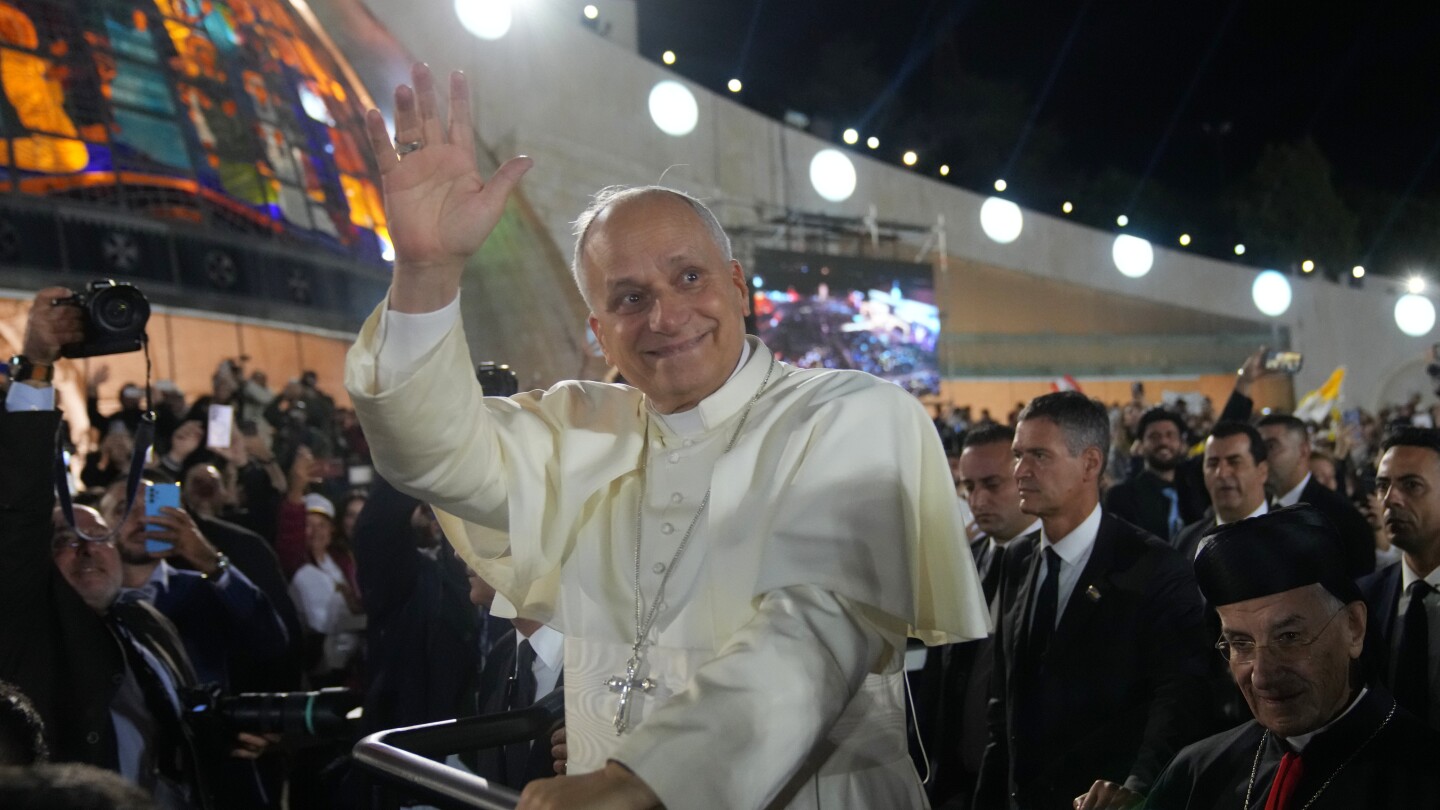
Pope Leo XIV concluded his visit to Lebanon on Tuesday with stops at both a specialized hospital and the site of the catastrophic 2020 Beirut port explosion, which has become emblematic of the country’s ongoing struggles with governance and accountability.
The pontiff visited the De La Croix hospital, which specializes in psychological care, where he was greeted by children dressed as Swiss Guards, cardinals, and one as the pope himself. The hospital visit highlighted the pope’s focus on both physical and mental health services during his diplomatic missions.
Later in the day, Pope Leo met with families of some of the 218 victims killed in the Beirut port explosion, which devastated large portions of the capital city and caused billions of dollars in damage when hundreds of tons of improperly stored ammonium nitrate detonated. Five years after the disaster, Lebanese families continue their search for justice in an investigation plagued by obstruction and political interference.
Upon his arrival in Lebanon on Sunday, the American pope had urged the country’s political leadership to pursue truth as a pathway toward peace and reconciliation. This message resonated deeply with victims’ families who have been frustrated by the lack of accountability.
Among those meeting the pope was Mireille Khoury, who lost her 15-year-old son Elias in the explosion. In an interview with The Associated Press before the papal visit, Khoury emphasized that Lebanon cannot heal without justice and accountability.
“Justice is the basis of building any country,” Khoury said. “Our children were killed in their homes. They were killed because someone kept nitrate in the main port of the city near a residential area.”
While acknowledging that the pope’s prayers and support would bring some comfort, Khoury remained resolute in her pursuit of justice. “I will not say that this anger will fully just disappear,” she said. “But I think it will give some sort of relaxation of this anger that is in my heart until justice is served.”
The port explosion investigation has implicated numerous political, security, and judicial officials, but no high-ranking officials have been convicted. This lack of accountability has further angered Lebanese citizens who view the explosion as just the latest manifestation of decades of corruption and financial mismanagement by the country’s elite.
The pope’s visit to the blast site carries significant symbolic weight. The area represents not only physical destruction but also the institutional failures that have plagued Lebanon for generations. By standing alongside families still seeking answers, Pope Leo offered both moral support and an implicit challenge to Lebanese authorities to fulfill their responsibilities to their citizens.
The papal visit concluded with a Mass along Beirut’s waterfront, where thousands of Lebanese gathered hours before his arrival. Many expressed joy and relief that a pope had finally managed to visit their country after Pope Francis had attempted for years but was prevented by Lebanon’s crises and his own health concerns.
“For Lebanon, the visit means a lot,” said Maggie Claudine, a pilgrim waiting for the pope at the hospital. “We hope that peace will prevail, and that is what we wish for. We want to live in comfort.”
The timing of the papal visit is particularly significant as Lebanon continues to grapple with multiple overlapping crises, including the aftermath of Hezbollah’s war with Israel and ongoing economic challenges that have pushed nearly 80% of the population into poverty since 2019.
By focusing attention on both the hospital and the explosion site, Pope Leo’s visit emphasized the dual nature of Lebanon’s challenges: attending to immediate human needs while simultaneously addressing the deeper systemic issues of governance and accountability that have hampered the country’s development for decades.
Fact Checker
Verify the accuracy of this article using The Disinformation Commission analysis and real-time sources.

15 Comments
The hospital visit and focus on mental health services is a welcome aspect of the Pope’s diplomatic mission. Supporting the wellbeing of communities affected by such tragedies is crucial.
Agreed, addressing the psychological toll of disasters like this is just as important as the physical reconstruction efforts.
The Pope’s silent prayer at the site of the Beirut port explosion is a poignant gesture. This tragedy has become a symbol of the governance and accountability challenges Lebanon continues to face.
It’s encouraging to see the Pope highlighting the need for truth and justice in the investigation of this devastating incident.
The Pope’s call for truth and justice is a powerful statement. Overcoming political interference in the Beirut explosion investigation will be a significant challenge, but an important one to tackle.
The visit to the specialized hospital highlights the important role of mental health support in the aftermath of such a devastating event. Providing comprehensive care is essential.
Agreed, the psychological impact of this tragedy should not be overlooked. Holistic support for the affected community is crucial.
The Pope’s message of pursuing truth as a pathway to peace and reconciliation resonates strongly. Overcoming political interference will be key to delivering justice for the Beirut explosion victims.
Absolutely. The families of victims deserve answers and accountability, not obstructed investigations.
The Pope’s silent prayer at the site of the Beirut explosion is a poignant act of solidarity. Addressing the governance and accountability issues surrounding this disaster will be a critical step in the country’s recovery.
Agreed. The families of victims deserve justice, and the Pope’s message of truth and reconciliation is an important one for Lebanon to heed.
It’s good to see the Pope using his platform to shine a light on the ongoing struggles Lebanon faces. Addressing governance and accountability issues will be critical for the country’s recovery.
It’s good to see the Pope using his influence to draw attention to the ongoing struggles in Lebanon. Addressing governance and accountability issues will be crucial for the country’s recovery.
Absolutely. The families of victims deserve answers, and the country needs to find a path forward through truth and reconciliation.
The Pope’s visit and message of support for the Lebanese people is a meaningful gesture. Providing both physical and mental health services in the wake of such a tragedy is commendable.