


Listen to the article
Pope Leo XIV Opens Up About Conclave, Spirituality During Return Flight from Middle East
Pope Leo XIV on Tuesday offered rare insights into his mindset during the historic conclave that elected him, revealing a spiritual approach rooted in surrender to divine providence when he realized the papal office might be his destiny.
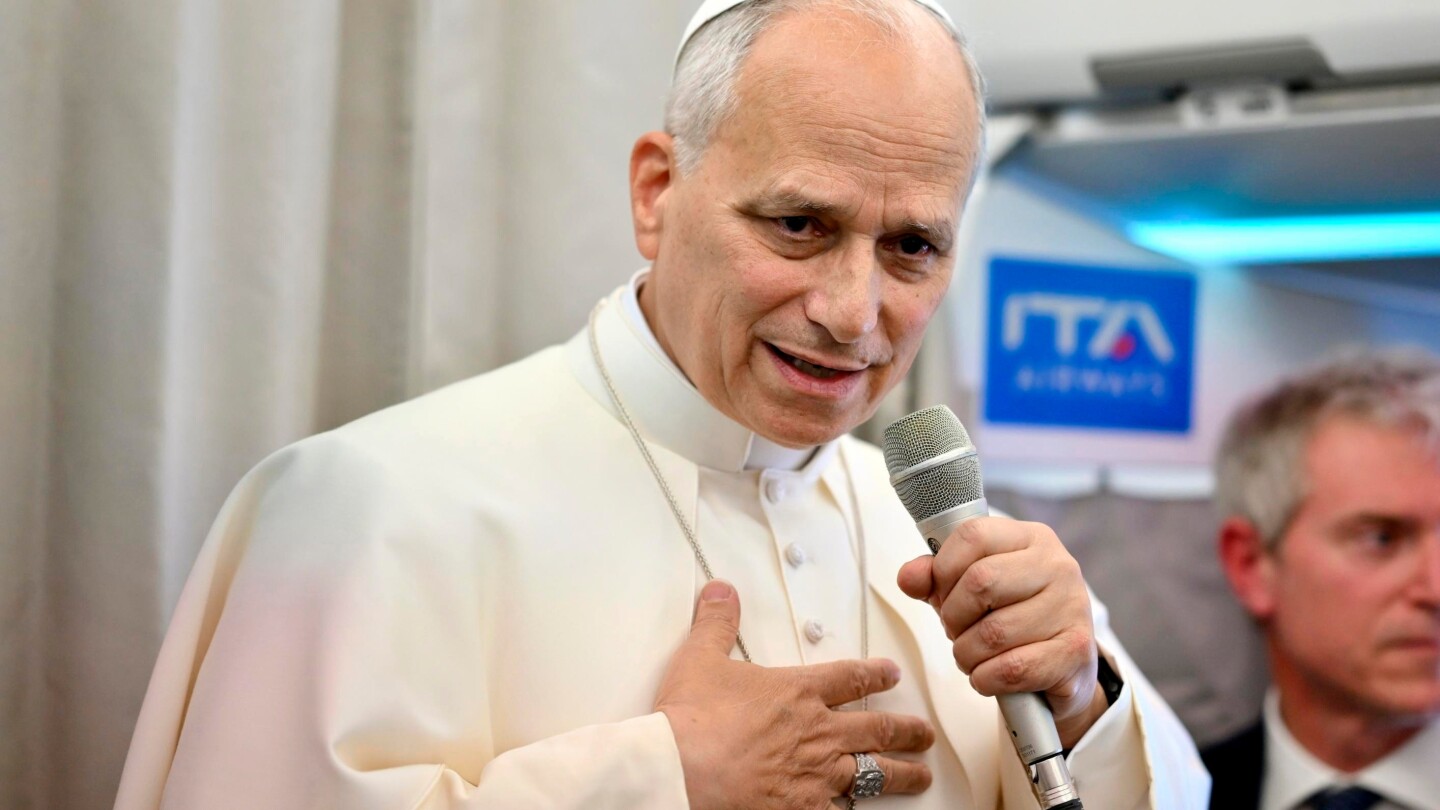
“I took a deep breath. I said ‘Here we go Lord. You’re in charge and you lead the way,'” Leo told journalists during a wide-ranging press conference aboard the papal plane as he returned from his inaugural international trip to Turkey and Lebanon.
The pontiff, who was elected in May in a remarkably swift four-ballot process, described his reaction when he noticed votes trending his way. “I resigned myself to the fact when I saw how things were going and I said ‘This could be a reality,'” he recalled.
Leo, formerly Cardinal Robert Prevost, made history as the first American to ascend to the papacy. The quick consensus among cardinal electors was notable, with his path to election becoming clear by the third ballot on the conclave’s second day.
During the 30-minute exchange with reporters, the Pope displayed increased comfort with media interactions, fielding questions in multiple languages and addressing topics ranging from international diplomacy to his spiritual foundations and future travel plans.
When asked about his sometimes expressive facial reactions during public events, Leo revealed a sense of humor about press interpretations. “My face is very expressive but I’m oftentimes amused by how the journalists interpret my face,” he said. “Sometimes I get really great ideas from all of you because you think you can read my mind or my face. You’re not always correct,” he added with a laugh.
Spiritual Influences and Leadership Philosophy
For those seeking to understand his approach to leadership, Leo recommended studying his spiritual influences, particularly “The Practice of the Presence of God” by Brother Lawrence, a 17th-century Carmelite friar. The book outlines a spirituality of surrender that has guided Leo through challenging assignments.
“It describes a type of prayer and spirituality where one simply gives his life to the Lord and allows the Lord to lead. If you want to know something about me, that’s been my spirituality for many years,” he explained. “In midst of great challenges – living in Peru during years of terrorism, being called to service in places where I never thought I’d be called to serve – I trust in God.”
This philosophy appears central to how Leo is navigating his unexpected role. Speaking to a retiring reporter, he reflected with gentle humor: “Just a year or two ago, I too thought about retiring some day. You’ve received that gift apparently. Some of us will continue to work.”
Middle East Diplomacy and Global Concerns
The Pope’s visit to Lebanon took place amid ongoing tensions between Israel and Hezbollah, with Leo hinting at behind-the-scenes diplomatic efforts. Though not elaborating on specific interventions, his presence in the region underscored the Vatican’s continued engagement in Middle Eastern peace processes.
On Venezuela, Leo urged diplomatic approaches over military threats from the United States, advocating for dialogue and potentially economic pressure as more constructive paths to influence the country’s leadership. “The voices coming from the United States change, with a certain frequency at times,” he observed. “I believe it’s better to look for ways of dialogue.”
Future Travel Plans
Looking ahead, the Pope outlined ambitious travel plans that reflect his global priorities. He hopes to make his second papal trip to Africa next year, with special interest in Algeria for its significance to Christian-Muslim relations and its connection to St. Augustine, who inspired Leo’s religious order.
Latin America also figures prominently in his travel agenda, with potential visits to Argentina, Peru, and Uruguay in 2026 or 2027. His planned trip to Argentina would fulfill expectations left unmet when Pope Francis, an Argentine, never returned to his homeland during his papacy.
Leo expressed particular enthusiasm about his interactions with young Catholics during his Middle East journey, describing their response as “awe-inspiring.”
“I think to myself, ‘These people are here because they want to see the pope.’ But I say to myself, ‘They’re here because they want to see Jesus Christ and they want to see a messenger of peace,'” he reflected. “Just to listen to their enthusiasm and to hear their response to that message is something that I think is – that enthusiasm – is awe-inspiring. I just hope I never get tired of appreciating everything that all these young people are showing.”
Fact Checker
Verify the accuracy of this article using The Disinformation Commission analysis and real-time sources.

8 Comments
Fascinating insights from Pope Leo XIV. It’s interesting to hear his spiritual perspective on the conclave process and his new role. I wonder what challenges and opportunities he sees ahead for the Church.
The Pope’s comments on his mindset during the conclave vote are quite revealing. It’s admirable that he approached this momentous decision with such a sense of surrender and trust in divine providence.
As the first American pope, Pope Leo XIV’s election is certainly historic. I’m curious to learn more about his vision and priorities for the Church going forward, particularly in areas like spirituality and global outreach.
It’s heartening to hear the Pope speak about his spiritual approach to discerning and accepting his new role. His emphasis on surrender and trusting in God’s plan sets an inspiring example.
As the first American pope, Pope Leo XIV’s election represents a significant shift for the Catholic Church. I’m curious to see how his cultural and geographic background might influence his priorities and vision for the future.
Pope Leo XIV’s background as an American cardinal is certainly noteworthy. I wonder how this unique perspective might shape his leadership and the Church’s global engagement under his stewardship.
The Pope’s candid comments provide a rare glimpse into the inner workings and decision-making process of the conclave. His description of resigning himself to the role is quite compelling.
The Pope’s candid reflections on his initial reaction to the conclave results are quite relatable. It must have been a surreal experience to suddenly find himself called to such a weighty responsibility.