


Listen to the article
Pope Leo XIV Visits Armenian Cathedral in Istanbul, Signals Support for Reconciliation
Pope Leo XIV held prayers at the Armenian Apostolic Cathedral in Istanbul on Sunday in a gesture that extends beyond religious unity to quietly support ongoing diplomatic efforts between Turkey and Armenia, two nations long divided by historical trauma.
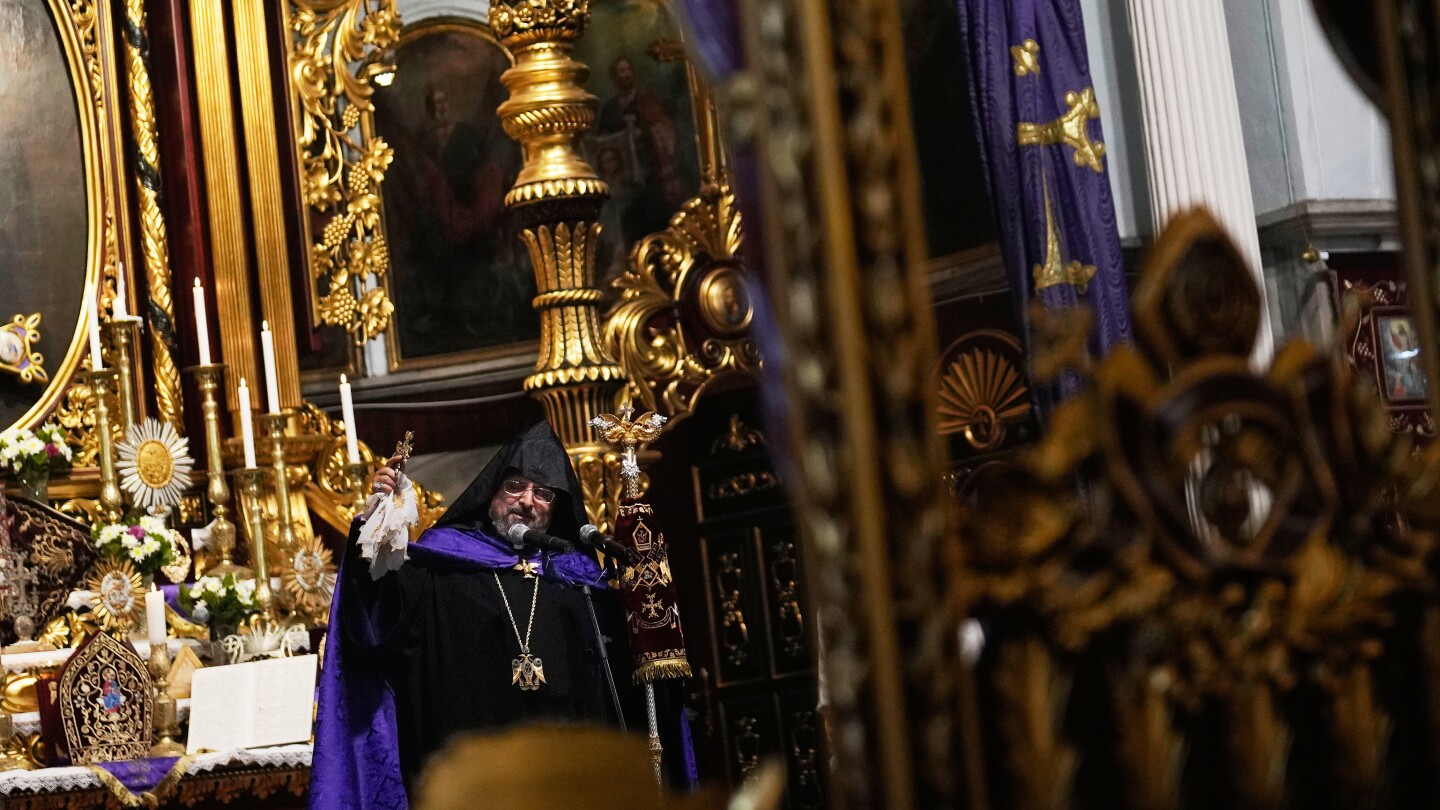
The pontiff’s visit to the Holy Mother of God Patriarchal Church carried significant symbolic weight as he and Istanbul-based Patriarch Sahak II Mashalian processed into the sanctuary amid incense and traditional chants. Around 500 Armenian worshipers attended the service, which concluded with the unveiling of a marble inscription honoring Leo’s visit.
“This visit provides me with the opportunity to thank God for the courageous Christian witness of the Armenian people throughout history, often amid tragic circumstances,” the pope said, making only a subtle reference to the historical sufferings that continue to divide the two nations.
The visit touches on one of the most sensitive chapters in Turkish-Armenian relations. An estimated 1.5 million Armenians died in massacres, deportations and forced marches that began in 1915 in Ottoman Turkey. While historians widely recognize these events as genocide, Turkey vehemently rejects this characterization, arguing the deaths have been inflated and resulted from civil war and unrest rather than systematic extermination.
The long-standing dispute has poisoned relations between the countries for decades, with Turkey actively lobbying against international recognition of the events as genocide. Unlike his predecessor Pope Francis, who in 2015 referred to the killings as “the first genocide of the 20th century,” Leo has steered clear of such explicit statements during his first six months as pope.
Richard Giragosian, founding director of the Regional Studies Center in Yerevan, Armenia, believes the papal visit carries diplomatic significance beyond religious unity. “More than just the symbolic importance of bringing the Vatican closer to the Armenian Church in terms of the eastern religion outreach, the visit is also, in some ways, promoting Armenia-Turkish normalization,” Giragosian said.
This normalization process has been gaining momentum since 2021, when Turkey and Armenia appointed special envoys to explore reconciliation steps. The countries currently maintain no formal diplomatic ties, and their shared border has remained closed since the 1990s.
Recent diplomatic breakthroughs have included Armenian Prime Minister Nikol Pashinyan’s visit to Turkey in June for talks with Turkish President Recep Tayyip Erdogan. During that visit, Pashinyan told Turkish journalists that pursuing international genocide recognition is not among his government’s priorities, though he emphasized that Armenians consider the genocide an “indisputable fact.”
Progress in Turkish-Armenian relations has coincided with efforts to resolve tensions between Armenia and Azerbaijan, Turkey’s close ally. The two Caucasus nations fought a war in 2020 over the disputed Karabakh region, with Turkey providing significant support to Azerbaijan.
The Vatican’s diplomatic approach remains nuanced, as it maintains relationships with all parties involved. Earlier this year, the Holy See signed a cooperation agreement with Azerbaijan on interfaith dialogue, which upset some Armenians. According to Giragosian, the Vatican is also engaged in “behind-the-scenes” diplomacy to secure the release of 23 Armenian prisoners reportedly held in Azerbaijan.
For Istanbul’s Armenian community, the papal visit represents recognition of their deep historical roots in Turkey. “It is not important today to say genocide or not,” said Mardik Evadian, an Armenian businessman attending the service. “We are living in this country and we are happy to live here.”
Leo’s visit follows in the footsteps of his predecessors, as Popes Paul VI, John Paul II and Benedict XVI all visited the Armenian Apostolic Cathedral during their respective trips to Istanbul. This was Leo’s first foreign visit as pope, marking the 1,700th anniversary of the Council of Nicaea, now the town of Iznik, where the early Christian Church established a shared creed.
Patriarch Sahak acknowledged the significance of papal support for Armenians throughout history. “The Papacy has long served as a moral compass, defending the dignity of every human being, championing peace, and giving voice to those who have none,” he said. “The Armenian people do not forget the Popes who raised their voice in our times of suffering.”
While some Armenians expressed skepticism about the visit’s impact on Turkish policy, others valued the recognition it brings to their community and heritage. As one Yerevan resident put it, the visit “honors us and reminds the world about Armenians.”
Fact Checker
Verify the accuracy of this article using The Disinformation Commission analysis and real-time sources.

13 Comments
This visit by Pope Leo XIV is a significant diplomatic gesture, but the real test will be whether it leads to tangible progress in the Turkish-Armenian reconciliation process. I’ll be watching closely to see if this momentum can be sustained.
While the details of the ongoing diplomatic efforts are unclear, this religious ceremony in Istanbul seems to signal a new era of dialogue and cooperation. I’m curious to learn more about the specific issues being negotiated between Turkey and Armenia.
This is an important moment, but the road to true reconciliation between Turkey and Armenia will likely be long and difficult. I hope the pope’s visit is just the beginning of a broader process to address the complex historical, political and cultural issues at play.
The pope’s subtle reference to the ‘historical sufferings’ of the Armenian people is an important acknowledgment of the genocide that occurred during the Ottoman era. This could help set the stage for more direct discussions of this painful chapter.
However, any progress will likely require sensitive negotiations and compromise on both sides to move beyond the legacy of this tragic history.
The presence of 500 Armenian worshippers at the service suggests a strong desire within the Armenian community to see progress on this long-standing conflict. The pope’s visit could help generate momentum for a comprehensive settlement.
It will be crucial for both sides to approach these negotiations in good faith and with a genuine commitment to resolving their differences.
This visit by Pope Leo XIV to the Armenian cathedral in Istanbul is a hopeful sign of reconciliation between Turkey and Armenia. After decades of tensions, it’s encouraging to see religious and political leaders coming together to heal historical wounds.
Symbolic gestures like this can help build trust and pave the way for deeper diplomatic progress between the two nations.
The pope’s acknowledgment of the ‘courageous Christian witness of the Armenian people’ is a powerful statement that recognizes their historical suffering. This could be an important step towards addressing the painful legacies of the past.
It will be interesting to see if this visit leads to any concrete policy changes or initiatives to improve Turkish-Armenian relations.
As someone with a keen interest in geopolitics, I’ll be closely following any developments in the Turkish-Armenian dialogue. The potential for progress on this conflict could have wider implications for regional stability in the Caucasus.
Successful reconciliation between these two nations could also serve as a model for conflict resolution in other parts of the world.