


Listen to the article
Pope Leo XIV Champions Interfaith Unity in Historic Lebanon Visit
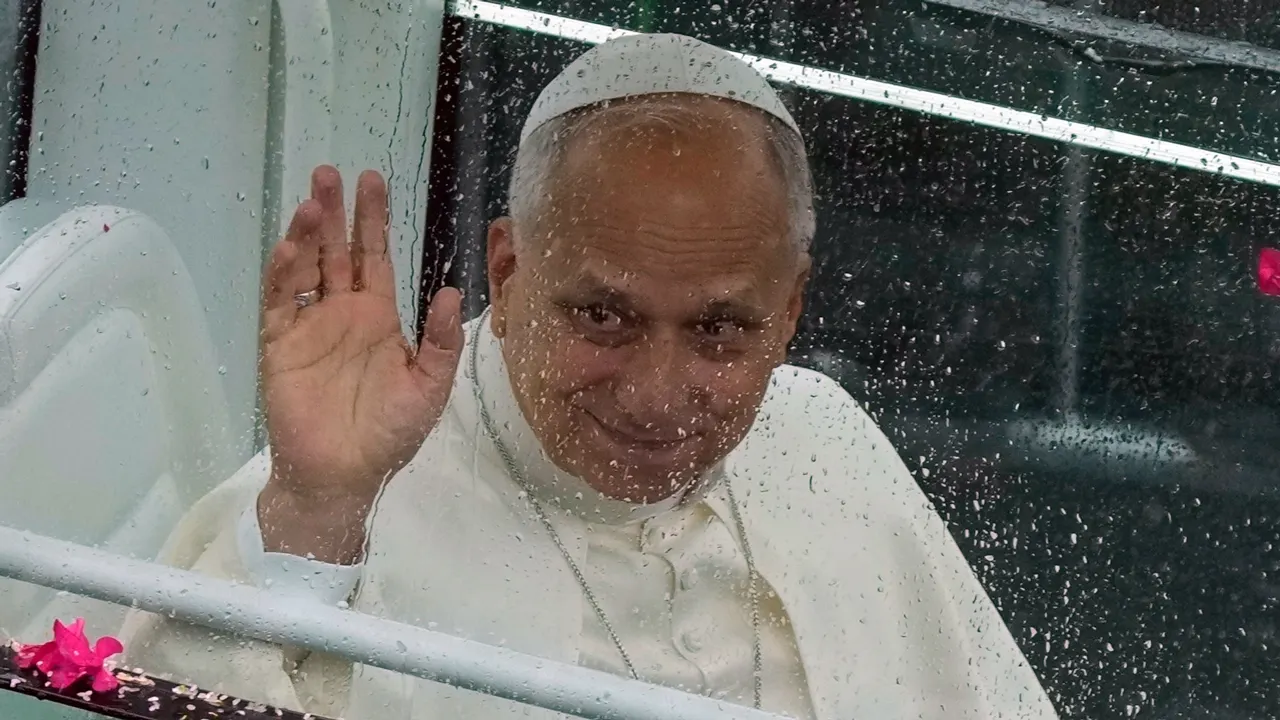
Pope Leo XIV received a jubilant welcome in Lebanon Monday, where he celebrated the country’s tradition of religious coexistence as a beacon of hope for a conflict-torn region. Thousands of Lebanese citizens braved steady rain to line his motorcade route, some throwing flower petals and rice on his car as signs of welcome.
The visit marks a significant moment for the first American pope, who chose the heart of Middle Eastern Christianity for his maiden papal voyage. Billboards bearing his image dotted highways around Beirut as the country embraced this rare diplomatic and spiritual occasion.
“In an age when coexistence can seem like a distant dream, the people of Lebanon, while embracing different religions, stand as a powerful reminder that fear, distrust and prejudice do not have the final word, and that unity, reconciliation, and peace are possible,” Leo said during an interfaith gathering at Beirut’s Martyr’s Square.
The interfaith meeting brought together the country’s Christian patriarchs alongside Sunni, Shiite, and Druze spiritual leaders under a shared tent. After listening to hymns and readings from both the Bible and Quran, the religious leaders joined the pope in planting an olive sapling as a symbol of peace.
Leo’s comments underscored Lebanon’s unique position in the Middle East, echoing St. John Paul II’s famous description of the country as “more than just a country, but a message of freedom to the rest of the world.” This sentiment carries particular weight given Lebanon’s history of sectarian conflict during its 1975-1990 civil war, which was largely fought along religious lines.
The papal visit comes at a particularly tense moment for Lebanon, which continues to struggle with economic crisis, political deadlock, and the aftermath of the devastating 2020 Beirut port explosion. Regional conflicts have further complicated the situation, with recent tensions between Hezbollah and Israel threatening stability.
During the interfaith gathering, Ali al-Khatib, deputy head of the Supreme Islamic Shiite Council, directly appealed to the pontiff: “We put Lebanon in your hands so that maybe the world helps us,” referring to concerns about potential Israeli strikes against the country.
Earlier in the day, Leo visited the tomb of St. Charbel Makhlouf at the hilltop monastery of St. Maroun in Annaya, about 25 miles from Beirut. The site attracts hundreds of thousands of pilgrims annually, both Christian and Muslim, highlighting the cross-faith veneration that characterizes Lebanon’s unique religious landscape.
Security was noticeably tight throughout the visit, with Lebanese troops deployed along motorcade routes and the pope traveling in a closed, bulletproof popemobile—a departure from his predecessor Pope Francis’s practice. The precautions reflected regional tensions but did little to dampen the enthusiastic reception.
Many Lebanese shared footage of the warm welcome alongside a previously viral video of Queen Rania of Jordan asking Leo during an October Vatican visit if Lebanon was safe to visit. The pope’s confident response—”Well, we’re going”—had resonated with Lebanese citizens who felt affirmed by his commitment to visit despite security concerns.
Christians currently make up approximately one-third of Lebanon’s 5 million people, representing the largest percentage of Christians in any Middle East nation. The country’s post-independence power-sharing agreement designates the presidency for a Maronite Christian, making Lebanon the only Arab country with a Christian head of state.
The Vatican views this Christian presence as crucial for the Church’s position in the region, particularly as Christian populations in neighboring countries like Iraq and Syria have declined dramatically following conflicts and the rise of extremist groups.
Leo concluded his day at a youth rally at Bkerki, the seat of the Maronite Church, where he encouraged young Lebanese Christians to remain in their homeland despite economic hardships that have driven many to emigrate.
“We will stay here,” said May Noon, a pilgrim at St. Charbel Monastery. “No one can uproot us from this country. We must live in it as brothers because the church has no enemy.”
As Pope Leo XIV continues his visit, his presence stands as both a spiritual pilgrimage and a powerful diplomatic statement about Lebanon’s importance as a model for religious coexistence in one of the world’s most troubled regions.
Fact Checker
Verify the accuracy of this article using The Disinformation Commission analysis and real-time sources.

14 Comments
It’s heartening to see the Pope embracing this diplomatic role and using his platform to advocate for interfaith cooperation. This type of moral leadership is sorely needed.
It’s encouraging to see the Pope take such a hands-on approach to diplomacy and peacebuilding in the Middle East. This type of high-level engagement is sorely needed.
The Pope’s call for the ‘Divine Gift of Peace’ is a powerful sentiment during these turbulent times. It’s encouraging to see spiritual leaders come together to advocate for harmony.
Absolutely. Interfaith dialogue and understanding are crucial to resolving conflicts and building a more peaceful world.
While the challenges facing the region are immense, the Pope’s message of hope and unity is a welcome counterpoint to the forces of division and conflict.
The Pope’s visit to the Middle East is a bold move, but one that could pay dividends if it helps to foster greater understanding between different religious communities.
Agreed. The Pope’s ability to convene diverse religious leaders is a unique opportunity to build bridges and promote peaceful coexistence.
A timely visit by the Pope to promote peace and interfaith unity in the Middle East. Hopefully his message of reconciliation can help ease tensions in the region.
Agreed. Lebanon’s tradition of religious coexistence is an inspiring example for the rest of the region to follow.
The Pope’s choice to visit Lebanon, a country that has weathered so much conflict, is significant. Hopefully his message of unity can inspire leaders across the region.
Lebanon’s diversity and history of religious coexistence make it an ideal setting for the Pope’s call for peace and reconciliation.
The Pope’s emphasis on the ‘Divine Gift of Peace’ resonates strongly, especially in a region that has endured so much strife and bloodshed. Hopefully his words can inspire real change.
Absolutely. The Pope’s moral authority and global platform make him well-positioned to drive progress on this critical issue.
While the Pope’s visit is a symbolic gesture, I hope it translates into tangible progress on the ground in terms of reducing tensions and promoting greater tolerance.