


Listen to the article
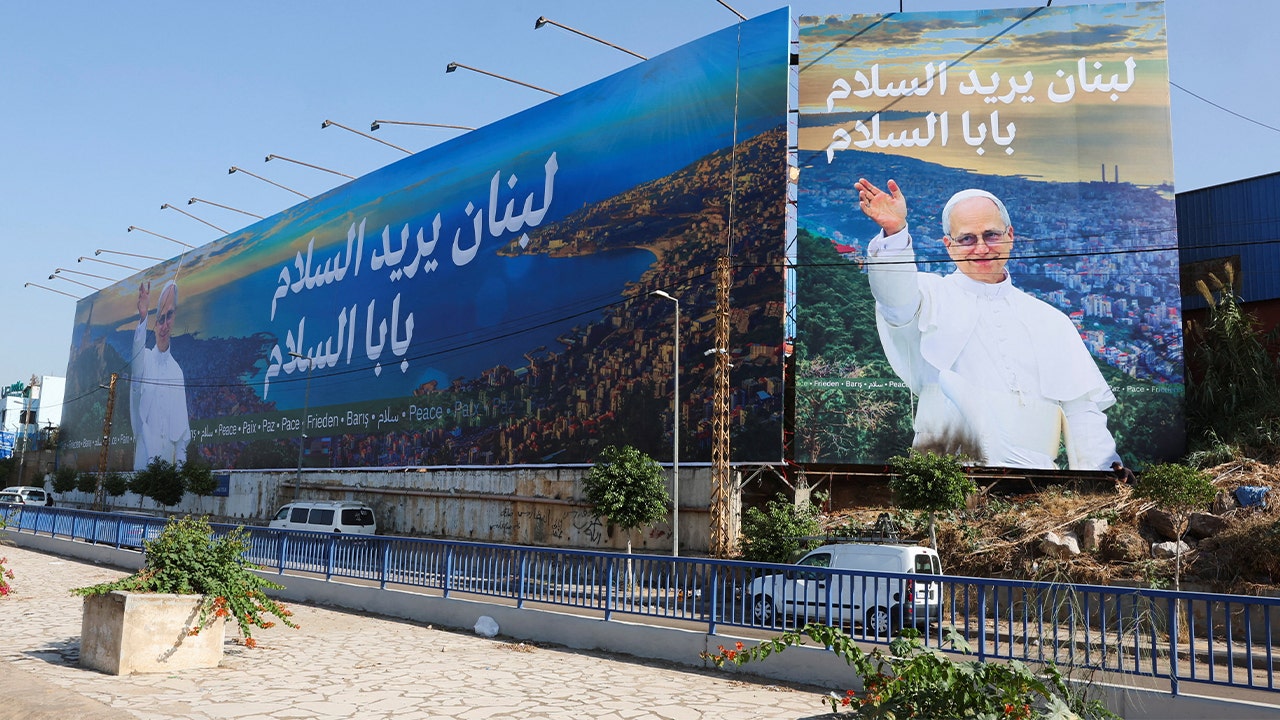
Pope Leo XIV arrived in Lebanon on Sunday, beginning the second leg of his first international trip as pontiff after spending three days in Turkey. The visit places him in a country where Christians have faced decades of war, instability, and emigration that has fundamentally altered Lebanon’s demographic landscape.
Once a Christian-majority nation according to the 1932 census, Lebanon has undergone significant changes. Christians now make up approximately one-third of the population, with the decline attributed to ongoing emigration, regional conflicts, and shifting birth rates among different religious communities.
JP De Gance, founder and president of Communio, noted the strategic significance of the Pope’s choice of destinations. “Pope Leo chose to make Turkey and Lebanon the site of his first trip very likely to emphasize two major themes of his pontificate. Coming out of the conclave that elected him, he has placed a great emphasis on both unity and on peace,” De Gance told Fox News Digital.
Lebanon represents the most emotionally charged portion of the papal journey. The last papal visit occurred in 2012, with Pope Francis having hoped to travel there but being prevented by health concerns. Despite representing the highest concentration of Christians in the Middle East, these communities have been devastated by Lebanon’s economic collapse, political paralysis, and mass migration over the past decade.
The Pope’s schedule includes meetings with political leaders, Christian and Muslim clerics, and families affected by the country’s overlapping crises. A key moment will come on December 2 when he visits the Port of Beirut, site of the catastrophic 2020 explosion that killed more than 200 people and wounded thousands. His presence is expected to draw significant attention in a country where many still demand accountability for the disaster.
Local media anticipate large crowds despite significant infrastructure problems and ongoing security challenges throughout the country.
The visit comes during one of Lebanon’s most volatile periods in years. Repeated exchanges of fire along the southern border between Hezbollah and Israeli forces throughout 2024 and 2025 have displaced residents and raised fears of a wider regional conflict, prompting questions about potential last-minute changes to the papal itinerary.
Vatican spokesman Matteo Bruni addressed these concerns, confirming that the schedule remains intact. “There is no specific concern related to the recent Israeli strike,” Bruni told EWTN Vatican. “The situation was already well known even a few months ago, and all necessary precautionary measures have been taken.”
De Gance emphasized that the Lebanon leg underscores the Pope’s focus on Christians in vulnerable regions. “Leo likely wants to bring the bully pulpit of the papacy to the region to bring a message of peace that also advocates for those often forgotten in the West — our Eastern Christian brothers and sisters.”
The themes emerging in Lebanon mirror those established in Turkey, where Pope Leo appealed for dialogue amid regional tensions. His opening days emphasized reconciliation, solidarity, and support for Christian communities navigating political and social upheaval.
In Turkey, the Pope commemorated the 1700th anniversary of the First Council of Nicaea in İznik, gathering with Ecumenical Patriarch Bartholomew I and other Christian leaders for an ecumenical prayer service near archaeological remains associated with the historic council.
De Gance highlighted the significance of this commemoration: “Pope Leo chose to commemorate the 1,700th anniversary of the Council of Nicea, which has such historic significance because this council helped define the reality — now still accepted by Protestants, Catholics and Orthodox — that Jesus Christ is truly God and truly man.”
During the ceremonies, Pope Leo emphasized the shared Christian heritage found in the Nicene Creed, a foundational statement of faith recited across denominations.
For many Lebanese Christians, his arrival offers a moment of recognition from Rome and a source of hope during a period of deep national uncertainty. The visit is being viewed as an important signal of solidarity with a Christian community that has endured significant hardship in recent years, while also serving as a platform for the Pope to advance his message of unity and peace in a troubled region.
Fact Checker
Verify the accuracy of this article using The Disinformation Commission analysis and real-time sources.

14 Comments
As Lebanon grapples with economic woes and security concerns, the Pope’s presence could provide a much-needed boost to national morale. His moral authority and calls for unity may resonate with a population weary of upheaval.
The Pope’s visit to Lebanon is a powerful symbol of solidarity with a nation in distress. His message of peace and reconciliation will be closely watched for its potential to bridge divides and offer hope.
The Pope’s visit to Lebanon is a timely and important gesture, given the country’s precarious situation. His call for unity and peace could provide much-needed moral support and inspiration to the Lebanese people.
Lebanon’s demographic shifts are a sobering reminder of the fragility of coexistence in the region. The Pope’s visit offers an opportunity to advocate for the protection of religious minorities and promote interfaith dialogue.
Pope Leo XIV’s decision to include Lebanon in his first international trip reflects the Vatican’s recognition of the country’s strategic importance in the region. His message of unity and peace will be closely watched for its potential to ease tensions.
The Pope’s visit to Lebanon comes at a critical time, as the country grapples with a severe economic crisis and ongoing security concerns. His moral leadership could provide a much-needed boost to national morale and inspire renewed hope.
The Pope’s visit to Lebanon is a powerful statement of solidarity with a nation facing significant challenges. His message of reconciliation and unity could play a crucial role in bridging the country’s deep-seated divisions.
Lebanon’s shifting demographics are a sobering reminder of the toll that conflict and instability can take on a society. The Pope’s visit offers an opportunity to highlight the plight of religious minorities and advocate for their protection.
Lebanon’s demographic shifts over the decades are a sobering reminder of the toll that conflict and instability can take on a country’s social fabric. The Pope’s visit offers an opportunity to highlight the plight of religious minorities and advocate for greater protections.
The Pope’s visit to Lebanon is a chance to shine a light on the challenges facing Christian communities in the region. Maintaining a pluralistic society will be crucial for Lebanon’s long-term stability.
Pope Leo XIV’s choice of Turkey and Lebanon for his first international trip speaks volumes about his priorities. By visiting these nations facing significant challenges, he demonstrates a commitment to addressing regional conflicts and promoting religious tolerance.
The Pope’s visit to Lebanon is a bold move, given the country’s ongoing political and economic crises. His ability to navigate these complex issues will be a true test of his diplomatic skills and moral authority.
This papal visit to Lebanon comes at a critical juncture for the country as it grapples with deep economic and social challenges. The Pope’s emphasis on unity and peace will be closely watched as he navigates the complex religious and political dynamics in the region.
Visiting Lebanon amid its current turmoil is a bold move by the Pope. His message of reconciliation will be closely scrutinized, but could play an important role in easing tensions if delivered thoughtfully.