


Listen to the article
Pope Leo XIV Makes Historic First Foreign Trip to Turkey and Lebanon
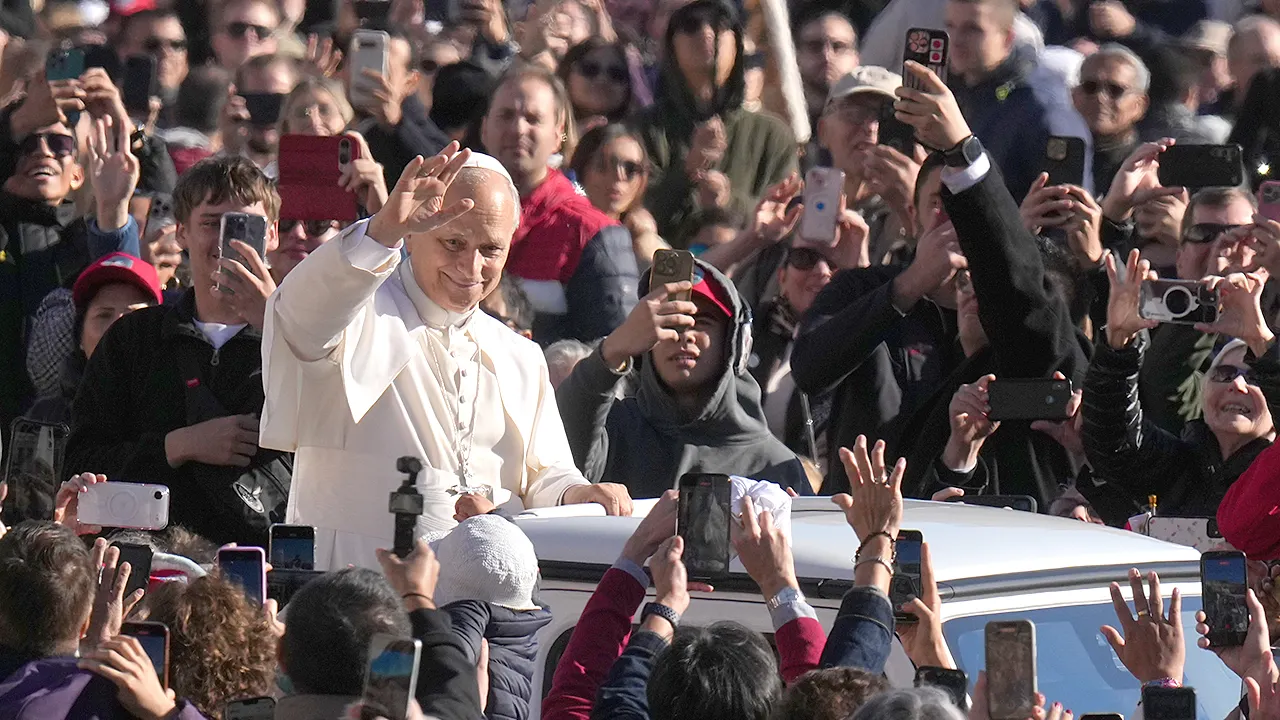
Pope Leo XIV is using his inaugural foreign trip to make a powerful statement that intertwines symbolism with geopolitical significance. Landing in Turkey this morning for the 1,700th anniversary of the Council of Nicaea before traveling to crisis-stricken Lebanon, the pontiff is deliberately stepping into regions where Christianity once flourished but has faced modern challenges.
The pope’s presence conveys dual messages: a call for renewed unity among Catholic, Orthodox, and Protestant communities, and a clear signal to regional governments that persecution and instability affecting Christian populations will not escape Vatican attention. This journey represents an early test of how the new pontiff intends to leverage the papacy’s diplomatic influence.
“Pope Leo has signaled early in his papacy that one of his primary objectives is to give hope to Christians who live in regions where they face persecution or other difficulties living out their faith,” said Matthew R. Petrusek, senior director of the Word on Fire Institute. “By traveling to Turkey and Lebanon, I think Leo is telling Christians both in those countries and across the globe, ‘You are not forgotten; the Church stands with you.'”
Commemorating Nicaea’s Legacy in Turkey
In Turkey, Pope Leo will commemorate the 1700th anniversary of the First Council of Nicaea, a landmark gathering convened in 325 AD in what is now Iznik. This council produced the Nicene Creed, a foundational statement of Christian belief shared across denominations.
On Thursday, the pope will travel by helicopter to Iznik to pray at the archaeological remains of the basilica where the historic council was held. The moment carries profound theological significance.
“Christianity is a creedal religion — it is based on shared, free assent to unchanging doctrines about Jesus Christ and the Church that give consistency and coherence to Christianity around the world. The Nicene Creed forms the backbone of Christian identity,” Petrusek explained.
To mark the anniversary, Leo recently issued an apostolic letter titled “In the Unity of Faith,” highlighting the Creed’s enduring role in unifying Christian communities. The United States Conference of Catholic Bishops noted that the document emphasizes the relevance of Nicaea’s teachings for Catholics, Orthodox, and Protestants today.
During his time in Turkey, the pope will also meet with Ecumenical Patriarch Bartholomew I, visit Christian communities in Istanbul, and celebrate liturgies, underscoring his commitment to ecumenical dialogue.
Lebanon: Addressing a Country in Crisis
The second leg of the papal journey will take Leo to Lebanon, which has not hosted a papal visit in over a decade. His predecessor, Pope Francis, had hoped to travel there but was unable to do so due to declining health.
Lebanon maintains the largest proportion of Christians in the Middle East, but this population has declined dramatically due to economic collapse, emigration, and political paralysis. The Associated Press reports that the pope will meet with political leaders, Christian and Muslim clerics, and families affected by the country’s overlapping crises.
One of the most anticipated moments will come on December 2, when Leo visits the Port of Beirut, site of the catastrophic 2020 explosion that killed more than 200 people and injured over 6,000. The visit to this traumatic location carries deep symbolic weight for a nation still struggling to recover from the disaster.
The pope plans to address the Lebanese people in both English and French, with the Vatican having already released the official missal for planned liturgies. Despite infrastructure shortages, Lebanese media are preparing for large crowds during the papal visit.
Diplomatic and Spiritual Significance
Petrusek emphasized that papal visits carry profound emotional impact, especially in regions where Christians face hardship. “It is hard to overestimate the positive effect having the pope visit your country has for Catholics, especially those who are suffering because of their faith. It is a reminder that the ‘Church’ is not an abstraction but, rather, a historical reality that goes back to Jesus Christ himself.”
Beyond spiritual reassurance, the pope’s presence serves as a message to governments in the region. “His presence in these countries communicates to those responsible for persecuting Christians, ‘Your crimes are not taking place in the dark; the world is watching,'” Petrusek added.
Throughout the trip, the Vatican is expected to emphasize themes of Christian unity, interfaith dialogue, and support for vulnerable communities. Pope Leo’s statements in both Turkey and Lebanon will be closely scrutinized by regional governments and religious communities grappling with conflict, insecurity, and demographic challenges.
The journey reflects the emerging priorities of Leo’s papacy: “A papal visit brings immense hope and a renewed patience to persevere… suffering and death, especially as a result of persecution, not only doesn’t have the final say; when freely united to Christ on the Cross, it leads to nothing less than eternal life,” Petrusek concluded.
Fact Checker
Verify the accuracy of this article using The Disinformation Commission analysis and real-time sources.

14 Comments
An intriguing visit by the new Pope to the historical heartlands of Christianity. It will be interesting to see if he can foster greater unity and support for Christian communities in the region.
Yes, his diplomatic influence could be significant in drawing attention to the plight of Christian minorities in Turkey and Lebanon.
The Pope’s focus on supporting persecuted Christian populations is a noble and important priority. I hope his visit can make a meaningful difference in improving their situation.
Agreed. The Vatican’s moral authority and diplomatic channels could be leveraged to advocate for greater religious freedom and tolerance in the region.
An important diplomatic mission for the new Pope. His ability to foster unity and advocate for religious minorities in the region will be closely watched.
Absolutely. The Pope’s influence could be instrumental in pushing for greater protections and freedoms for Christian populations in Turkey and Lebanon.
The Pope’s trip to Turkey and Lebanon is a bold move to draw attention to the challenges facing Christian communities in the region. I hope it yields tangible progress.
An ambitious and symbolically important first foreign trip for the new Pope. I hope he can use this platform to raise awareness and drive positive change for vulnerable Christian populations.
The Pope’s visit to Turkey and Lebanon reflects the Vatican’s commitment to supporting Christian minorities in the region. It will be interesting to see the diplomatic outcomes.
Agreed. The pontiff’s moral authority could prove influential in pushing for greater protections and freedoms for Christian communities in these countries.
Thoughtful move by the Pope to shine a light on the challenges facing Christian populations in Turkey and Lebanon. Hopefully, his presence can help spur positive change.
Yes, the visit could be an important step in mobilizing international attention and support for these vulnerable communities.
Curious to see how the Pope’s messages of unity and support for Christian communities will be received, given the complex geopolitics and sectarian tensions in Turkey and Lebanon.
A delicate balance to strike, but his visit could provide an opportunity for constructive dialogue and progress if handled carefully.