


Listen to the article
Pope Leo XIV Tours Istanbul’s Blue Mosque, Prioritizes Christian Unity Over Prayer
Pope Leo XIV visited Istanbul’s iconic Blue Mosque on Saturday, touring the 17th-century landmark in his white socks after removing his shoes as is customary. Despite earlier Vatican statements indicating the pontiff would observe a “brief moment of silent prayer,” Leo declined to do so, focusing instead on strengthening ties with Orthodox patriarchs and promoting unity between Eastern and Western churches.
During the tour, the first American pope in history admired the mosque’s soaring tiled domes and Arabic inscriptions as an imam guided him through the sacred space. Imam Asgin Tunca later told reporters he had invited the pope to pray, saying, “It’s not my house, not your house, it’s the house of Allah,” but Leo politely declined with a simple “That’s OK.”
Vatican spokesman Matteo Bruni clarified the pope’s approach after the visit: “The pope experienced his visit to the mosque in silence, in a spirit of contemplation and listening, with deep respect for the place and the faith of those who gather there in prayer.” The Vatican subsequently issued a corrected version of its trip bulletin, removing the reference to the planned “brief moment of silent prayer” without further explanation.
The visit marks a departure from Leo’s predecessors’ approaches to the Sultan Ahmed Mosque, as it is officially known. When Pope Benedict XVI visited in 2006 amid tensions following his controversial Regensburg speech that many interpreted as linking Islam with violence, he observed a moment of silent prayer as the imam prayed beside him. Pope Francis was even more explicit during his 2014 visit, standing for two minutes in silent prayer facing east with his head bowed.
Another notable omission from Leo’s itinerary was the nearby Hagia Sophia, a UNESCO World Heritage site that was once one of Christianity’s most significant cathedrals. Turkey converted the landmark from a museum back into a mosque in July 2020, a decision that drew widespread international criticism, including from the Vatican.
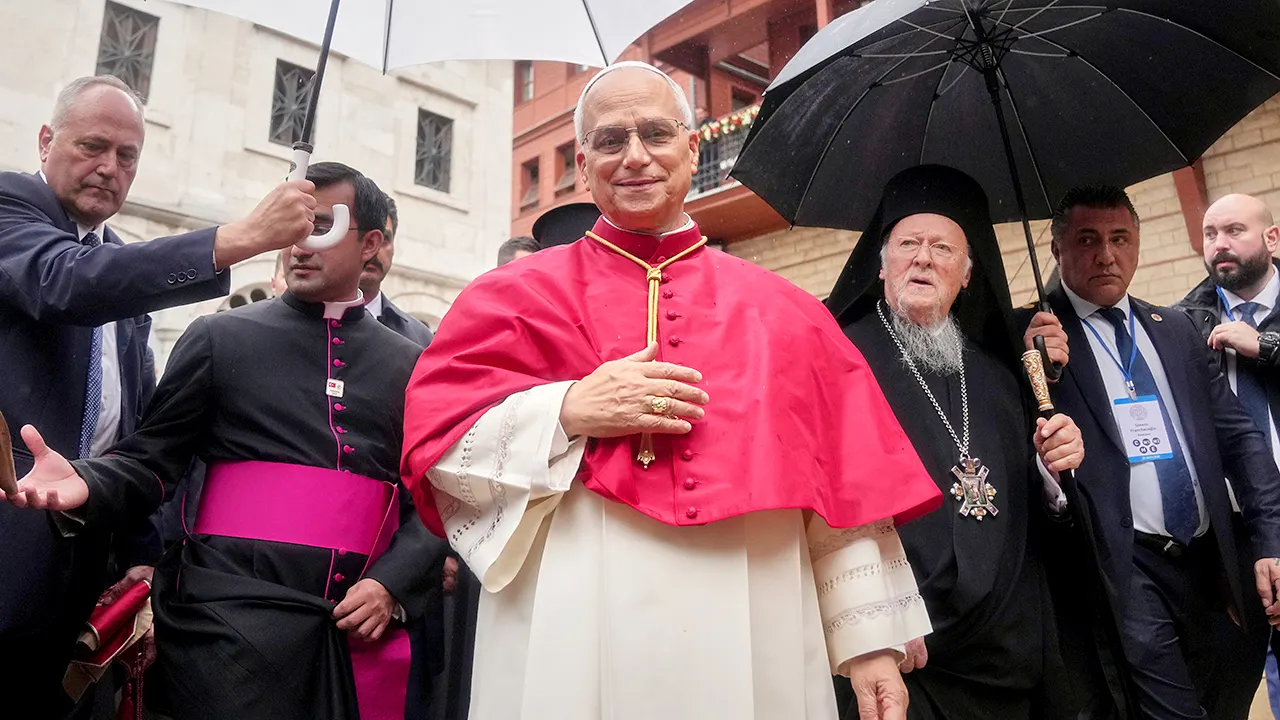
Following his mosque visit, Pope Leo met privately with Turkey’s Christian leaders at the Syriac Orthodox Church of Mor Ephrem. Later, he prayed with Ecumenical Patriarch Bartholomew I, spiritual leader of the world’s Orthodox Christians, at the patriarchal Church of Saint George, where they signed a joint declaration pledging “courageous steps” toward Christian unity.
A significant focus of their joint statement was finding a common date for celebrating Easter, addressing one of many differences that have persisted since the Great Schism of 1054 divided Eastern and Western churches. “It is our shared desire to continue the process of exploring a possible solution for celebrating together the Feast of Feasts every year,” the statement affirmed.
Leo also highlighted the upcoming Holy Year in 2033, which will commemorate the 2000th anniversary of Christ’s crucifixion, inviting Orthodox patriarchs to join in a pilgrimage to Jerusalem as “a journey that leads to full unity.”
The pope concluded his Istanbul activities with a Catholic Mass at the Volkswagen Arena for Turkey’s small Catholic community, which numbers just 33,000 in a country of more than 85 million, predominantly Sunni Muslims.
Meanwhile, trip organizers faced logistical challenges when Leo’s ITA Airways Airbus A320neo charter was affected by a worldwide Airbus software update mandated by the European Union Aviation Safety Agency. The update was ordered after analysis suggested a computer code issue may have contributed to a sudden altitude drop on a JetBlue flight last month. Vatican spokesman Bruni assured that technicians were en route to Istanbul with the necessary equipment to address the issue.
Pope Leo is scheduled to depart for Beirut, Lebanon, on Sunday afternoon for the second leg of his inaugural international trip as pontiff.
Fact Checker
Verify the accuracy of this article using The Disinformation Commission analysis and real-time sources.

14 Comments
While a joint prayer may have been symbolically powerful, the Pope’s choice to prioritize unity over ritual observance shows wisdom and nuance. Promoting harmony between faiths is a noble and challenging goal.
Touring historic religious sites and learning about different faiths is valuable for building bridges. The Pope’s visit highlights the importance of mutual understanding, even when joint worship isn’t possible.
Absolutely. Diplomacy and diplomacy through cultural exchange can go a long way in promoting peace and cooperation between faiths.
The Pope’s approach of silent contemplation and respect for the mosque’s significance is admirable. Avoiding performative acts while focusing on building connections is a thoughtful way to navigate interfaith relations.
Absolutely. Quiet diplomacy and genuine interest in learning about other faiths can sometimes be more impactful than grand symbolic gestures.
The Pope’s visit to the Blue Mosque underscores the importance of cultural exchange and mutual understanding, even when full religious unity remains elusive. A spirit of openness and respect is a positive step forward.
Well said. Fostering interfaith dialogue through shared experiences like this can lay the groundwork for greater cooperation down the line.
The Pope’s decision not to pray at the Blue Mosque is understandable, as that could have been seen as an endorsement of Islamic beliefs. His emphasis on listening and mutual understanding is commendable.
Exactly. Maintaining one’s own faith identity while still showing respect for others is a delicate balance, but the Pope seems to have navigated it well.
Interesting to see the Pope prioritize unity over joint prayer during his visit to the Blue Mosque. Respecting the faith of others while promoting dialogue is a wise approach.
Agreed. The Pope’s silent contemplation and listening show an openness to understanding the mosque’s significance for the Muslim community.
While a joint prayer may have been a symbolic gesture, the Pope’s respectful presence and focus on unity are more meaningful. This visit reflects a thoughtful, nuanced approach to interfaith relations.
It’s good to see the Pope taking a diplomatic approach and focusing on building ties with Orthodox patriarchs rather than engaging in joint prayer. Respecting differences while finding common ground is crucial for interfaith dialogue.
Interesting to see the Pope decline a joint prayer at the Blue Mosque, instead emphasizing unity through cultural exchange. Finding common ground while respecting differences is crucial for progress on interfaith issues.