


Listen to the article
Poland Summons Israeli Ambassador Over Yad Vashem Holocaust Statement
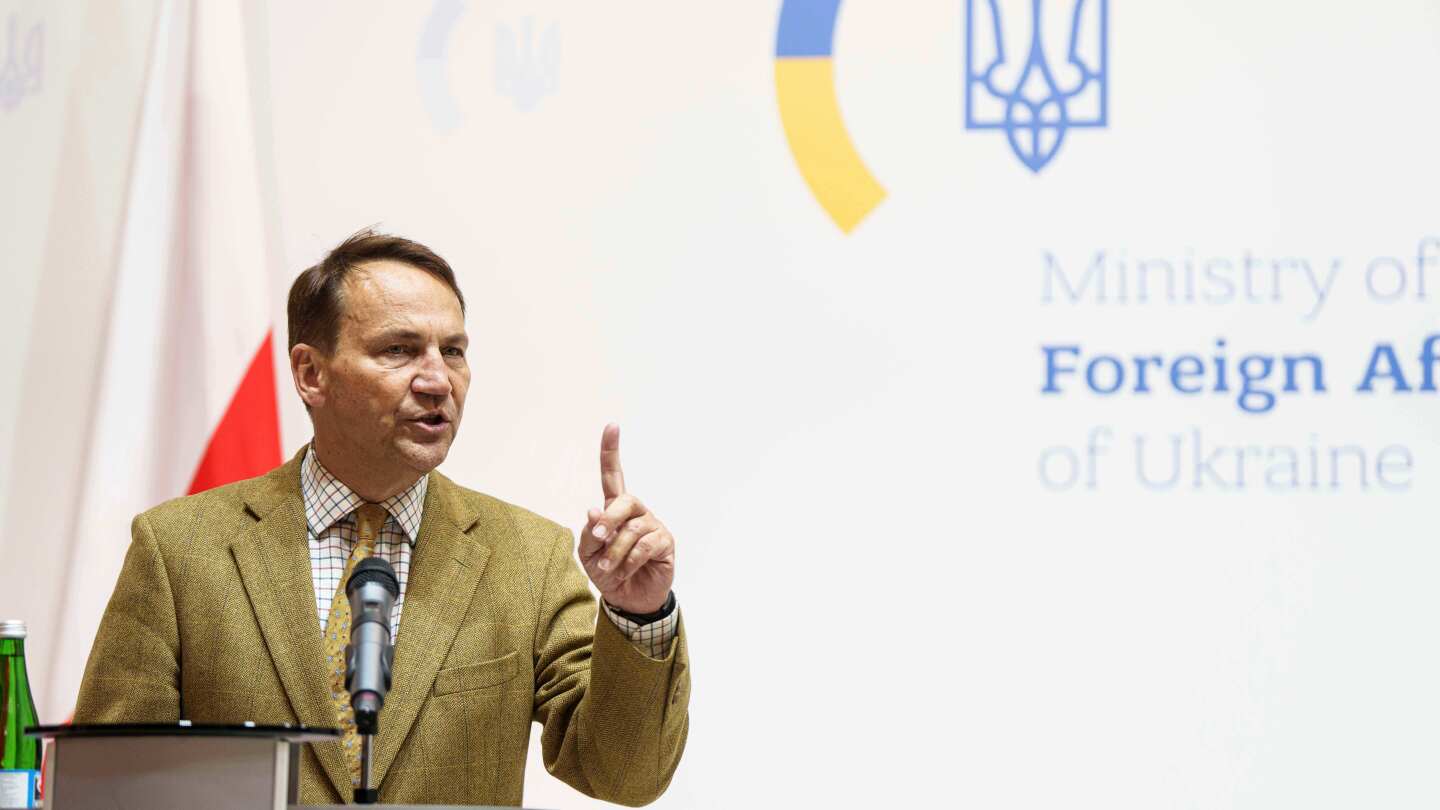
Poland’s Foreign Minister Radek Sikorski announced Monday that he is summoning the Israeli ambassador following a controversial social media post by Yad Vashem, Israel’s official Holocaust memorial institution.
The diplomatic tension arose after Yad Vashem stated on X (formerly Twitter) on Sunday that “Poland was the first country where Jews were forced to wear a distinctive yellow badge in order to isolate them from the surrounding population.”
Sikorski specifically called for Yad Vashem to revise its post and explicitly mention “German-occupied” Poland. The lack of this clarification touched a sensitive historical nerve in Polish-Israeli relations.
“Since the misleading post has not been amended, I am summoning the Israeli ambassador,” Sikorski stated on Monday, escalating what had begun as a social media dispute into a formal diplomatic issue.
In its original post, Yad Vashem described how on November 23, 1939, “Hans Frank, the governor of the Generalgouvernement issued an order that all Jews aged 10 and above must wear a white cloth armband 10 cm wide marked with a blue Star of David on their right arm.” The Generalgouvernement was the administrative unit established by Nazi Germany in occupied central Poland.
The controversy highlights Poland’s long-standing sensitivity to language that might suggest Polish complicity in Nazi crimes rather than emphasizing Poland’s status as an occupied territory. Nazi Germany invaded Poland in September 1939, marking the beginning of World War II, and established several major death camps on occupied Polish soil where millions of Jews and others were murdered.
Polish officials have consistently pushed back against phrases like “Polish death camps,” insisting on terminology such as “Nazi death camps in German-occupied Poland” to accurately reflect historical responsibility.
The previous nationalist government led by the Law and Justice (PiS) party had taken particularly strong measures on this issue, nearly implementing legislation that would have imposed prison sentences on those suggesting Polish complicity in Nazi crimes. This controversial 2018 law was later amended after international criticism, particularly from Israel and the United States.
Prime Minister Donald Tusk, whose centrist coalition came to power in December 2023 replacing the PiS government, also criticized Yad Vashem’s phrasing, demonstrating the cross-partisan nature of Polish sensitivity to historical narratives about the Holocaust.
In response to the initial backlash, Yad Vashem acknowledged on social media that “as noted by many users and specified explicitly in the linked article, it was done by order of the German authorities.” However, this clarification apparently fell short of what Polish officials deemed necessary.
The dispute occurs against a backdrop of periodically strained Polish-Israeli relations, particularly regarding Holocaust remembrance and interpretation. While Poland was home to Europe’s largest Jewish community before WWII—about 3.3 million people—approximately 90% of them perished in the Holocaust.
Poland points to the fact that, unlike other occupied territories, it never collaborated institutionally with the Nazis and its underground state punished Poles who collaborated. However, historical research has also documented instances of individual Poles who participated in anti-Jewish violence or denounced Jews to German authorities.
The current diplomatic tension demonstrates how historical memory remains politically charged in Central Europe, where interpretations of the Holocaust continue to influence contemporary diplomatic relations between Israel and countries that were under Nazi occupation.
Fact Checker
Verify the accuracy of this article using The Disinformation Commission analysis and real-time sources.

25 Comments
Nice to see insider buying—usually a good signal in this space.
Good point. Watching costs and grades closely.
Nice to see insider buying—usually a good signal in this space.
Good point. Watching costs and grades closely.
Good point. Watching costs and grades closely.
The cost guidance is better than expected. If they deliver, the stock could rerate.
If AISC keeps dropping, this becomes investable for me.
Uranium names keep pushing higher—supply still tight into 2026.
Good point. Watching costs and grades closely.
Good point. Watching costs and grades closely.
Interesting update on Poland’s foreign minister summons Israeli ambassador over Yad Vashem post. Curious how the grades will trend next quarter.
Good point. Watching costs and grades closely.
Good point. Watching costs and grades closely.
If AISC keeps dropping, this becomes investable for me.
Good point. Watching costs and grades closely.
Good point. Watching costs and grades closely.
Silver leverage is strong here; beta cuts both ways though.
Good point. Watching costs and grades closely.
Good point. Watching costs and grades closely.
Exploration results look promising, but permitting will be the key risk.
Good point. Watching costs and grades closely.
The cost guidance is better than expected. If they deliver, the stock could rerate.
Good point. Watching costs and grades closely.
Good point. Watching costs and grades closely.
Production mix shifting toward World might help margins if metals stay firm.