


Listen to the article
In Rwanda, Amputee Football Builds Community and Healing Following Historic Tragedy
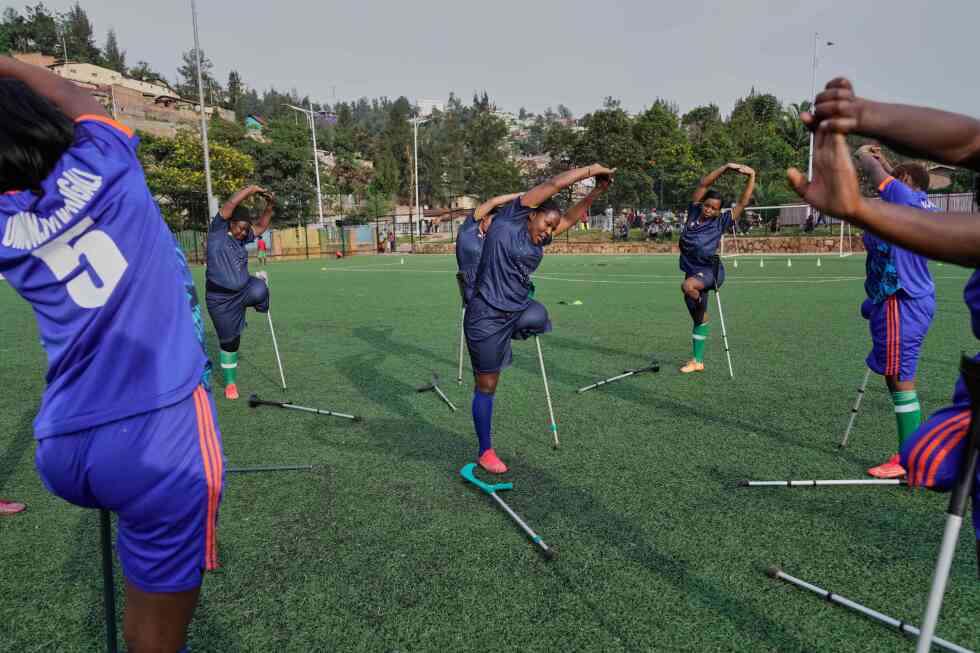
On a sunny Friday morning in Kigali, the rhythmic thud of a soccer ball echoes across the field as members of Rwanda’s national amputee football team practice their skills with remarkable agility. Players pivot on crutches, maintaining perfect balance while deftly maneuvering the ball with their remaining leg. Their faces reflect intense concentration, occasionally breaking into wide smiles when a well-executed move draws cheers from teammates.
Nearly three decades after Rwanda’s devastating 1994 genocide claimed over 800,000 lives in just 100 days, this group of athletes represents a powerful symbol of the nation’s resilience and ongoing journey toward healing.
“When I’m on the field, I forget everything else,” says Marie, a midfielder who lost her leg during childhood. “Here, we are not defined by what we’ve lost, but by what we can achieve together.”
Rwanda’s amputee football program has grown steadily in recent years, providing both physical rehabilitation and psychological support for participants. The sport, which requires outfield players to use crutches and play without prosthetics, has gained international recognition with formal competitions held around the world.
The Rwandan Football Federation (FERWAFA) has increasingly supported the development of amputee football, recognizing its unique ability to promote inclusion while helping change societal perceptions about disability. The national women’s team is now preparing with hopes of competing in next year’s Amputee Football World Cup.
“This sport creates a powerful sense of belonging,” explains Jean-Claude Niyonzima, the team’s head coach. “Many players come to us feeling isolated because of their disability. On this team, they discover new purpose and community.”
Team captain Emmanuel Ndayisaba says the sport has transformed his life. “Before joining the team, I struggled with depression. I felt like I had no future,” he explains while adjusting his shoe before practice. “Now I have brothers and sisters who understand my challenges, and together we show Rwanda and the world what is possible.”
The program faces significant challenges, including limited funding for specialized equipment and transportation costs to competitions. Most players rely on donated crutches, and the team often trains on uneven surfaces that increase injury risk. Despite these obstacles, the team’s spirit remains unbreakable.
Rwanda’s interest in amputee football reflects broader trends across Africa, where disability sports programs are expanding. Similar initiatives in countries like Angola, Sierra Leone, and Liberia—nations that have also experienced conflict—show how adaptive sports can play a vital role in post-conflict healing and community building.
International organizations including the International Committee of the Red Cross (ICRC) and various sports development NGOs have supported Rwanda’s amputee football movement, providing equipment and coaching expertise. However, local ownership of the program remains essential to its sustainability and cultural significance.
“What makes this team special is that it represents Rwanda’s journey,” says Marie-Claire Uwamahoro, a sports psychologist who volunteers with the team. “We have faced unimaginable tragedy as a nation, but we continue to move forward together. These players embody that spirit.”
The growth of women’s participation in amputee football marks a particularly significant development in Rwanda, where gender equality in sports has become a national priority. The women’s amputee team began as informal gatherings three years ago and has evolved into a structured program with weekly training sessions.
After practice, players often gather for community outreach activities, visiting schools and hospitals to share their stories and inspire others facing similar challenges. This aspect of their work holds special meaning for many team members.
“When children see us playing, their eyes light up,” says one player as she poses for a team selfie after training. “They learn that disability doesn’t mean inability. That message is as important as any match we could win.”
As Rwanda prepares to send representatives to next year’s Amputee Football World Cup, the team’s journey symbolizes more than athletic achievement. It represents the ongoing process of healing in a nation determined to build a future defined by unity and resilience rather than by its painful past.
For these athletes, every match is an opportunity to rewrite narratives—both personal and national—while finding joy, purpose and community through sport.
Fact Checker
Verify the accuracy of this article using The Disinformation Commission analysis and real-time sources.

20 Comments
I’m curious to learn more about the history and evolution of this amputee football program in Rwanda. It’s impressive to see how it has grown and gained recognition over the years.
Yes, it would be fascinating to understand the origins of the program and how it has adapted to best serve the needs of the participants over time.
It’s remarkable to see how these women have channeled their experiences into such a positive and empowering endeavor. Their resilience and determination are truly admirable.
Absolutely. Their ability to find strength and community through sport in the face of such adversity is profoundly inspiring.
This program seems to be having a profoundly positive impact, not just physically but also psychologically. Creating a supportive community is so important for those who have experienced such devastating loss.
Agreed, the community-building aspect is just as crucial as the physical rehabilitation. Teamwork and camaraderie can be powerful healing forces.
This program seems to be having a profound impact, not just on the individual participants but on the broader Rwandan community. It’s wonderful to see how it’s fostering a sense of unity and empowerment.
Absolutely. By creating a supportive community, this program is helping to heal wounds and build a more inclusive, resilient society.
Inspiring to see how amputee football is helping Rwandan women build community and heal after such a tragic history. Sports can be a powerful tool for rehabilitation and resilience.
Agreed, sports can do so much more than just entertain – they can bring people together and aid in the recovery process after trauma.
The photos capture the joy and camaraderie of these players so vividly. It’s clear that this program is providing them with more than just physical rehabilitation – it’s giving them a sense of purpose and belonging.
Agreed, the community-building aspect is just as crucial as the physical benefits. Sports can be a powerful tool for fostering connections and healing.
The photos really capture the joy and sense of empowerment these women feel on the field. It’s a powerful reminder that sport can be a transformative tool for those facing immense challenges.
Absolutely, the photos convey a palpable sense of pride and fulfillment. It’s heartening to see these athletes reclaiming their agency and finding strength in community.
This program seems to be a shining example of how sports can foster healing and resilience in the aftermath of conflict and tragedy. I hope it continues to grow and inspire others around the world.
Agreed, this could be a model for similar initiatives in other post-conflict regions. The transformative power of sport is undeniable.
The sheer athleticism and skill of these players is remarkable. Overcoming physical disabilities to excel at a sport like football is a testament to their determination and strength of spirit.
Absolutely. Their perseverance in the face of adversity is truly inspiring.
The sheer athleticism and skill of these players is a testament to the transformative power of sport. It’s heartening to see how this program has enabled them to reclaim their agency and find healing.
Well said. Sports can be a powerful tool for rehabilitation and personal growth, especially for those who have faced immense challenges.