


Listen to the article
Peruvian Military Film Sparks Debate About Historical Accuracy and Political Messaging
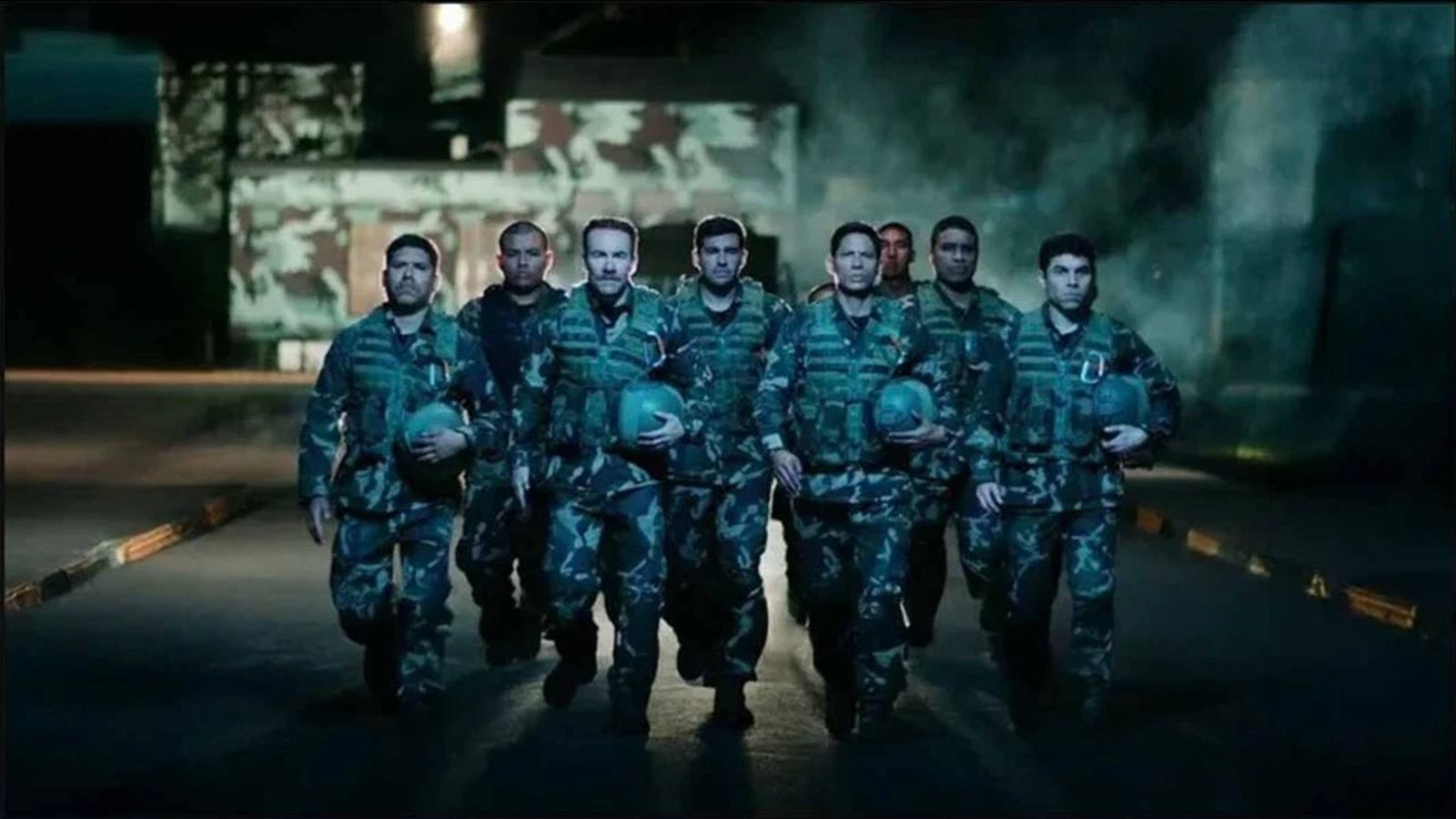
Netflix has added the Peruvian film “Chavín de Huántar: The Rescue of the Century” to its global catalog, bringing renewed attention to the controversial 1997 military operation that ended a hostage crisis at the Japanese embassy in Lima.
The film, which premiered in Peru last October, dramatizes the April 1997 rescue mission in which 195 Peruvian commandos freed 72 hostages who had been held for nearly five months by 14 members of the Túpac Amaru Revolutionary Movement (MRTA). While the operation resulted in the deaths of only one hostage and two soldiers, all 14 MRTA members were killed—with evidence suggesting some were summarily executed after being captured unarmed.
Produced with logistical support from the Peruvian Army, the film has become one of the biggest box-office successes in Peruvian cinema history. Critics argue, however, that it presents a sanitized version of events that glorifies the military while neglecting crucial historical and political context.
From an artistic standpoint, the film relies heavily on military action movie clichés. The protagonist, Juan Valer—one of the soldiers who died during the operation—is portrayed as a loving father who selflessly volunteers for the dangerous mission. Other squad members are depicted as heroic professionals willing to sacrifice themselves for their country.
What’s notably absent from the narrative is any substantive exploration of the MRTA’s origins or the sociopolitical conditions that led to the embassy siege. The guerrilla group emerged from a fusion of Castroite armed movements with petty-bourgeois nationalist and Stalinist tendencies. Nestor Cerpa Cartolini, who led the hostage-taking, began his political activity as a union leader whose previous factory occupation ended in violent government repression.
The film also fails to address the nature of Alberto Fujimori’s government at the time of the crisis. Initially elected as a populist outsider in 1990, Fujimori quickly abandoned his campaign promises and implemented severe neoliberal economic reforms. To push through these unpopular policies, he executed a “self-coup” in 1992, dissolving parliament and the judiciary to concentrate power in his hands.
By 1996, when the embassy siege began, the Fujimori regime was implicated in death squad massacres, numerous human rights violations, and widespread corruption. The Peruvian Army served as the backbone of this authoritarian government, having deployed tanks during the 1992 self-coup and provided personnel for the regime’s death squads.
The timing of the film’s release and promotion coincides with a period of profound political instability in Peru. The country is currently governed by a coalition of right-wing parties—including one led by Fujimori’s daughter, Keiko—that many Peruvians view as corrupt and self-serving. This “congressional mafia pact” has followed Fujimori’s playbook by concentrating political power through constitutional amendments, threatening judges and prosecutors, and removing democratically elected presidents.
Public approval for Peru’s congress has plummeted to between 4 and 6 percent—among the lowest in the world—following the 2023 parliamentary coup that ousted democratically elected president Pedro Castillo. Against this backdrop, some analysts suggest that the film represents an attempt by Peru’s ruling class to rehabilitate the image of the military and distract from ongoing political crises.
The government’s investment in the Chavín de Huántar narrative extends beyond cinema. In 2004, then-president Alejandro Toledo (now serving prison sentences for corruption) established the Chavín de Huántar Museum, which features a replica of the structure used to train for the embassy assault. More recently, President Dina Boluarte led the 27th anniversary ceremony of the operation in April 2024.
Boluarte also intervened to dismiss the director of the Place of Memory Museum after complaining it didn’t give adequate attention to Operation Chavín de Huántar. Critics noted this move may have been motivated by concerns that the museum would document the killing of 50 protesters in early 2023, when Boluarte issued a shoot-to-kill order to suppress demonstrations against Castillo’s ouster.
As “Chavín de Huántar: The Rescue of the Century” streams to a global audience, it serves as a reminder of how historical events can be reframed to serve contemporary political purposes, particularly during times of national instability and institutional crisis.
Fact Checker
Verify the accuracy of this article using The Disinformation Commission analysis and real-time sources.

12 Comments
This film seems to touch on an important but sensitive part of Peruvian history. While the military operation may have been successful in a tactical sense, the reports of extrajudicial killings are deeply troubling. I hope the film explores those darker aspects objectively.
Exactly, the film’s depiction of this event will be crucial in shaping public understanding. It needs to grapple with the moral ambiguities, not just celebrate the military’s triumph.
Interesting to see this controversial military rescue operation dramatized in film. While the operation succeeded in freeing hostages, the reports of summary executions raise concerning questions about human rights abuses. It will be important to examine the film’s portrayal of events objectively.
I agree, the historical accuracy and political messaging of this film warrant close scrutiny. Glorifying military action without addressing complex ethical issues could be seen as propaganda rather than balanced storytelling.
It’s interesting that this film has become a box office hit in Peru, despite the controversies surrounding the actual events. The military’s involvement in the production raises red flags about potential bias or whitewashing. I hope the filmmakers strived for impartiality in their portrayal.
Yes, the military’s support for this production is concerning. They may have sought to shape the narrative in their favor. Careful critical analysis of the film will be necessary to assess whether it offers a balanced, fact-based account or simply propaganda.
Dramatizing controversial historical events like this can be a double-edged sword. On one hand, it can bring greater attention to important issues. But on the other, there’s a risk of sanitizing or glorifying problematic actions. I’ll be curious to see how this film navigates that balance.
Well put. Striking the right balance between historical accuracy and dramatic storytelling is crucial. Responsible filmmaking on sensitive topics requires great care and nuance to avoid inadvertently promoting harmful narratives.
The Chavín de Huántar rescue operation was clearly a pivotal moment in Peruvian history, but one with a great deal of moral ambiguity. I hope this film takes an unflinching look at the complexities of the situation, rather than just celebrating the military’s success.
The Chavín de Huántar rescue operation was clearly a complex and contentious episode. This film could provide an opportunity to revisit and reexamine the historical record, but it will need to do so in a nuanced and balanced way. Glossing over human rights concerns would be a disservice.
Well said. Any dramatization of this event should aim to shed light on the full truth, not just reinforce a one-sided narrative. Nuance and objectivity will be key to making this a meaningful and valuable historical exploration.
This film touches on some complex geopolitical issues and human rights concerns that deserve nuanced treatment. While the hostage rescue mission may have achieved its tactical objectives, the reported extrajudicial killings are extremely troubling. I hope the filmmakers grapple with those darker aspects honestly.