


Listen to the article
Iran Claims Mojtaba Khamenei Recovering from Strike Injuries Amid Conflicting Reports
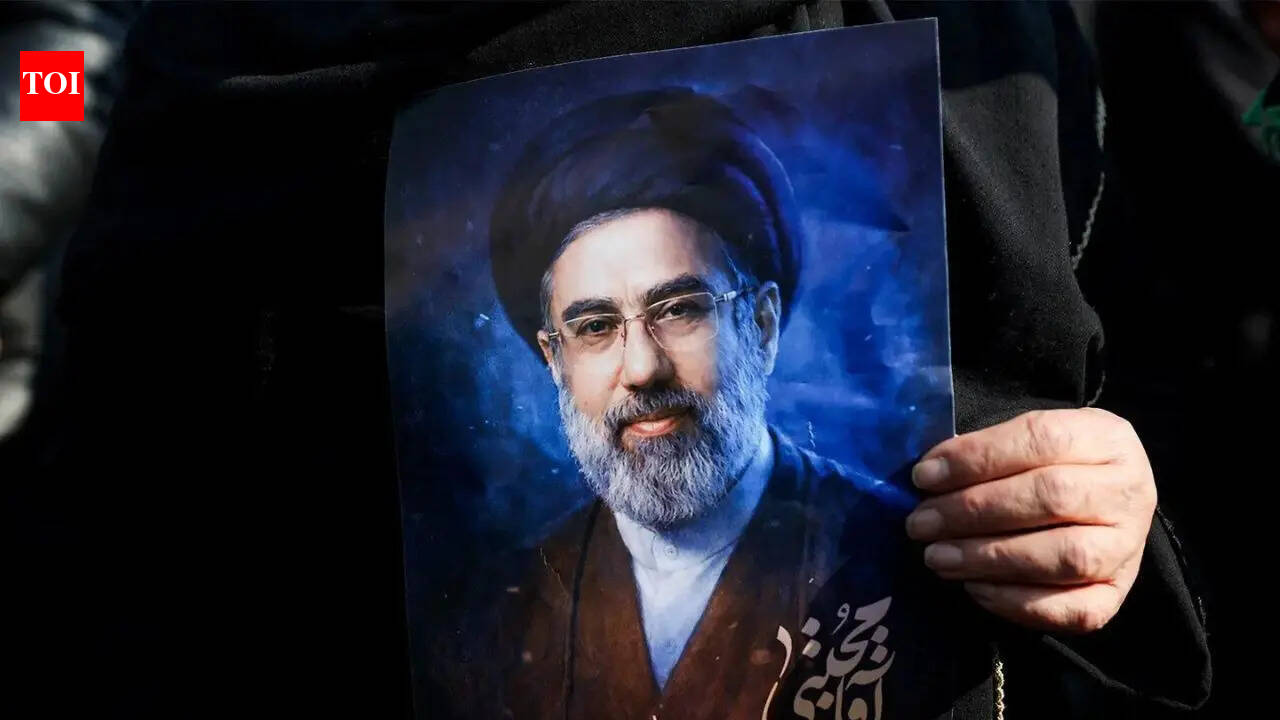
Iran’s Supreme Leader Mojtaba Khamenei is in “good health” and suffered only minor injuries during the February 28 strikes, according to senior Iranian officials who spoke on Friday. These statements come as international speculation mounts over his condition and ability to govern following the attack that reportedly killed his father, former Supreme Leader Ali Khamenei.
Mazaher Hosseini, head of protocol in the office of the supreme leader, provided specific details about the injuries, stating that Khamenei sustained damage to his kneecap, lower back, and the area behind his ear.
“During the attack, Khamenei was not in the place where the attack took place. They hit his home where his wife was killed. He was on his way, on the stairs, when the missile struck there. He was knocked to the ground by the blast,” Hosseini explained while addressing supporters, according to Iran International English.
The Iranian official insisted that Khamenei remains actively involved in state affairs despite his injuries. “Thank God, he is in good health. The enemy is spreading all kinds of rumors and false claims. They want to see him and find him, but people should be patient and not rush. He will speak to you when the time is right,” Hosseini added.
He acknowledged that “a small piece of shrapnel had hit him behind the ear” but emphasized that the wounds were healing and that Khamenei was now “in complete health.”
These official statements contrast sharply with international media reports about the 56-year-old cleric’s condition. Reuters reported earlier this month, citing three sources familiar with Khamenei’s inner circle, that he had suffered severe facial injuries and serious wounds to one or both legs during the strike on the supreme leader’s compound in central Tehran.
The Reuters report also claimed that several members of Khamenei’s family, including his wife and close relatives, were killed in the attack alongside his father, Ali Khamenei.
Despite these reported injuries, Khamenei allegedly remains mentally alert and continues participating in major state decisions through audio conferences, including discussions related to the ongoing regional conflict and negotiations with Washington.
A separate CNN report, citing US intelligence assessments, indicated that Mojtaba Khamenei has emerged as a central figure in shaping Iran’s war and negotiation strategy following recent US and Israeli strikes. The report noted that US intelligence agencies have not visually confirmed Khamenei’s whereabouts since he assumed leadership after his father’s death.
CNN further reported that Khamenei is avoiding electronic communication and relying instead on trusted couriers and face-to-face meetings while undergoing medical treatment for burns and other injuries affecting parts of his face, arm, torso, and leg.
The uncertainty surrounding Khamenei’s condition comes at a critical moment for Iran’s foreign relations. In a parallel development, US President Donald Trump stated on Friday that the United States expected to receive a response from Iran regarding Washington’s proposal aimed at ending the ongoing Middle East conflict.
“We’ll hear from them supposedly tonight,” Trump told reporters before traveling to Virginia. When asked if Iran was deliberately delaying the process, he responded, “We’ll find out soon enough.”
Trump also contested characterizations of the US proposal as merely a “one-page offer” to Iran. “Well, it’s more than a one-page offer. It’s an offer that basically said they will not have nuclear weapons; they are going to hand us the nuclear dust and many other things that we want,” he explained.
When questioned about whether Iran had accepted these terms, Trump expressed skepticism about Iranian commitments: “They have agreed. When they agree, it doesn’t mean much because the next day they forget they agreed.”
The situation highlights the complex dynamics of Iran’s internal power structure following the reported death of Ali Khamenei and the continuing tensions between Tehran and Washington as regional conflicts persist.
Fact Checker
Verify the accuracy of this article using The Disinformation Commission analysis and real-time sources.

18 Comments
This is a highly complex and sensitive situation. While I hope Khamenei is recovering, the reliability of the Iranian government’s claims is questionable. Transparent, impartial investigation is needed to establish the facts.
Agreed. Relying solely on information from either side is problematic – we need objective, verifiable reporting to understand what truly happened.
Injuries to a top Iranian leader would certainly have significant implications. However, the conflicting information makes it hard to assess the situation accurately. I’ll be interested to see if any independent sources can corroborate the details provided by Iranian officials.
Claims of injuries to high-profile Iranian figures are always worth scrutinizing. Given the tensions in the region, I’ll be keeping an eye on reliable international news coverage to understand the evolving situation better.
The situation seems highly complex and politically charged. It’s prudent to withhold judgment until more facts are known. I wonder what the geopolitical implications could be if the reported injuries to Khamenei are confirmed.
The potential injuries to Khamenei raise significant questions about power dynamics and succession in Iran. However, I would hesitate to draw firm conclusions without more corroborating evidence from diverse and impartial sources.
While the reports of injuries to Khamenei are intriguing, I think it’s wise to approach them with caution. Verifying claims from authoritarian regimes can be challenging. I’m interested to see if other credible sources can shed more light on this development.
The specifics provided by the Iranian officials are quite detailed, but the conflicting information makes it difficult to know what actually occurred. I hope the situation can be clarified through credible, independent reporting.
The details provided by the Iranian officials seem quite specific, but the conflicting reports make it hard to assess the situation. I’m curious to see if more independent information emerges in the coming days.
Agreed, transparency and objective reporting will be key to understanding what actually occurred. Speculation without confirmed facts is not very helpful.
Interesting developments in Iran. While concerning if true, it’s important to verify claims from all sides before drawing conclusions. I’m curious to see if more details emerge from independent sources to corroborate the Iranian government’s account.
Injuries to senior Iranian officials could have far-reaching geopolitical implications. I’m curious to see how this story unfolds and whether independent verification can shed more light on the situation.
This is a complex geopolitical situation with high stakes. While I hope Khamenei is recovering, the reliability of the Iranian government’s claims is questionable given their history. More neutral verification would be ideal.
This is a concerning development, if true. I hope Khamenei is recovering well and that the situation can be resolved peacefully. Conflicting reports make it hard to know the full truth of what happened.
Yes, it’s important to be cautious about claims from either side given the political tensions. Verifying the facts will be crucial.
Any reports of violence or instability in Iran are concerning. I’ll be closely monitoring reliable news sources to better understand the facts and potential ramifications of this incident, if confirmed.
The reports of Khamenei’s injuries are concerning, but the lack of clarity on what actually happened is troubling. I hope the truth can be established through transparent and impartial investigation, rather than relying solely on claims from either side.
Absolutely. Objective verification of the facts is critical in a tense geopolitical environment like this.