


Listen to the article
Pakistan’s President Defends Military Strikes in Afghanistan Amid Escalating Border Tensions
Pakistan’s president on Monday staunchly defended his country’s military operations in Afghanistan, asserting that Islamabad exhausted all diplomatic channels before resorting to strikes against militant groups operating from Afghan soil. In an address to lawmakers, President Asif Ali Zardari urged Afghanistan’s Taliban government to disarm groups responsible for cross-border attacks targeting Pakistan.
“No state accepts serial attacks on its soil,” Zardari declared, emphasizing that the Taliban leadership in Kabul “must choose to dismantle the terror groups that survive on conflict and its war economy.”
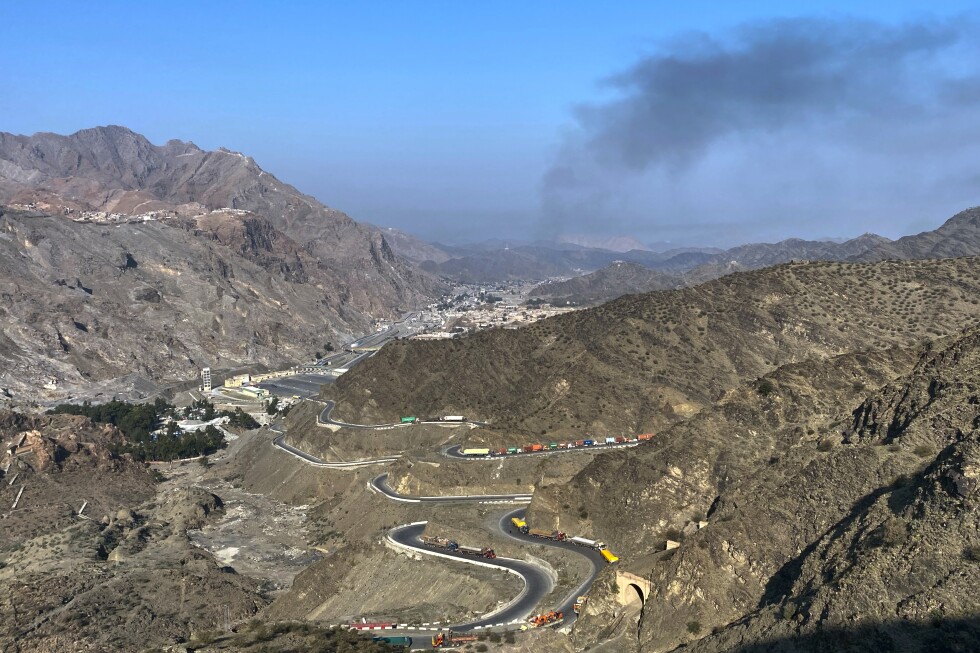
The situation has deteriorated rapidly in recent days, with Pakistan characterizing the conflict as an “open war” with Afghanistan, raising significant concerns within the international community. The volatile border region continues to serve as a sanctuary for militant organizations, including al-Qaida and Islamic State affiliates.
Tensions escalated dramatically last week when Afghanistan launched retaliatory strikes on Thursday in response to Pakistani airstrikes conducted the previous Sunday. Since then, Pakistan has intensified military operations along the shared border. Information Minister Attaullah Tarar claimed Pakistani forces had killed 435 Afghan fighters and captured 31 Afghan positions during these operations, allegations that Kabul has categorically denied.
The human cost of the conflict continues to mount. Afghanistan’s deputy government spokesman Hamdullah Fitrat reported that Pakistani military forces fired mortar shells at a refugee camp in eastern Kunar province, resulting in the deaths of three children and injuries to three others. Meanwhile, Afghanistan’s defense ministry stated that Afghan forces conducted strikes against a Pakistani military facility near Paktia province, inflicting “substantial losses and heavy casualties.”
Pakistan’s military has not responded directly to these allegations but maintains it is only targeting Afghan military installations to minimize civilian casualties.
The root of the current crisis lies in Pakistan’s struggle against the Tehreek-e-Taliban Pakistan (TTP), also known as the Pakistani Taliban. The country has experienced a significant surge in violence in recent months, which Islamabad attributes to TTP militants operating both within Pakistan and from Afghan territory. Pakistani officials have consistently accused Afghanistan’s Taliban government of providing safe havens for the TTP, a claim that Kabul vehemently denies.
This latest round of cross-border fighting has effectively terminated a ceasefire previously brokered by Qatar and Turkey in October. Despite efforts to reach a lasting agreement during negotiations in Istanbul, the two neighboring countries have been unable to establish a permanent resolution to their differences.
During his address, Zardari reiterated Pakistan’s willingness to engage in dialogue, stating, “We have never walked away from talks.” However, he also leveled serious accusations against Afghanistan, claiming it serves as a proxy for India by harboring militant groups that target Pakistan. “Stop being used by another country as a battlefield for their ambitions,” he urged Afghan authorities.
To bolster his argument, Zardari referenced a recent report from the United Nations Security Council’s monitoring team that described the presence of militant groups in Afghanistan as posing an extra-regional threat to stability.
The escalating conflict comes at a particularly challenging time for both countries. Pakistan faces severe economic difficulties alongside its security challenges, while Afghanistan continues to struggle with international isolation and humanitarian crises since the Taliban returned to power in 2021.
Regional experts warn that prolonged hostilities could further destabilize the already fragile region, potentially creating new opportunities for extremist groups to expand their influence. The international community has called for restraint from both sides and urged a return to dialogue as the only sustainable path toward resolving the deep-seated tensions between the neighboring states.
Fact Checker
Verify the accuracy of this article using The Disinformation Commission analysis and real-time sources.

6 Comments
Pakistan’s president makes a fair point about the need to address cross-border attacks originating from Afghan soil. However, unilateral military action carries significant risks and may further inflame regional tensions. All parties should prioritize de-escalation and work towards a negotiated settlement that addresses the root causes of the conflict.
The situation along the Pakistan-Afghanistan border is undoubtedly complex, with valid grievances on both sides. However, the escalation of military strikes is deeply concerning and risks further destabilizing an already volatile region. All parties should prioritize de-escalation and a negotiated settlement that addresses the complex drivers of the conflict.
Resolving the tensions between Pakistan and Afghanistan will require nuanced diplomacy and a willingness to address the legitimate concerns of both sides. While the Taliban’s refusal to dismantle militant groups is concerning, a military-first approach is unlikely to yield lasting peace in the volatile border region.
The ongoing border tensions between Pakistan and Afghanistan are deeply concerning. While each side has grievances, the escalating military strikes are unlikely to resolve the complex issues at hand. A diplomatic solution focused on dismantling militant groups and securing the volatile border region would be the wisest path forward.
While Pakistan’s president raises legitimate concerns about cross-border attacks, the continued reliance on military strikes is unlikely to resolve the underlying issues. A comprehensive regional strategy that prioritizes diplomacy, counter-terrorism cooperation, and economic development would be a more effective approach to addressing the complex challenges in this border region.
The ongoing conflict between Pakistan and Afghanistan is deeply concerning, with valid grievances on both sides. While Pakistan’s president may have a point about the need to address cross-border attacks, military strikes are unlikely to provide a sustainable solution. A renewed diplomatic push, focused on dismantling militant groups and addressing the root causes of the conflict, would be a more constructive path forward.