


Listen to the article
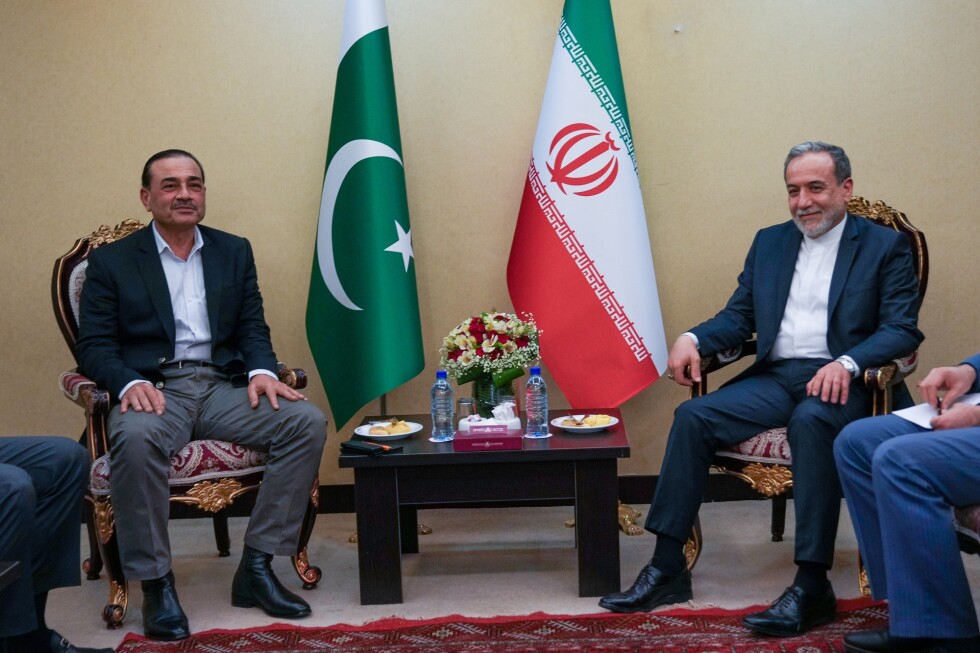
Pakistan’s army chief traveled to Tehran on Wednesday to meet with Iran’s foreign minister, marking the latest diplomatic effort to ease Middle East tensions and broker a second round of U.S.-Iran negotiations after nearly seven weeks of conflict. The talks come as a U.S. naval blockade of Iranian ports continues for a third day, with the Trump administration threatening new economic sanctions on countries doing business with Iran.
The White House indicated that any future talks would likely take place in Islamabad, Pakistan’s capital, though no final decision has been made on resuming negotiations. Pakistan has emerged as a key mediator in the conflict after hosting rare direct talks between U.S. and Iranian officials, which authorities claim helped narrow differences between the opposing sides.
The Pakistani military delegation to Iran included the country’s interior minister and senior security officials, although specific details of the discussions were not disclosed. Meanwhile, regional officials speaking anonymously told The Associated Press that the United States and Iran have reached an “in principle agreement” to extend the current ceasefire, which is scheduled to expire next Tuesday.
Iran’s Foreign Minister Abbas Araghchi participated in preliminary discussions with Pakistan’s Army Chief of Staff Asim Munir, with talks expected to continue Thursday, according to Iranian state media. Despite these diplomatic efforts, tensions remain high as Ali Abdollahi, commander of Iran’s joint military command, threatened to halt regional trade if the United States does not lift its naval blockade.
The economic pressure on Iran intensified as U.S. Treasury Secretary Scott Bessent warned that countries and private companies could face sanctions for conducting business with Tehran. White House Press Secretary Karoline Leavitt stated that the U.S. had not “formally requested an extension of the ceasefire” but remains “very much engaged” in ongoing negotiations.
Mediators are working to find compromises on three major sticking points that derailed previous direct talks: Iran’s nuclear program, navigation rights in the Strait of Hormuz, and compensation for wartime damages. Iranian Foreign Ministry spokesman Esmail Baghaei indicated that Iran is open to discussing its uranium enrichment activities but insisted that the country “must be able to continue enrichment” based on its needs.
The U.S. negotiating team, led by Vice President JD Vance, has urged Iran to agree to a 20-year moratorium on uranium enrichment as part of a potential deal to end the war. Iranian negotiators countered with an offer to suspend enrichment for five years, a proposal the White House rejected.
The human toll of the conflict continues to mount, with at least 3,000 people killed in Iran, more than 2,100 in Lebanon, 23 in Israel, and over a dozen in Gulf Arab states. Thirteen U.S. service members have also lost their lives.
The war has significantly disrupted global markets and the international economy. Shipping routes have been severed, and airstrikes have damaged military and civilian infrastructure throughout the region. However, oil prices have declined amid hopes for a diplomatic resolution, and U.S. stocks on Wednesday surpassed records set in January.
President Donald Trump expressed optimism about the negotiations, stating in an interview with Fox Business Network that Iran wants “to make a deal very badly.” He also claimed in a social media post that China has agreed not to provide weapons to Iran, despite long-standing Chinese support for Iran’s ballistic missile program.
U.S. Central Command reported that no ships have successfully penetrated the blockade in its first 48 hours, with nine merchant vessels complying with U.S. forces’ instructions to turn around and reenter Iranian waters. The blockade aims to cut off Iran’s oil exports, which have continued despite sanctions, providing vital revenue to the Iranian government.
Since the conflict began on February 28, Iran has restricted maritime traffic through the Strait of Hormuz, a critical passage for approximately one-fifth of global oil transits during peacetime. This effective closure sent oil prices soaring and increased costs for fuel, food, and other essential goods worldwide.
Meanwhile, Israel continues its military operations in Lebanon, with the country’s National News Agency reporting airstrikes and artillery shelling throughout southern Lebanon on Wednesday. Israeli Prime Minister Benjamin Netanyahu stated that Israeli troops were close to “eliminating this great stronghold of Hezbollah” in Bint Jbeil and would continue expanding control in southern Lebanon.
The fighting persists despite Israeli and Lebanese officials concluding their first direct talks in decades. Netanyahu confirmed that negotiations are ongoing, with disarming Hezbollah remaining a key objective for Israel.
The Lebanese Health Ministry reported that Israeli strikes hit three paramedic teams in southern Lebanon on Wednesday, killing three medical workers and wounding six others. Israel did not immediately respond to requests for comment on these incidents.
Israel and Lebanon have technically remained at war since Israel’s establishment in 1948, with Lebanon deeply divided over diplomatic engagement with its southern neighbor.
Fact Checker
Verify the accuracy of this article using The Disinformation Commission analysis and real-time sources.

16 Comments
It’s encouraging to see the possibility of an ‘in principle agreement’ to extend the current ceasefire. Even small steps towards de-escalation can pave the way for more substantive negotiations.
Maintaining the ceasefire would be an important confidence-building measure as the parties explore a path forward. Let’s hope this leads to a broader diplomatic breakthrough.
While the details of the discussions remain unclear, the very fact that these talks are taking place is a positive sign. Any progress towards easing regional tensions should be welcomed.
Absolutely. Even if the specifics are not yet public, the mere fact that the parties are engaging in diplomacy is an important step in the right direction.
Interesting development in the ongoing tensions between Pakistan and Iran. Diplomatic efforts to ease Middle East conflicts are always welcome, though the details of these discussions will be closely watched.
Indeed, with the US naval blockade and threat of new sanctions, any progress towards negotiation and conflict resolution would be a positive step.
This development highlights the complex geopolitical dynamics at play in the Middle East. Pakistan’s role as a mediator could prove critical in navigating the delicate balance of interests and finding a path forward.
Indeed, Pakistan’s unique position as a country with ties to both the US and Iran makes it well-suited to facilitate dialogue and potentially broker a compromise solution.
The potential for Pakistan to host future US-Iran negotiations is an intriguing prospect. Neutral ground could help create an environment more conducive to productive discussions and conflict resolution.
Agreed. Neutral mediation in a neutral location may be the best way to make progress and find a diplomatic solution to this longstanding regional conflict.
The proposed move to hold future talks in Islamabad is an intriguing development. Pakistan’s neutrality in this conflict could prove valuable in facilitating constructive dialogue.
Absolutely. Neutral ground for the negotiations may be key to making meaningful progress and reducing tensions.
This could be an important opportunity for Pakistan to leverage its position as a regional mediator. Bringing the US and Iran back to the negotiating table could help stabilize the volatile situation.
Agreed. Pakistan’s role as an intermediary is crucial, given the high stakes involved for the entire region.
The Pakistani delegation’s meeting with Iranian officials underscores the country’s strategic importance in the region. Islamabad’s willingness to engage with both sides could be crucial for diffusing the crisis.
Agreed. Pakistan’s position as a neutral broker with ties to both the US and Iran makes it well-placed to facilitate dialogue and potentially broker a compromise solution.