


Listen to the article
Ukraine’s allies have announced a massive new military aid package, including 120,000 drones from the United Kingdom, as Russia intensifies its aerial assault campaign with hundreds of drones and ballistic missiles in overnight strikes against Ukrainian territory.
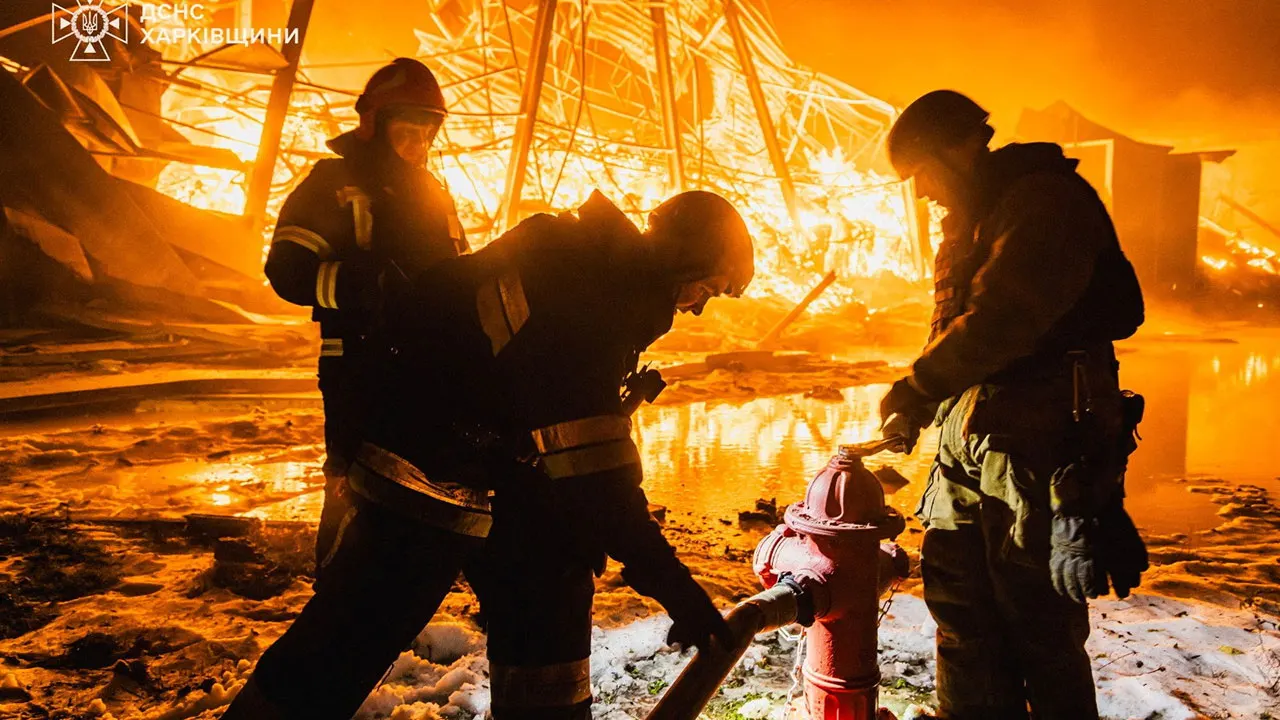
The commitments came during a critical period as Ukrainian officials warned of escalating Russian bombardments and made urgent appeals for enhanced air defense systems. According to Ukrainian authorities, Russia launched 324 drones and three ballistic missiles in a single overnight assault on Wednesday, part of what military analysts describe as a broader surge in aerial attacks targeting civilian and critical infrastructure.
Russian strikes have hit more than half a dozen areas of Ukraine behind the front lines over Tuesday and Wednesday alone, according to multiple reports. The intensity of the campaign was highlighted by Ukrainian Defense Minister Mykhailo Fedorov, who revealed that between November and March, Moscow had deployed approximately 27,000 Shahed-type drones, nearly 600 cruise missiles, and 462 ballistic missiles against Ukrainian targets.
“Every day we need air defense missiles—every day Russia continues its strikes,” Ukrainian President Volodymyr Zelenskyy said in a post on Telegram, underscoring the urgent need for defensive capabilities.
The human toll of these attacks continues to mount. Recent strikes killed an 8-year-old boy in the central Cherkasy region and injured a woman in southern Zaporizhzhia, according to Ukrainian officials. These casualties add to the growing civilian death toll in a conflict that has now stretched beyond three years since Russia’s full-scale invasion began in February 2022.
In response to Ukraine’s deteriorating security situation, defense leaders from approximately 50 countries convened virtually on Wednesday to coordinate military aid and boost weapons production, with a particular emphasis on air defense systems. The session was co-chaired by German Defense Minister Boris Pistorius and British Defense Secretary John Healey, with NATO Secretary-General Mark Rutte also participating. The United States was represented by Under Secretary of Defense for Policy Elbridge Colby.
Several countries announced significant new contributions during the meeting. Germany and Ukraine agreed on a substantial 4 billion-euro ($4.7 billion) defense package, while Norway pledged an even larger commitment of 9 billion euros (approximately $10.6 billion) in assistance. The Netherlands announced it would spend 248 million euros ($293 million) to produce drones specifically for Ukraine’s defense forces.
Perhaps most notably, the United Kingdom committed to supplying 120,000 drones to bolster Ukraine’s capabilities against Russian forces. This represents one of the largest single drone packages provided to Ukraine since the war began and signals the growing importance of unmanned systems in the evolving conflict.
Russia has responded forcefully to these expanded support measures. The Russian Defense Ministry warned that European efforts to increase drone production for Ukraine risk deepening their involvement in the conflict. Russian state media quoted defense officials characterizing the decisions by European countries as leading to an escalation of the military-political situation and a “creeping transformation” of Europe into Ukraine’s strategic support base.
The intensification of Russian aerial assaults comes as Ukraine faces increasing challenges on multiple fronts. Military analysts suggest Russia is attempting to overwhelm Ukrainian air defenses through sheer volume of attacks while simultaneously targeting energy infrastructure as Ukraine heads into the colder months.
This latest round of international support underscores the continued commitment of Ukraine’s Western partners, even as the conflict approaches its fourth year with no resolution in sight. However, defense experts note that the sustainability of both military aid and Ukraine’s defensive capabilities remains a critical concern as Russia demonstrates its willingness to pursue a long-term war of attrition.
The ongoing drone and missile exchanges have become a defining feature of the conflict, with both sides developing increasingly sophisticated unmanned systems and countermeasures. As winter approaches, protecting civilian infrastructure from aerial attacks will likely become an even more pressing priority for Ukrainian defense forces and their international backers.
Fact Checker
Verify the accuracy of this article using The Disinformation Commission analysis and real-time sources.

30 Comments
Exploration results look promising, but permitting will be the key risk.
Good point. Watching costs and grades closely.
The cost guidance is better than expected. If they deliver, the stock could rerate.
Exploration results look promising, but permitting will be the key risk.
Good point. Watching costs and grades closely.
The cost guidance is better than expected. If they deliver, the stock could rerate.
Good point. Watching costs and grades closely.
Good point. Watching costs and grades closely.
Silver leverage is strong here; beta cuts both ways though.
If AISC keeps dropping, this becomes investable for me.
Good point. Watching costs and grades closely.
Good point. Watching costs and grades closely.
Uranium names keep pushing higher—supply still tight into 2026.
Good point. Watching costs and grades closely.
Good point. Watching costs and grades closely.
Silver leverage is strong here; beta cuts both ways though.
Interesting update on Allies Rush Thousands of Drones to Ukraine Amid Russian Missile Onslaught. Curious how the grades will trend next quarter.
Good point. Watching costs and grades closely.
Good point. Watching costs and grades closely.
Silver leverage is strong here; beta cuts both ways though.
Uranium names keep pushing higher—supply still tight into 2026.
Good point. Watching costs and grades closely.
Uranium names keep pushing higher—supply still tight into 2026.
Good point. Watching costs and grades closely.
If AISC keeps dropping, this becomes investable for me.
Good point. Watching costs and grades closely.
Good point. Watching costs and grades closely.
Uranium names keep pushing higher—supply still tight into 2026.
Good point. Watching costs and grades closely.
Good point. Watching costs and grades closely.