


Listen to the article
The U.S. Navy’s blockade against Iran is showing early signs of effectiveness, as vessels linked to Iran have been forced to halt or reverse course after attempting to leave the Persian Gulf. According to Admiral Brad Cooper, head of U.S. Central Command, the blockade that began Monday “has been fully implemented” and has “completely halted economic trade going in and out of Iran by sea.”
This maritime enforcement action represents a significant escalation in tensions and could place substantial economic pressure on Iran’s economy. It comes in response to Iran’s earlier disruption of shipping through the strategically vital Strait of Hormuz, which has sent global energy prices climbing amid the ongoing conflict.
“U.S. forces have completely halted economic trade going in and out of Iran by sea,” Cooper stated. The blockade is being enforced beyond the Strait of Hormuz in the Gulf of Oman, with the U.S. military observing vessels departing Iranian facilities before intercepting them once they’ve cleared the strait.
The U.S. Central Command reported Wednesday that no vessels had managed to bypass the blockade during its first 48 hours of operation. Ten vessels have already complied with directions to turn around and return toward Iranian ports or coastal areas. Navy warships are communicating directly with merchant ships, making it clear they are prepared to board vessels and use force if necessary to ensure compliance.
Shipping data confirms the blockade’s impact. Ana Subasic, trade risk analyst at data firm Kpler, noted that on Tuesday, only eight vessels—most linked to Iran or under sanctions—transited the strait. “Most of the vessels have appeared to halt or have reduced movement after clearing the strait,” she said, “which tells us that the effect of the blockade is starting to show up.”
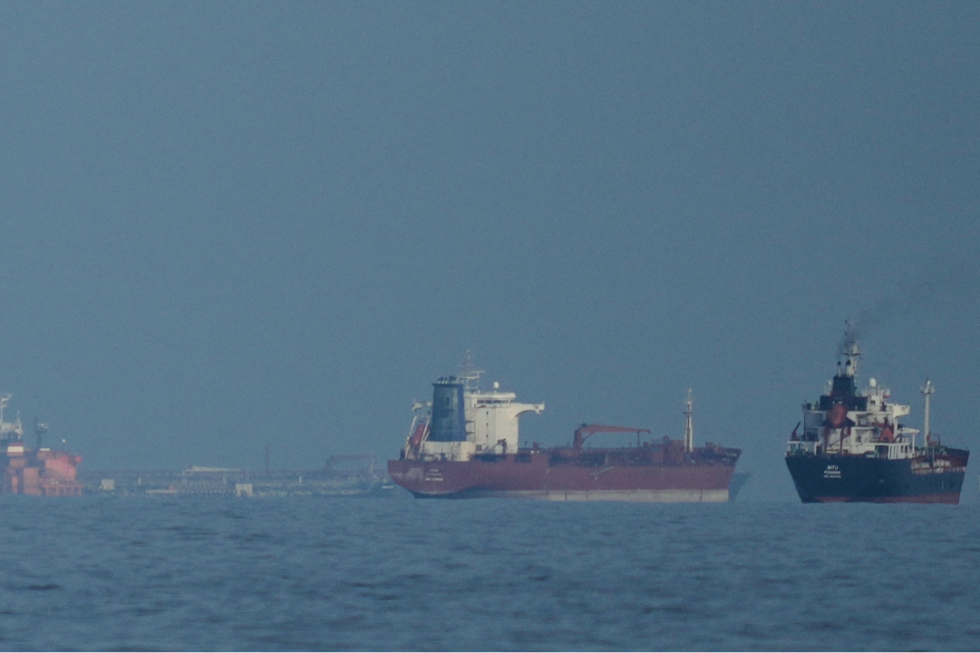
Maritime tracking data reveals several vessels attempting to evade detection or changing course after encountering the blockade. The Rich Starry, a Chinese-owned tanker previously sanctioned by the U.S. for smuggling Iranian petroleum products, entered the Persian Gulf empty on April 4, turned off its transponder for over a week—a common tactic called “running dark”—then reappeared laden with oil before abruptly reversing course after passing through the strait.
Similarly, the oil-products tanker Elpis departed Iranian waters Monday, passed through the strait, then cut its engines in the Gulf of Oman before disabling its radio transponder on Tuesday.
Maritime intelligence firm Windward described vessel behavior as “indicating a fragmented and uneven response to the blockade” as sanctioned vessels continued to be active, with some transiting the strait while others delayed or reversed course.
The U.S. blockade comes as a direct response to Iran’s effective closure of the Strait of Hormuz through threats against shipping. Iran’s actions had blocked approximately 20% of the world’s typical daily oil consumption, causing oil prices to surge and prompting warnings about higher inflation and possible recessions in major economies. Vessels had been attacked with aerial and undersea drones and unknown projectiles, killing 11 crew members, and causing ship traffic to drop by more than 90%.
While some oil from Gulf producing nations has been rerouted through pipelines to the Red Sea and Gulf of Oman, these alternative routes cannot compensate for the effective closure of the strait. Iran has also begun vetting the few vessels still attempting passage, requiring detailed information on cargo and crew to be submitted to the Revolutionary Guard and imposing a $1 fee per barrel of oil or fuel products.
The terms of the U.S. blockade allow for exceptions, creating some uncertainty in maritime operations. According to notices to mariners, the blockade permits “humanitarian shipments including food and medical supplies essential for the survival of the civilian populations” to pass with inspections, aligning with international law on naval warfare. “Neutral” ships may also pass after inspection, though the definition of “neutral” remains unclear.
Iran has responded with threats of its own. On Wednesday, the commander of Iran’s joint military command warned that Iran would completely block exports and imports across the entire Persian Gulf region, Sea of Oman, and Red Sea if the U.S. does not lift its blockade. “Iran will act with strength to defend its national sovereignty and its interests,” Ali Abdollahi stated, adding that the U.S. blockade represents “a prelude to violating the ceasefire.”
The standoff carries significant implications for Iran’s economy. Without the ability to export oil, the country’s storage facilities will eventually fill, forcing it to shut down wells that are difficult to restart. Additionally, Iran relies on gasoline imports due to insufficient domestic refinery capacity.
Fact Checker
Verify the accuracy of this article using The Disinformation Commission analysis and real-time sources.

16 Comments
This blockade is a significant escalation by the US, and I’m concerned about the potential for miscalculation or retaliation from Iran. While pressuring Iran’s economy may be the goal, disrupting global energy supplies and risking a wider conflict seems very risky. Diplomatic efforts should be redoubled.
I agree, this blockade could have far-reaching and unpredictable consequences. Cooler heads need to prevail, and both sides should focus on diplomatic solutions to ease tensions rather than resort to military confrontation.
The US sea blockade on Iran is a bold and risky move that could backfire. While it may disrupt Iran’s trade, it also risks disrupting global energy markets and provoking a strong response from Iran. Diplomacy should be the top priority to find a peaceful resolution to this conflict.
Absolutely. Escalating the situation through military means rarely leads to positive outcomes. Diplomatic efforts to find a mutually acceptable solution should be the focus, rather than further antagonizing Iran and risking an uncontrolled spiral of retaliation.
Interesting development in the ongoing tensions between the US and Iran. The sea blockade seems like a bold move, but I wonder about the long-term economic impacts on both sides. Could this lead to further escalation or will diplomacy prevail?
You raise a good point. This blockade could have far-reaching consequences for Iran’s economy and global energy markets. It will be critical to monitor how Iran responds and whether this leads to an easing or worsening of the conflict.
The US appears to be ratcheting up the pressure on Iran through this sea blockade. While it may disrupt Iran’s trade, I’m concerned about the potential for unintended consequences and further destabilization in the region. Diplomacy should still be the priority.
I agree, the blockade is a risky move that could backfire. Diplomatic solutions should be the focus, as military escalation could have severe humanitarian and economic costs for the whole region.
This blockade is a bold move by the US, but I worry it may only provoke a stronger response from Iran. Disrupting their seaborne trade could really hurt their economy, but Iran may feel compelled to retaliate in unpredictable ways. De-escalation should be the priority here.
You’re right, Iran may see this as an act of war and feel compelled to respond forcefully. Keeping communication channels open and pursuing diplomatic solutions would be the wisest path forward to avoid a dangerous spiral of retaliation.
While I understand the US is seeking to exert economic pressure on Iran, this sea blockade seems like a very risky move. Disrupting global energy markets and provoking Iran could lead to a dangerous cycle of retaliation. Cooler heads need to prevail, and diplomatic efforts should be the top priority.
Absolutely, diplomacy should be the focus here. Escalating tensions through military means often leads to unintended consequences that can be difficult to control. Both sides need to exercise restraint and work towards a peaceful resolution, rather than risk further destabilizing the region.
This sea blockade is a significant escalation by the US, and I worry it could have unintended consequences. Disrupting Iran’s seaborne trade may put economic pressure on them, but it also risks destabilizing global energy markets and provoking a strong response from Iran. Diplomacy should be the priority.
You make a good point. Maintaining open communication channels and pursuing diplomatic solutions should be the focus, rather than further antagonizing Iran through military means. The risks of miscalculation and retaliation are simply too high in this volatile situation.
While I understand the US is trying to exert economic pressure on Iran, this sea blockade seems like a very risky move that could backfire. Disrupting global energy markets and provoking Iran further is a dangerous game. Cooler heads need to prevail and find a diplomatic solution.
Absolutely. Escalating tensions through military means often leads to unintended consequences. Diplomacy, patience, and de-escalation should be the top priorities here, rather than further antagonizing Iran and risking a wider conflict.