


Listen to the article
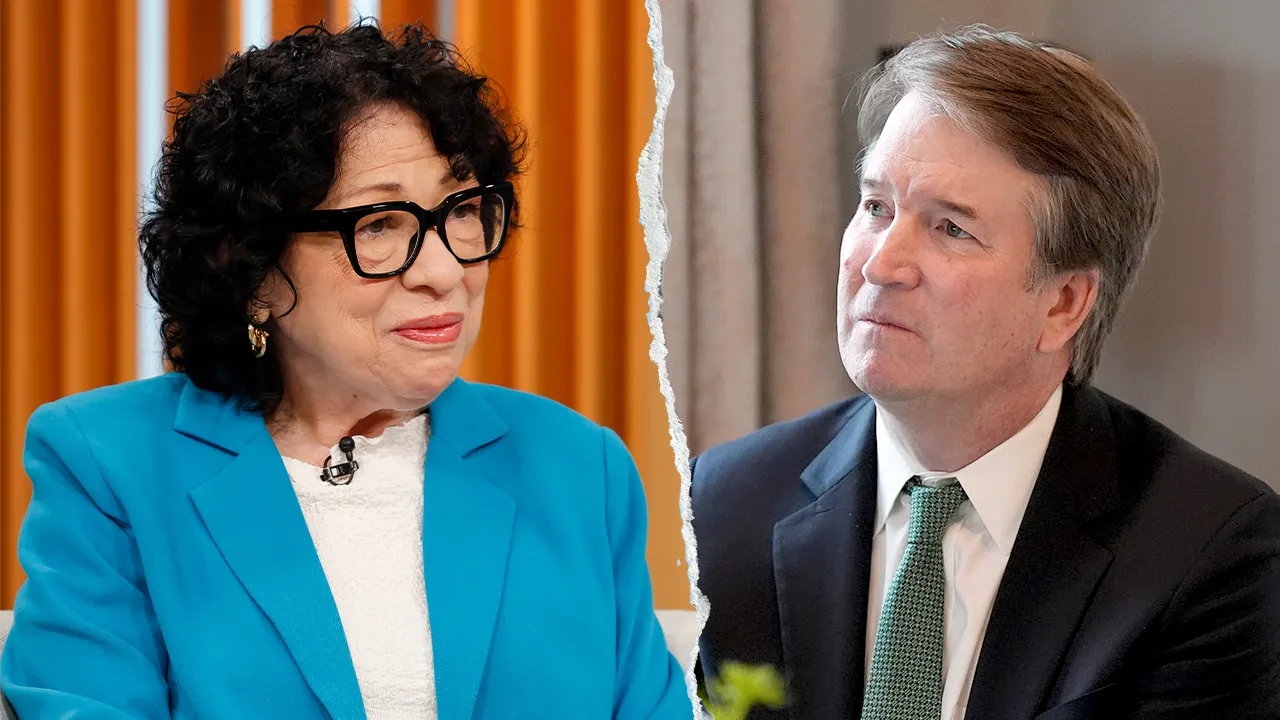
U.S. Supreme Court Justice Sonia Sotomayor issued a formal apology Wednesday for remarks she made criticizing fellow Justice Brett Kavanaugh over his position on immigration enforcement, acknowledging her comments were “inappropriate” and “hurtful.”
The controversy stemmed from Sotomayor’s recent appearance at the University of Kansas School of Law, where she took aim at Kavanaugh’s understanding of immigration enforcement consequences without directly naming him. Her critique centered on Kavanaugh’s concurring opinion in Noem v. Perdomo, a case decided by the Supreme Court in September with a 6-3 vote along ideological lines.
“I had a colleague in that case who wrote, you know, these are only temporary stops,” Sotomayor said during her university appearance. “This is from a man whose parents were professionals and probably doesn’t really know any person who works by the hour.”
The case in question involved a significant immigration enforcement dispute, where the Supreme Court allowed Immigration and Customs Enforcement (ICE) to resume using “apparent race or ethnicity” and work locations as factors in immigration stops in California. The Court’s decision temporarily lifted restrictions that had been imposed by lower courts.
In his concurrence supporting the stay, Kavanaugh wrote that legal residents’ interactions with immigration agents are “typically brief, and those individuals may promptly go free after making clear to the immigration officers that they are U.S. citizens or otherwise legally in the United States.” He defended the legal reasoning behind such stops as longstanding and based on reasonable suspicion.
Sotomayor, who authored the dissenting opinion in the case, suggested during her remarks that Kavanaugh’s privileged background prevented him from understanding the real financial consequences such detentions have on hourly workers. She emphasized that her own “life experiences” as the first Hispanic justice had taught her “to think more broadly and to see things others may not,” in what appeared to be a reference to racial profiling concerns.
In Wednesday’s court-issued statement, Sotomayor acknowledged her misstep: “I referred to a disagreement with one of my colleagues in a prior case” but “made remarks that were inappropriate. I regret my hurtful comments. I have apologized to my colleague.”
The unusual public apology highlights the growing tensions within the nation’s highest court, which has become increasingly polarized on hot-button issues like immigration enforcement, abortion rights, and presidential power. The incident comes at a time when the Supreme Court is under heightened scrutiny for both its decisions and the personal conduct of its justices.
Earlier this year, Chief Justice John Roberts warned against personal attacks on judges, calling such rhetoric “dangerous” – though his comments were directed at criticism coming from outside the Court, not from within its ranks.
Legal experts note that while public disagreements between justices on legal reasoning are commonplace and expected, personal criticisms of colleagues’ backgrounds or motivations have traditionally been considered out of bounds in the collegial environment the Court tries to maintain.
The case that sparked the controversy reflects broader national debates about immigration enforcement tactics. The Supreme Court’s decision in Noem v. Perdomo allowed ICE to continue enforcement operations in Los Angeles while legal challenges proceed through lower courts. Critics of the ruling argue it opens the door to racial profiling, while supporters maintain it simply affirms established law enforcement practices based on reasonable suspicion.
Sotomayor’s apology represents a rare acknowledgment from the bench that even heated legal disagreements have boundaries that should be observed for the Court to function effectively as an institution.
Fact Checker
Verify the accuracy of this article using The Disinformation Commission analysis and real-time sources.

9 Comments
The Supreme Court’s rulings on immigration enforcement have major real-world consequences. It’s understandable that the Justices feel passionately about these issues. But Sotomayor’s criticism of Kavanaugh crossed a line, so her retraction is the right thing to do.
Judicial impartiality and civility are essential, even when Justices profoundly disagree. Sotomayor’s retraction demonstrates her commitment to those principles, which is admirable. The American people deserve a Supreme Court that puts the law above partisan politics.
The Supreme Court’s recent immigration enforcement rulings have been quite divisive. It’s understandable that Sotomayor feels strongly about the impacts, but criticizing a fellow Justice’s personal background was an unwise move. I’m glad she acknowledged that.
Agreed. The Justices should debate the legal merits, not make personal attacks. Sotomayor’s retraction shows she recognizes that crossing that line was inappropriate.
This is an interesting development. Sotomayor’s retraction and acknowledgment of inappropriate comments is a sign of maturity and professionalism. Judicial independence and impartiality are crucial, so I’m glad she’s addressing this issue directly.
You make a good point. Maintaining public trust in the judiciary requires judges to avoid political rhetoric and focus on the law. Sotomayor’s retraction helps preserve the Court’s integrity.
While I don’t always agree with Kavanaugh’s jurisprudence, Sotomayor’s comments about his background were unfair and unbecoming of a Supreme Court Justice. I’m pleased to see her take responsibility and apologize.
While I don’t share Sotomayor’s views on the immigration enforcement case, her retraction shows integrity. Justices must avoid personal attacks and focus on the legal merits, no matter how high the stakes. This is a positive step for the Court’s credibility.
It takes courage for a Supreme Court Justice to admit and correct an error. Sotomayor’s retraction of her inappropriate comments about Kavanaugh is a commendable act that upholds the Court’s reputation for impartiality. Judicial restraint is vital, even on divisive issues.