


Listen to the article
U.S. Signals Shift to Economic Warfare Against Iran as Ceasefire Nears Expiration
WASHINGTON — The Trump administration is preparing to intensify economic pressure on Iran if diplomatic efforts fail to produce a deal before the current ceasefire expires next week. Treasury Secretary Scott Bessent warned Wednesday that the U.S. is ready to deploy what he described as the “financial equivalent” of a bombing campaign.
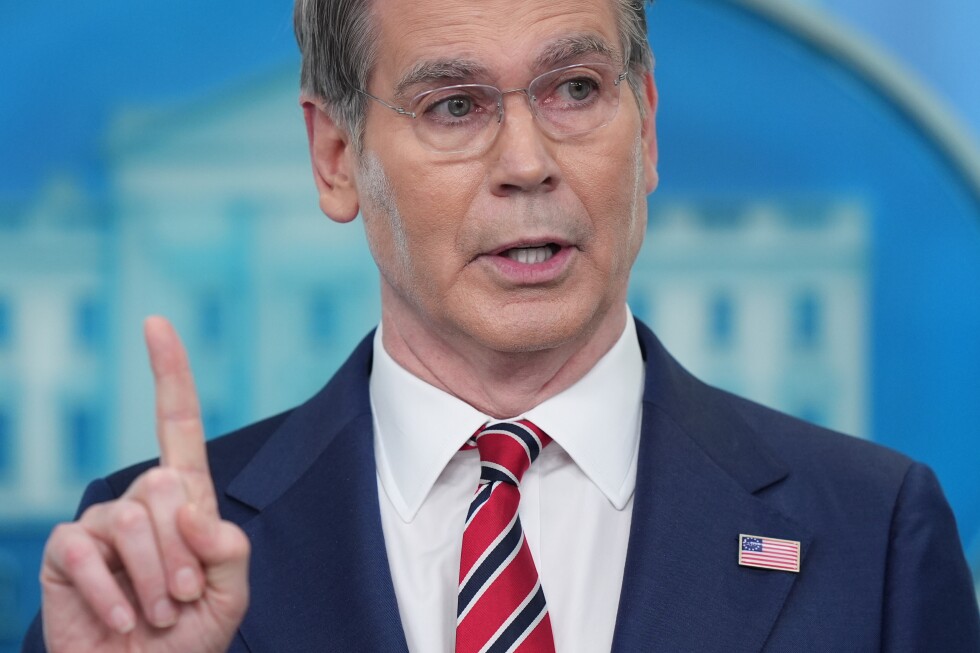
Speaking at a White House briefing, Bessent outlined plans to target countries and companies doing business with Iranian entities through an expanded system of secondary sanctions. These measures would affect even U.S. allies like the United Arab Emirates and economic competitors such as China.
“We have told companies, we have told countries that if you are buying Iranian oil, if Iranian money is sitting in your banks, we are now willing to apply secondary sanctions, which is a very stern measure,” Bessent said. The Treasury Secretary made clear these financial measures would rival the impact of military strikes.
The Treasury Department has already sent warning letters to financial institutions in China, Hong Kong, the UAE, and Oman, threatening sanctions for facilitating Iranian business transactions. The department specifically indicated that two Chinese banks have received warnings about handling Iranian funds—a significant development as President Trump prepares to visit Beijing next month for talks with Chinese President Xi Jinping.
In a coordinated move, the U.S. imposed sanctions Wednesday on an oil smuggling network linked to the late Ali Shamkhani, who had been a senior Iranian security official and close adviser to the former Supreme Leader. These sanctions target dozens of individuals, companies, and vessels involved in clandestine operations to transport and sell Iranian and Russian oil through front companies, many based in the UAE.
“Treasury will continue to cut off Iran’s illicit smuggling and terror proxy networks,” Bessent said in an accompanying statement. “Financial institutions should be on notice that Treasury will leverage all tools and authorities, including secondary sanctions, against those that continue to support Tehran’s terrorist activities.”
According to a person familiar with administration discussions, the economic strategy represents a critical element in Trump’s playbook to pressure Iran into accepting limitations on its nuclear program. The source, speaking on condition of anonymity, indicated that officials believe restricting Iran’s ability to pay its supporters could force the regime to negotiate.
The administration is also considering targeting Iran’s bonyads—charitable trusts that control a substantial portion of the Iranian economy—as potential pressure points that have not yet been fully exploited.
Some administration officials have expressed growing confidence that recent military actions and the naval blockade of Iranian ports in the Strait of Hormuz have shifted momentum in Trump’s favor. Iran has suffered tens of billions of dollars in damage to its infrastructure, including critical setbacks to its oil industry that could take years to repair.
Vice President JD Vance emphasized Tuesday that Trump is seeking a comprehensive agreement. “He doesn’t want to make, like, a small deal. He wants to make the grand bargain,” Vance said. “If you guys commit to not having a nuclear weapon, we are going to make Iran thrive.”
Stephen Miller, the president’s deputy chief of staff, offered a more stark assessment, suggesting Trump had “played the checkmate move” by implementing the blockade. “If Iran chooses the path of economic strangulation by blockade, then the world will pass Iran by,” Miller said during a Fox News appearance. “New energy routes will be established. New supply chains will be established.”
However, some lawmakers question whether additional sanctions would be effective. Massachusetts Senator Elizabeth Warren, the top Democrat on the Banking Committee, argued that any new economic measures would be offset by financial gains Iran has experienced during the conflict.
“Instead of circumstances where we can keep sanctions on Iran and constrict their economy, the blockade in the Strait of Hormuz—combined with the sharply rising price of oil—has helped Iran’s economy,” Warren said. She added that Bessent is trying to “mop up the mess that Donald Trump has created by initiating this war.”
Daniel Pickard, a sanctions attorney, warned that imposing secondary sanctions could trigger “diplomatic and economic blowback” from allies, potentially undermining coalition-building efforts against Tehran. “A lot of our trading partners have been outspoken in regard to their opposition to the conflict in Iran,” Pickard noted.
Congressional Republicans appear divided on the strategy. Senator Thom Tillis of North Carolina expressed support for any increased pressure, stating: “If the administration came up with the ideas, I would support all of the above. More pressure, the better.”
Others, like Senator Mike Rounds of South Dakota, were more skeptical. “I’m not sure if it’s sanctions that’ll do it. I think we’re putting some pretty heavy sanctions on right now,” said Rounds, who serves on both the Banking and Armed Services Committees. “I personally am just not optimistic that we actually can fix this thing without a regime change.”
Trita Parsi, executive vice president of the Quincy Institute, suggests that Trump’s recent actions may have altered the dynamic between the two nations. In a recent analysis, Parsi argued that “Iran now appears to need an agreement more than the United States does,” and that Tehran has a narrow window to “convert battlefield leverage into lasting strategic gain.”
As the ceasefire deadline approaches, the administration appears to be positioning itself with multiple options, signaling it will pursue economic warfare if diplomatic efforts fail to produce results.
Fact Checker
Verify the accuracy of this article using The Disinformation Commission analysis and real-time sources.

9 Comments
From a mining industry perspective, the potential for disruptions to critical mineral and metal supplies from Iran is concerning. Policymakers should carefully weigh the economic tradeoffs of intensifying sanctions versus negotiating a new nuclear agreement.
As an energy analyst, I’m concerned that this shift to economic warfare could trigger oil price volatility and disruptions to global energy trade. Diplomatic efforts to reach a new nuclear deal should remain the priority to avoid unintended market consequences.
I share your concerns. Escalating financial pressure on Iran risks retaliatory actions that could severely disrupt energy flows and commodity markets worldwide. Prudent policymaking is needed to navigate this geopolitical minefield.
From a mining and commodities perspective, heightened US-Iran tensions could impact supply and pricing of critical resources like oil, copper, and uranium. Investors will be closely watching how this economic standoff evolves in the coming weeks.
Interesting developments on the economic front with Iran. It seems the US is ready to ramp up financial pressure through secondary sanctions if a new nuclear deal isn’t reached. This could have significant implications for global trade and energy markets.
Yes, the threat of broad secondary sanctions is a powerful economic weapon. It will be crucial to see how US allies and rivals like China respond to these escalating financial measures.
This seems like a high-stakes game of economic brinkmanship between the US and Iran. While the Trump administration believes financial warfare can compel Iranian concessions, history suggests such tactics often backfire. A measured, diplomatic approach may be wiser.
The pivot to economic warfare against Iran is a risky strategy that could backfire. Cutting Iran off from the global financial system may provoke retaliation and disrupt energy supplies. A diplomatic solution seems preferable to escalating economic tensions.
You raise a fair point. Unilateral US sanctions could destabilize the region and global markets. Renewed diplomacy to address Iran’s nuclear program may be the wiser path forward.