


Listen to the article
Former Bangladesh Prime Minister Sentenced to 21 Years on Corruption Charges
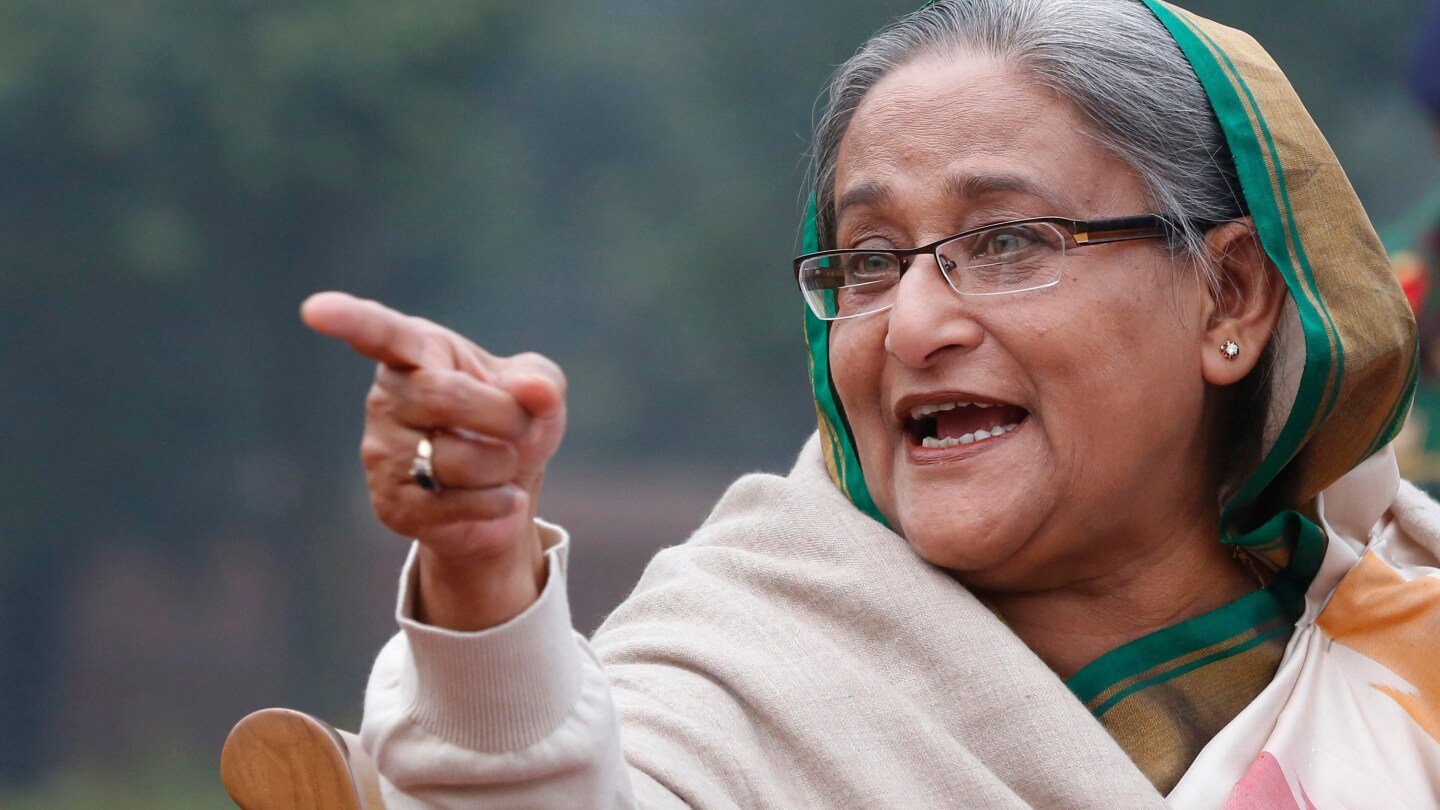
Bangladesh’s ousted Prime Minister Sheikh Hasina received a 21-year prison sentence Thursday in three corruption cases related to land allocation in a government development project, adding to her legal troubles following her exile to India.
The Dhaka Special Court found Hasina guilty of illegally securing plots in the Purbachal New Town project for herself and family members despite their ineligibility. Judge Mohammad Abdullah Al Mamun ordered the three seven-year sentences to be served consecutively.
This verdict follows a separate death sentence handed down to Hasina earlier this month for crimes against humanity stemming from her government’s crackdown on last year’s mass uprising that ended her 15-year rule in Bangladesh.
Her son Sajeeb Wazed and daughter Saima Wazed were each sentenced to five years in prison in one of the three corruption cases. All defendants were found guilty of concealing information about their property in Dhaka to illegally obtain three plots of land by abusing state power.
Hasina’s son, who resides in Washington D.C., disputed the charges in a statement to The Associated Press, describing the proceedings as “another kangaroo court judgment.”
“The aim of the conviction was to prevent any of my family members from running for elections in the future,” he said. “The charges against each of us were for purchasing a 1/6 acre plot of land on the outskirts of Dhaka in an empty area for $30,000 each. This was another rapid trial; we were not allowed to hire attorneys and received no communications.”
The cases were filed by Bangladesh’s Anti-Corruption Commission after Hasina’s government was toppled last year. Additional legal proceedings against the former prime minister continue, with another verdict expected on December 1 in a separate case.
Human rights organizations have raised serious concerns about the trials, which have been conducted in absentia with Hasina in exile and without legal representation. Both Hasina and her former ruling Awami League party have denounced the proceedings as politically motivated.
The 76-year-old Hasina ruled Bangladesh for nearly two decades across multiple terms and is the daughter of Bangladesh’s founding father, Sheikh Mujibur Rahman. Her government had been accused of increasing authoritarianism, particularly in the years leading up to her ouster.
The legal proceedings against Hasina come as Bangladesh navigates a challenging political transition. An interim government led by Nobel Peace Prize laureate Muhammad Yunus has been working to stabilize the nation since the upheaval that forced Hasina’s departure.
The South Asian nation of 170 million people has experienced significant political turbulence since regaining independence in 1971. The interim government has announced plans for new elections in February 2024, aiming to establish democratic governance after the prolonged period under Hasina’s leadership.
These trials represent a significant reversal of fortune for Hasina, who was once credited with overseeing strong economic growth in Bangladesh. Under her leadership, the country achieved notable development milestones, but critics argued this came at the cost of democratic freedoms and human rights.
Regional analysts note that the ongoing prosecution of Hasina and her family members could further complicate Bangladesh’s political landscape and potentially impact relations with neighboring India, where she currently resides in exile.
Fact Checker
Verify the accuracy of this article using The Disinformation Commission analysis and real-time sources.

7 Comments
While corruption should be firmly addressed, the lengthy prison sentences against Hasina and her family members seem very harsh. I hope the Bangladeshi judicial system can investigate these allegations thoroughly and impartially, without undue political influence.
This is a concerning development in Bangladesh’s political landscape. While corruption must be addressed, the severity of these sentences raises questions about due process and potential political motivations. It will be important to closely monitor the case and ensure a fair and transparent judicial process.
This is a complex and sensitive political situation in Bangladesh. Corruption must be tackled, but the severity of the sentences against Hasina raises concerns about the independence and fairness of the judicial process. Careful monitoring will be important going forward.
The allegations of land corruption against former Prime Minister Hasina are serious, but the harsh sentences seem disproportionate. I hope the judicial system in Bangladesh can uphold the rule of law in an impartial manner, without undue political interference.
The corruption charges against former Prime Minister Hasina are serious, but the lengthy prison sentences are concerning. Upholding the rule of law is crucial, but the judicial process must be transparent and free from political interference.
Allegations of corruption and abuse of power are always troubling, but the sentencing of a former prime minister to over 20 years in prison is extreme. I wonder if there are any concerns about the independence and fairness of the judicial process in this case.
You raise a good point. The severity of the sentences does raise questions about potential political motivations behind the prosecutions. Transparency and due process will be crucial in ensuring justice is served.