


Listen to the article
At least one person has died as torrential rains triggered widespread flooding across Albania, authorities confirmed Saturday, with rural communities bearing the brunt of the disaster.
Police recovered the body of a 76-year-old woman in the southeastern municipality of Devoll after floodwaters began receding in the area. The victim, who had been reported missing by her son, is believed to have been swept away by powerful currents. A search operation conducted by military personnel on Friday had initially failed to locate her.
In the southern village of Dushar, approximately 30 families remain isolated as flooding has rendered access roads impassable, cutting them off from essential services and supplies. Emergency responders are working to establish alternative routes to reach the stranded residents.
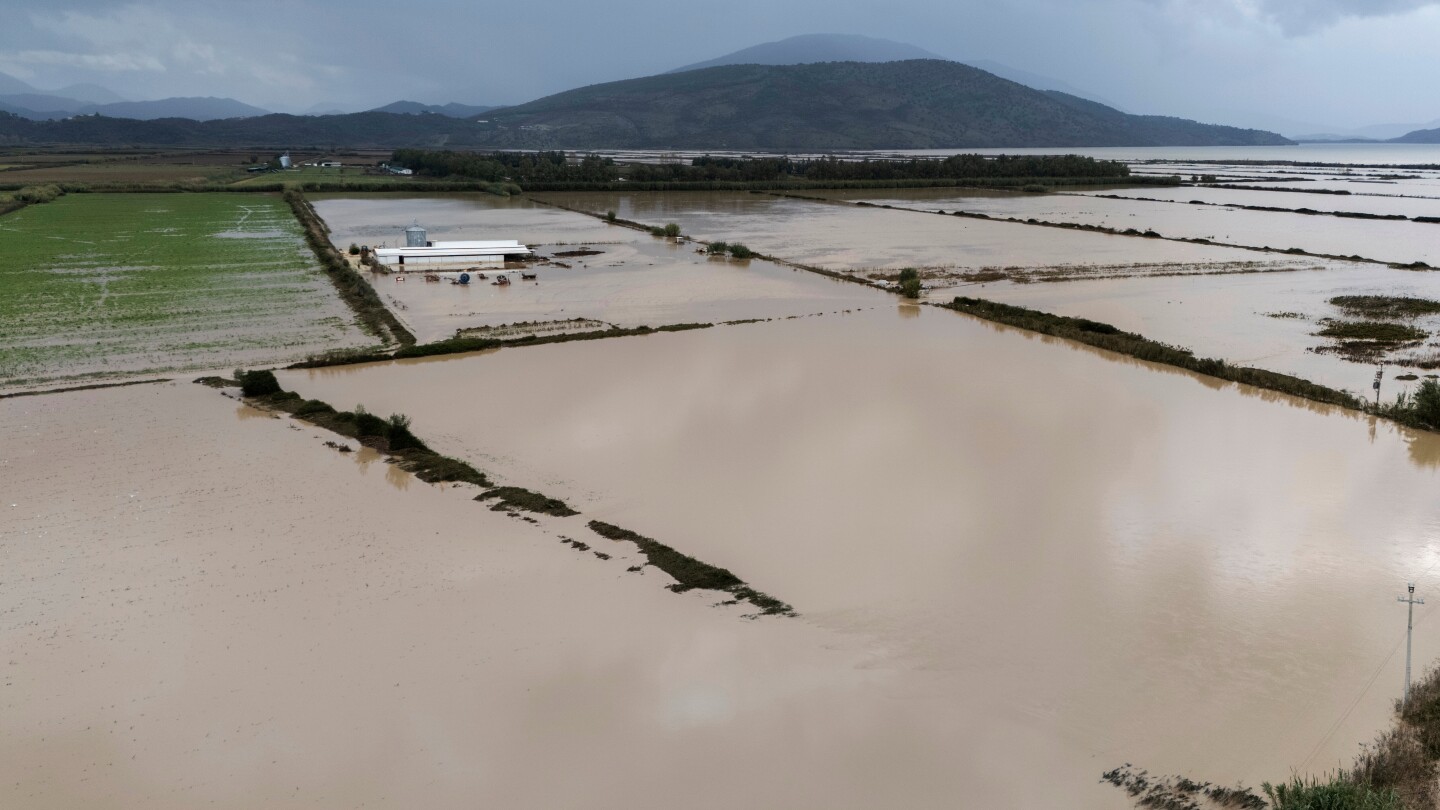
The deluge has caused major rivers to overflow their banks, inundating vast swaths of agricultural land throughout the Balkan nation. The Vjosa River, which flows through southern Albania, and the Seman River, which runs through the low-lying Myzeqeja plain, both breached their banks, transforming productive farmland into murky lakes.
According to the Civil Protection Agency, the northwestern Lezha region has been particularly hard-hit, with approximately 220 hectares (544 acres) of land still underwater. The flooding represents a significant blow to Albania’s agricultural sector, which accounts for about 20 percent of the country’s GDP and employs roughly 40 percent of its workforce.
Local farmers have expressed grave concerns about crop losses, with many reporting extensive damage to their fields and harvests. Videos shared on social media platforms show homes surrounded by muddy water and agricultural equipment partially submerged.
“This is devastating for our community,” said one farmer from the Lezha region who declined to be named. “Many of us depend entirely on these crops for our livelihood.”
Defense Minister Pirro Vengu conducted an inspection of flooded areas in the southern Sarande District on Saturday to assess the damage firsthand and coordinate response efforts. The minister’s visit underscores the government’s concern about the scale of the disaster.
“Our priority is ensuring the safety of all citizens affected by these floods,” Vengu told reporters during his tour. “We are mobilizing all available resources to provide assistance where it’s most needed.”
Weather forecasts indicate the situation may deteriorate further, with additional rainfall predicted in the coming days. Civil Emergency Teams remain on high alert, prepared to evacuate more residents if necessary and distribute emergency supplies to affected communities.
Albania is no stranger to flooding, particularly during autumn and winter months. However, climate experts have noted that extreme weather events have become more frequent and intense across the Balkans in recent years, a trend consistent with climate change predictions for the Mediterranean region.
The current floods come at a challenging time for Albania’s economy, which was already grappling with the lingering effects of the COVID-19 pandemic and rising inflation. The agricultural losses are expected to put additional pressure on food prices in the country.
Local authorities are now focusing on immediate relief operations while beginning to assess the full extent of the damage to infrastructure, homes, and farmland. The Albanian government has not yet announced whether it will request international assistance, though neighboring countries have previously offered aid during similar natural disasters.
As emergency responders continue their work, many rural communities face an uncertain road to recovery, with rebuilding efforts likely to stretch into the coming months.
Fact Checker
Verify the accuracy of this article using The Disinformation Commission analysis and real-time sources.

11 Comments
It’s alarming to see the extent of the flooding and the challenges faced by isolated communities. I hope the emergency responders can reach those in need and provide essential supplies and services. Improved early warning systems and disaster response protocols could help save lives in the future.
The tragic loss of life is deeply saddening. My heart goes out to the victim’s family and the broader community affected by this disaster. Extreme weather events like this are a stark reminder of the urgent need to address the impacts of climate change, both globally and at the national level.
This incident highlights the need for Albania to strengthen its infrastructure and disaster management capabilities. Upgrading flood control systems, enhancing emergency communication networks, and improving coordination between local and national authorities could help mitigate the impacts of extreme weather events.
Absolutely. Proactive investment in climate-resilient infrastructure should be a priority for the government. Engaging with international organizations and development partners could help Albania access funding and technical expertise for these critical projects.
The flooding’s impact on Albania’s agricultural sector is concerning. Protecting the country’s food security and economic stability should be a top priority for the government. I hope the authorities can work quickly to restore access to affected areas and provide the necessary support to farmers and rural communities.
Agreed. Safeguarding the agricultural sector is crucial, especially in the face of growing climate risks. Investing in sustainable farming practices and infrastructure could help strengthen Albania’s food systems and increase resilience.
The flooding seems to have had a significant impact on Albania’s agricultural sector, with major rivers overflowing and farmland inundated. This is concerning for the country’s food security and economic stability. Sustainable water management strategies will be key to building resilience.
Good point. Investing in climate-smart agriculture and irrigation systems could help protect the agricultural sector from future extreme weather events. The government should work closely with farmers to develop comprehensive adaptation plans.
Tragic to hear about the loss of life due to the flooding in Albania. My condolences to the family and community affected. Extreme weather events like this are becoming more common, and governments must invest in resilient infrastructure and disaster preparedness to protect vulnerable populations.
Agreed. Proactive measures to mitigate the impacts of climate change-related disasters are crucial. I hope the authorities can provide emergency aid and restore access to isolated communities as quickly as possible.
This disaster underscores the importance of effective disaster management and climate adaptation strategies. I hope the authorities can learn from this experience to improve early warning systems, emergency response protocols, and long-term resilience planning. International cooperation and sharing of best practices could be valuable in this effort.