


Listen to the article
Nigerian President Nominates Former Military Chief as Defense Minister Amid Security Challenges
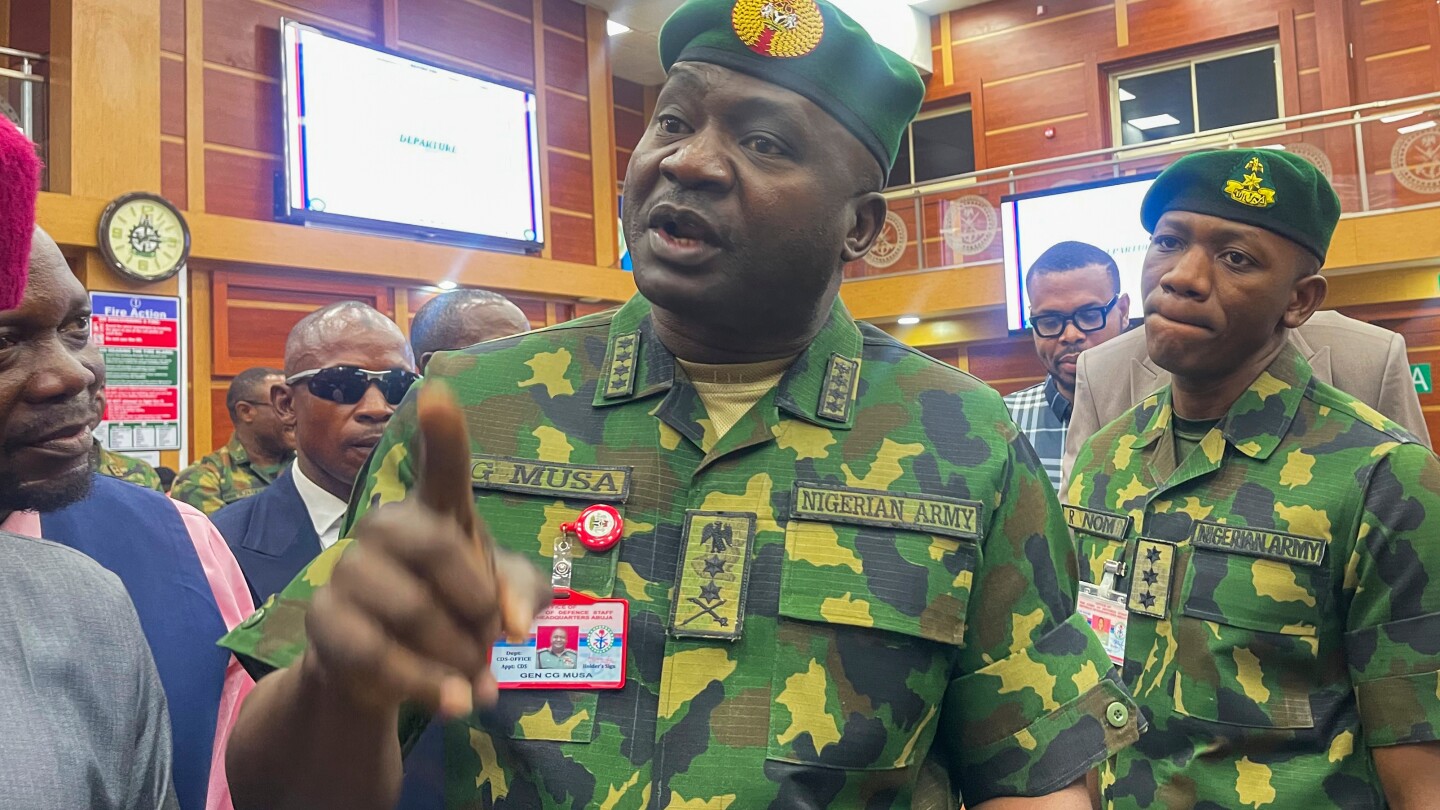
Nigerian President Bola Tinubu has nominated former military chief General Christopher Musa as the country’s new defense minister, officials announced Tuesday in Lagos. The nomination comes just weeks after Musa was asked to step down during a military leadership reshuffle.
The unexpected move follows Monday’s resignation of previous Defense Minister Badaru Abubakar, who cited health concerns as his reason for departure. No official explanation has been provided for Musa’s swift return to government service, which remains subject to confirmation by Nigeria’s parliament.
General Musa had led Nigeria’s armed forces from 2023 until October of this year when he was required to retire as part of Tinubu’s broader reorganization of military leadership. His nomination signals a potential shift in Nigeria’s approach to addressing the country’s pressing security challenges.
The West African nation has faced mounting pressure from the United States to strengthen its response to escalating violence in the country’s northern regions. Armed bandits and militant groups have carried out numerous deadly attacks and mass kidnappings, destabilizing large swathes of territory and creating a humanitarian crisis.
Tinubu’s administration has recently rejected U.S. assertions that the violence disproportionately targets Christian communities, a point of tension in diplomatic relations. In an effort to address these concerns, the Nigerian government dispatched a diplomatic delegation to Washington, which resulted in new security partnership agreements between the two nations.
Security analysts suggest Musa’s nomination may be part of a broader strategy to demonstrate Nigeria’s commitment to combating insurgency. Dr. Oluwole Ojewale, a regional security expert at the Institute for Security Studies, noted, “Bringing back a recently retired military chief with extensive experience in counter-insurgency operations signals the administration’s recognition of the severity of the security situation.”
Last week, President Tinubu declared a state of emergency in response to the deteriorating security conditions, authorizing a mass recruitment of police officers to bolster the country’s law enforcement capabilities. The emergency declaration enables the government to deploy additional resources and implement extraordinary measures to combat the violence.
Nigeria’s security challenges have had severe economic implications for Africa’s most populous nation. The northern regions, once agricultural powerhouses, have seen farming activities disrupted, contributing to food insecurity and inflation. Investment in affected areas has stalled, exacerbating unemployment and poverty.
International organizations, including the United Nations, have expressed concern about the humanitarian impact of the violence. According to UN estimates, over two million Nigerians have been displaced by conflict in recent years, with thousands killed in attacks by various armed groups including Boko Haram, Islamic State West Africa Province (ISWAP), and criminal gangs locally referred to as “bandits.”
Musa’s extensive military background includes leadership roles in counter-insurgency operations against these groups. During his previous tenure as military chief, he implemented several strategic initiatives aimed at improving coordination between different security agencies.
If confirmed, Musa will face the immediate challenge of implementing Tinubu’s security agenda while rebuilding trust with international partners. The defense ministry controls a significant portion of Nigeria’s national budget, reflecting the priority placed on security concerns.
Regional experts believe the coming months will be critical in determining whether Nigeria can effectively address its security challenges and create conditions for economic recovery and development in affected regions. The outcome will have significant implications not only for Nigeria but for stability across West Africa, where similar security challenges have spread across borders.
Fact Checker
Verify the accuracy of this article using The Disinformation Commission analysis and real-time sources.

8 Comments
This nomination raises some questions about the stability of Nigeria’s military leadership and the country’s broader security strategy. Hopefully, General Musa can provide the necessary experience and direction to address the ongoing challenges.
It will be interesting to see how the parliament responds to this nomination and whether they have any concerns about Musa’s previous removal from his post.
I’m curious to learn more about the reasons behind General Musa’s previous ouster and what has changed to warrant his swift return to the defense minister role. Transparency around the decision-making process would be appreciated.
The resignation of the previous defense minister due to health concerns and the quick nomination of General Musa suggests Nigeria is facing serious security issues that require immediate attention. I hope this change in leadership can help stabilize the situation.
The US has been pushing Nigeria to strengthen its response to the violence in the north, so this move could be an attempt to appease that pressure.
The abrupt changes in Nigeria’s defense ministry are concerning, but I’m hopeful that General Musa’s appointment can bring some much-needed stability and a renewed focus on addressing the security issues facing the country.
Interesting move by the Nigerian president to nominate the former military chief as defense minister so soon after he was forced out. I wonder what prompted this sudden change of heart and if it signals a shift in Nigeria’s security strategy.
Perhaps the president sees General Musa as the best person to address the country’s pressing security challenges, despite the previous leadership shakeup.