


Listen to the article
Radio Lifelines to North Korea Dwindle as Major Broadcasters Go Silent
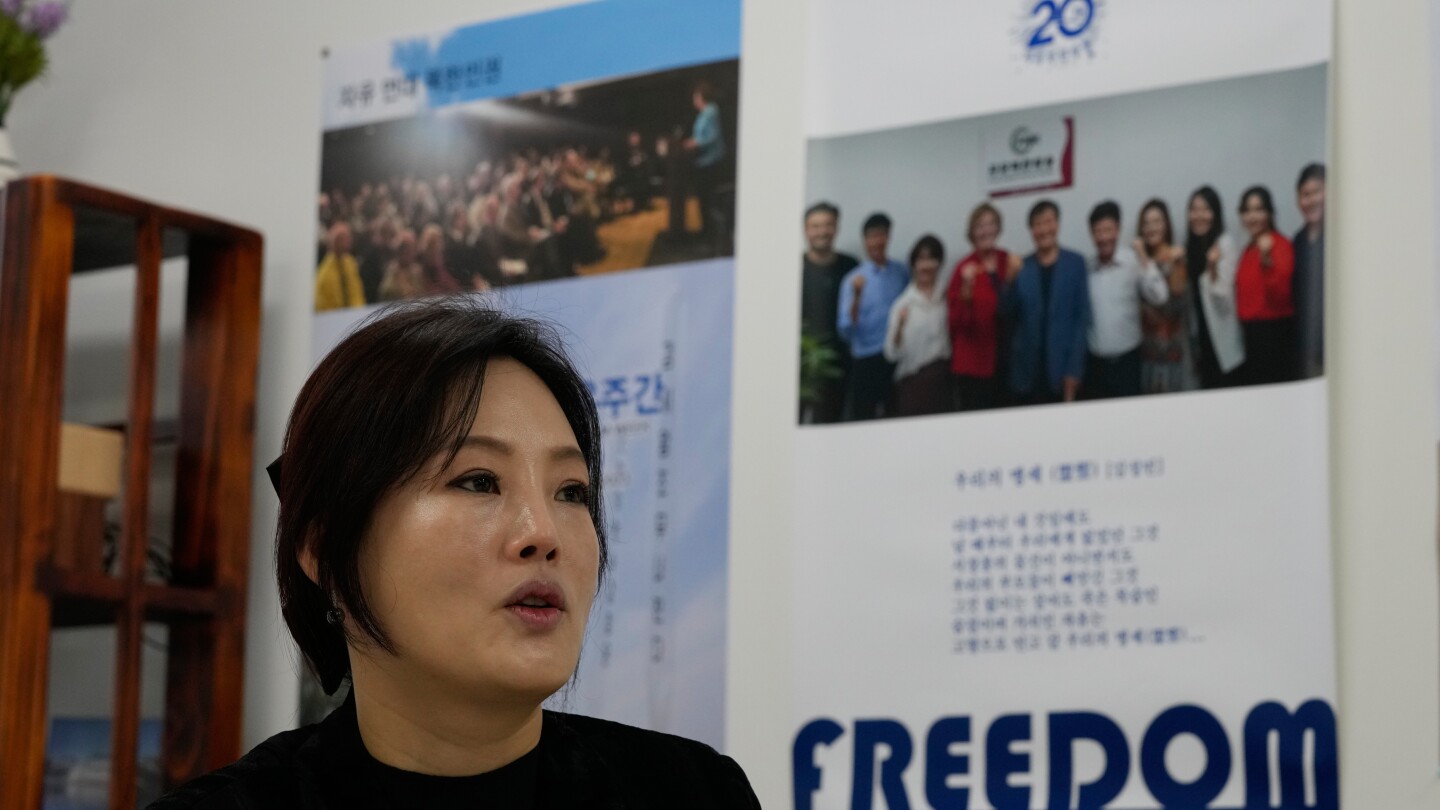
For two hours every day, Lee Si-young and her colleagues broadcast uncensored foreign news into North Korea, where their radio audience risks imprisonment if caught listening. But Lee, who heads the Seoul-based Free North Korea Radio station, now feels a growing sense of crisis as major government-funded broadcasters in the United States and South Korea have fallen silent this year.
“Our frustrations with the U.S. and South Korean governments are growing over their suspensions of radio broadcasts,” said Lee, a North Korean defector who runs the small, non-governmental FNK radio station. “We’re afraid that they’ve abandoned North Korean residents.”
In North Korea, all radio and TV sets are fixed to state-run channels, creating a tightly controlled information environment. Yet defectors have testified that they modified their radios or used smuggled devices to covertly tune in to foreign broadcasts at night, seeking news their government wanted to suppress – including outside perspectives on the Kim dynasty, glimpses of more affluent Western lifestyles, and success stories about defectors who escaped the regime.
According to 38 North, a respected academic website focused on North Korea, such outside radio broadcasting has decreased by approximately 85% following recent policy decisions by the U.S. and South Korean governments.
Two major U.S.-funded broadcasters – Voice of America and Radio Free Asia – were forced to halt their Korean-language radio broadcasts after President Donald Trump signed an executive order in March that effectively dismantled the agency overseeing these networks. Trump claimed the networks exhibited liberal bias or were wasteful.
Meanwhile, South Korea’s liberal government led by President Lee Jae Myung stopped cross-border radio broadcasts in an apparent attempt to reduce tensions with Pyongyang. His administration also turned off frontline loudspeakers that previously blared K-pop songs and world news across the border, and banned activists from flying balloons carrying propaganda leaflets and USB drives into North Korean territory.
The FNK station is now among just a handful of small civil or religious organizations still transmitting radio broadcasts into North Korea. Lee notes that her group, with only five workers – all North Korean defectors – is tiny compared to the now-silent Voice of America and Radio Free Asia operations.
“We feel heavy-hearted and have a conflict over whether we should tell North Koreans that those suspended broadcasts were paused only temporarily and they would definitely be restarted, or that we’re one of the few who survived,” she said.
Some observers question whether these information campaigns have actually made a difference in North Korea. The balloon launches and loudspeaker broadcasts have consistently been major points of contention with the North Korean regime.
South Korean Unification Minister Chung Dong-young characterized radio and loudspeaker broadcasts as “a relic of the Cold War” and expressed hope that suspending them would improve inter-Korean relations. The South Korean Defense Ministry told The Associated Press that pausing its “Voice of Freedom” radio broadcast was intended to ease military tensions with North Korea.
South Korean officials say North Korea has reciprocated by turning off its own border loudspeakers and stopping jamming signals that had targeted South Korean radio broadcasts. However, Pyongyang continues to refuse resuming long-dormant talks with Seoul and Washington.
Despite the shifting policy landscape, some defectors are exploring alternative ways to provide outside information to North Koreans. Lee Young-hyeon, a defector-turned-lawyer in South Korea, recently launched a website and mobile app called Korea Internet Studio, initially targeting tens of thousands of North Koreans living abroad, including laborers, students, diplomats, and their families.
These North Koreans abroad often have mobile phones with access to the global internet – a privilege strictly forbidden to citizens inside the country. Lee’s group aims to provide practical content, such as academic tips for students studying overseas, gift-buying advice for workers to send items home, and explanations of concepts like cryptocurrency.
“We don’t expect the public using our content to launch an uprising and topple the North Korean government,” Lee explained. “The objective is for North Koreans to learn there is such a good world where they can enjoy some freedom and rights.”
Lee believes North Korea might eventually ease its strict internet restrictions in a limited manner, potentially allowing companies from China, Russia, Vietnam and other allied nations to establish local offices in the country. Many observers remain skeptical, however, given the regime’s intensified crackdown on foreign influences.
Since 2020, North Korea has enacted increasingly harsh laws targeting outside cultural influences, particularly those from South Korea. The Reactionary Ideology and Culture Rejection Law reportedly imposes up to 10 years of imprisonment with hard labor on those caught consuming, possessing or distributing foreign movies and music, and up to five years on those using unauthorized radio and TV channels.
Defectors like Paek Yosep, who fled in 2003, attest to the impact of these outside broadcasts. He recalls being shocked when South Korean radio reports mentioned anti-government protests in Seoul – something unimaginable in North Korea. As a soldier stationed at the border, Paek enjoyed music played through South Korean loudspeakers.
Similarly, Kim Ki-sung at the FNK station says South Korean radio broadcasts he listened to for a decade before his 1999 defection directly influenced his decision to flee. Through these broadcasts, he learned that South Korea was prosperous enough to provide loans to the Soviet Union and had so many cars that traffic jams were common.
“I’m not sure how strongly addictive drugs are, but I think those broadcasts were the same,” Kim reflected. “Many ask us whether we’ve confirmed that people in North Korea are truly listening to our programs. But I believe we should keep doing this even if just one person listens to our broadcasts.”
Fact Checker
Verify the accuracy of this article using The Disinformation Commission analysis and real-time sources.

10 Comments
This is a disappointing development. These radio broadcasts were a rare opportunity for North Koreans to access independent news and information beyond state control. The government’s crackdown on outside media access is deeply troubling and will only serve to further tighten its grip on information.
It’s deeply concerning to see the suspension of major radio broadcasts into North Korea. These uncensored news sources were a vital lifeline, offering citizens a window to the outside world. The government’s suppression of independent media access is a grave human rights violation that must be addressed.
The shutdown of major radio broadcasts into North Korea is a troubling development. These lifelines provided vital news and information to a population that desperately needs access to independent sources. I fear this will only further isolate North Koreans.
This is deeply concerning. North Koreans deserve access to uncensored information and outside perspectives. The government’s tight control of media and radio is a grave human rights violation. I hope more can be done to support these underground radio broadcasts.
The suppression of outside news sources in North Korea is a concerning trend. These radio broadcasts were a rare opportunity for citizens to access uncensored information. I worry this will exacerbate the regime’s information control and further isolate the North Korean people.
It’s disheartening to see the dwindling radio lifelines to North Korea. These uncensored foreign broadcasts were a crucial window to the outside world for North Koreans. The government’s crackdown on independent media is deeply disturbing. More must be done to support these efforts.
This is a troubling development. These uncensored radio broadcasts provided a rare opportunity for North Koreans to access independent news and perspectives beyond state propaganda. I worry this will further isolate the North Korean people and strengthen the regime’s information control.
The dwindling of radio broadcasts into North Korea is a worrying development. These uncensored news sources were a rare window for citizens to access information beyond state propaganda. I fear this will only strengthen the regime’s information control and further isolate the North Korean people.
The dwindling of these radio lifelines to North Korea is a worrying trend. These uncensored foreign broadcasts were a crucial source of information for citizens, providing access to perspectives beyond state propaganda. I fear this will only empower the regime’s information control and further isolate the North Korean people.
This is a disappointing setback in efforts to provide North Koreans with access to independent news and information. These radio broadcasts were a vital link to the outside world. The government’s tight grip on media is deeply troubling. I hope more can be done to restore and expand these critical lifelines.