


Listen to the article
Law enforcement agencies from seven European countries have broken up a major international criminal network responsible for trafficking stolen cultural artifacts worth more than €100 million, Bulgarian authorities announced Thursday.
The coordinated operation led to the arrest of 35 suspects linked to a sophisticated smuggling ring that had been operating for over 16 years across Western Europe, the Balkans, the United States, and beyond. Approximately 20 individuals now face charges of antiquities trafficking and money laundering.
Bulgarian Prosecutor Angel Kanev, speaking at a news briefing, revealed the extensive scope of the criminal enterprise. “The money laundering investigation has so far identified over $1 billion in illicit funds,” Kanev said, highlighting the financial scale of the operation.
The multi-country action took place on Wednesday when judicial and law enforcement authorities from Albania, Bulgaria, France, Germany, Greece, Italy, and the United Kingdom executed simultaneous raids in their respective territories. The operation was coordinated by Eurojust, the European Union’s judicial cooperation unit, and Europol, the EU’s law enforcement agency.
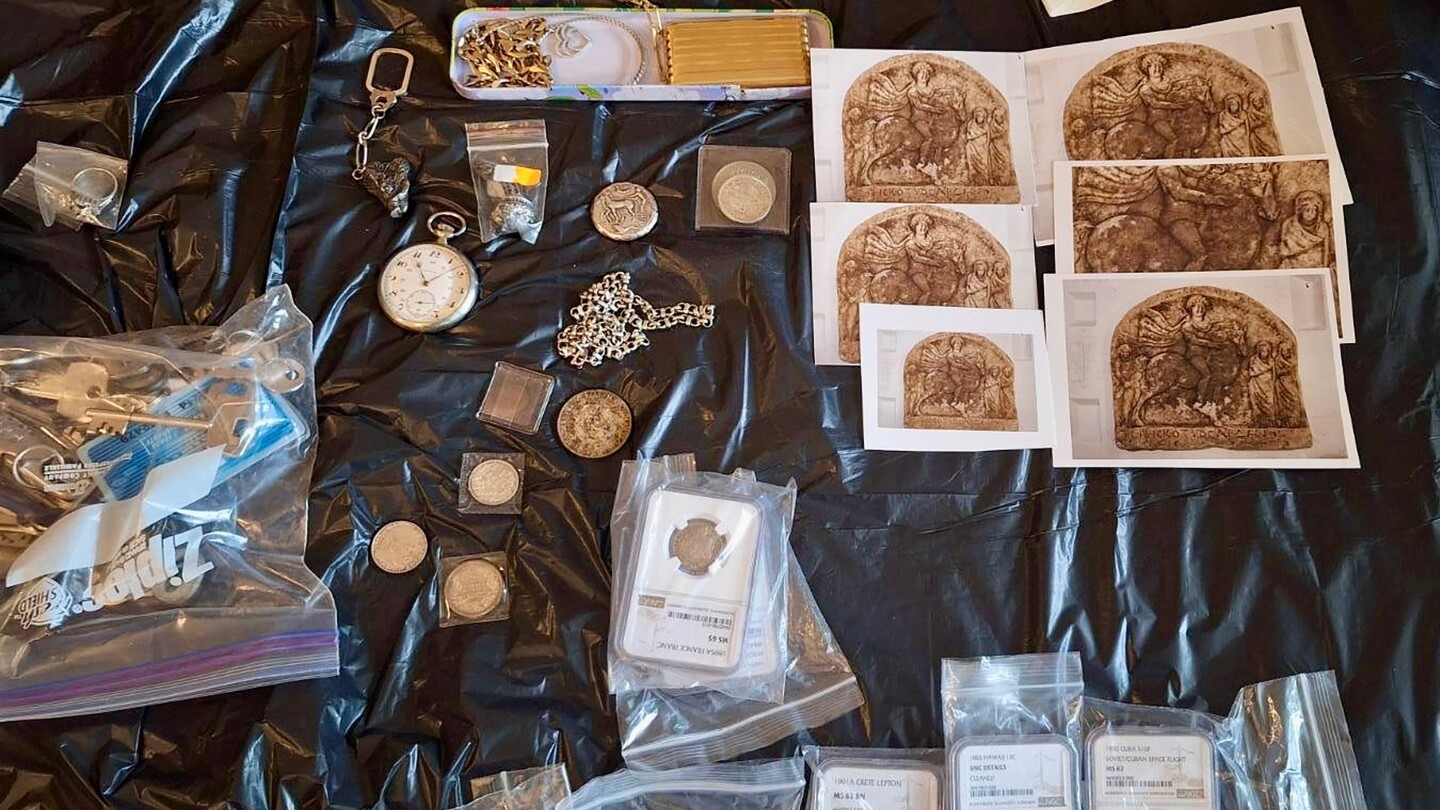
According to a Europol news release, authorities conducted 131 searches of houses, vehicles, and bank safes across the seven countries. The operation yielded more than 3,000 artifacts, including antique gold and silver coins and other antiquities with an estimated market value exceeding €100 million ($116 million). Law enforcement also seized artworks, weapons, documents, electronic equipment, large amounts of cash, and investment gold.
Paolo Befera, deputy head of the Italian Carabinieri’s specialized cultural heritage protection directorate, described the operation as “the largest of this manner ever conducted.” In Italy alone—a country rich in archaeological heritage—authorities recovered approximately 300 historical artifacts from the alleged traffickers.
The criminal network had been attempting to sell thousands of ancient artifacts stolen from museums across Europe, operating with a high level of sophistication that allowed them to evade detection for more than a decade and a half.
The Balkan region and Italy have historically been prime targets for criminal groups engaged in cultural heritage theft. These areas contain invaluable Greek and Roman archaeological treasures that command high prices on the international black market, despite strict laws protecting such artifacts in their countries of origin.
The illicit antiquities trade represents a significant global criminal enterprise, often interlinked with other forms of organized crime. The trafficking of cultural heritage items not only robs nations of their historical patrimony but also funds other criminal activities through the substantial profits generated.
Experts in cultural heritage protection have long warned that wealthy private collectors and even some institutions have contributed to the problem by purchasing artifacts without thoroughly investigating their provenance. This demand drives the market for looted antiquities and incentivizes criminal networks to continue their operations.
The successful dismantling of this particular network demonstrates the increasing effectiveness of cross-border cooperation between European law enforcement agencies in tackling organized crime. It also reflects growing recognition of the seriousness of cultural heritage crimes, which were previously often given lower priority compared to drug trafficking or human smuggling.
Investigations are ongoing, and authorities believe additional arrests may follow as they continue to unravel the network’s international connections and financial structures. The recovered artifacts will eventually be returned to their rightful institutions or countries of origin following the conclusion of legal proceedings.
Fact Checker
Verify the accuracy of this article using The Disinformation Commission analysis and real-time sources.

8 Comments
This is an important win for law enforcement, but the work is far from over. Stolen cultural artifacts can be incredibly difficult to recover, and the black market for these items remains lucrative. Ongoing vigilance will be needed to prevent similar criminal enterprises from emerging.
It’s good to see European authorities working together to crack down on the theft and illegal trade of cultural artifacts. This type of organized crime robs countries of their heritage and history.
Agreed. Preserving cultural heritage is so important, and these criminal networks undermine that. Hopefully this sends a strong message and deters future antiquities trafficking.
While the arrests are a positive step, the vast sums of money involved highlight the serious financial incentives driving this kind of organized crime. Addressing the root causes and economics of the antiquities trade will be essential to truly disrupt these criminal networks in the long run.
The sheer scale of this trafficking operation is quite alarming. I’m curious to learn more about how the criminals were able to operate across so many countries for over 16 years. What vulnerabilities in the system allowed this to happen?
That’s a great question. Dismantling these entrenched criminal networks requires addressing the systemic issues that enable them to thrive in the first place. Improved international coordination and information sharing seem crucial.
This is an impressive operation to dismantle a major antiquities trafficking network across Europe. Coordinating law enforcement efforts across multiple countries is crucial to tackle these complex international criminal enterprises.
Absolutely, the scale of the illicit funds involved – over $1 billion – is staggering. Combating money laundering is key to disrupting these sophisticated smuggling rings.