


Listen to the article
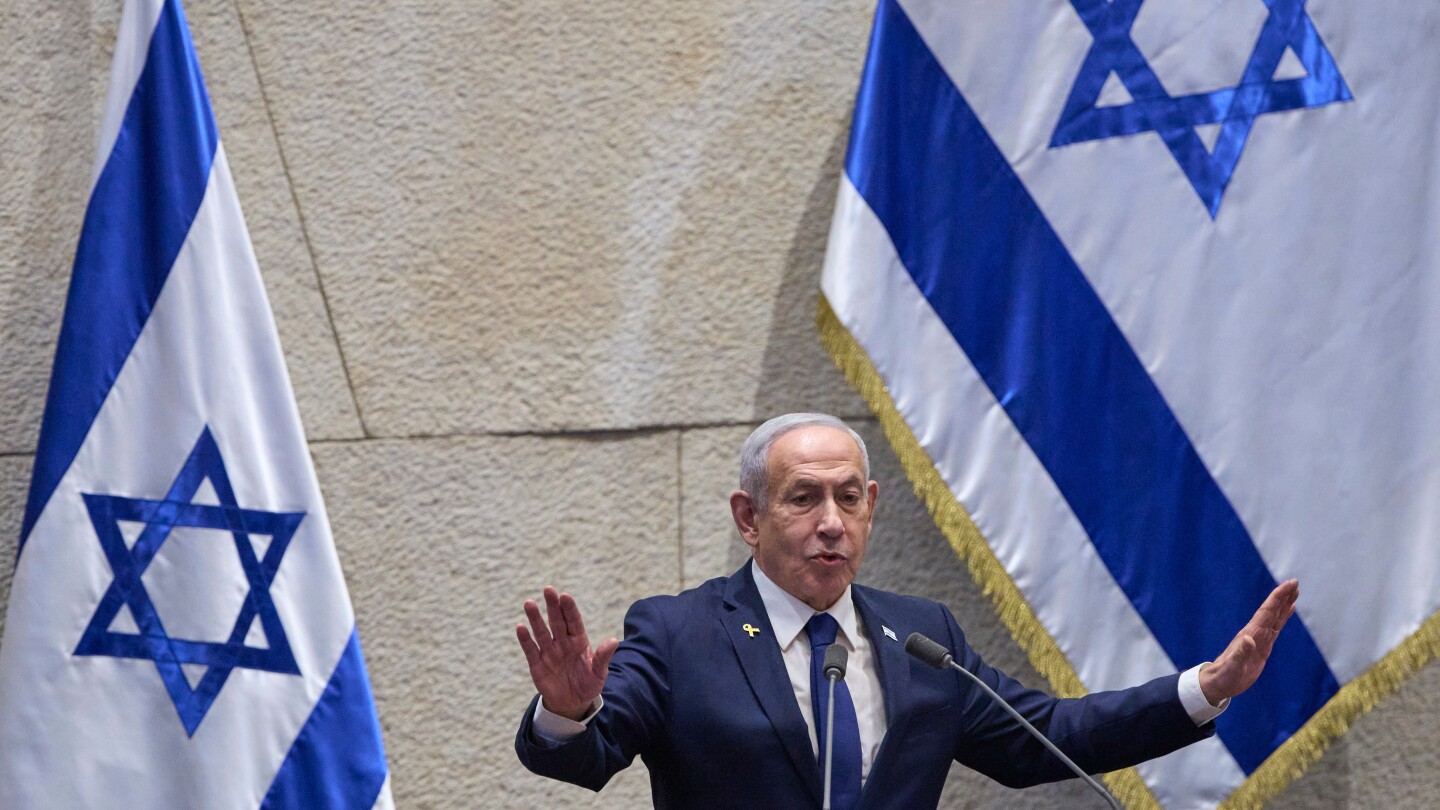
Israeli Prime Minister Benjamin Netanyahu has formally requested a presidential pardon to end his ongoing corruption trial, a move that has intensified political divisions in a country already grappling with wartime challenges.
In a statement released Sunday, Netanyahu’s office confirmed he had submitted the pardon request to the legal department of the President’s Office. President Isaac Herzog’s office described the application as an “extraordinary request” with “significant implications” for the country.
Netanyahu stands as the only sitting prime minister in Israeli history to face criminal charges while in office. He has been indicted on counts of fraud, breach of trust, and accepting bribes in three separate cases involving allegations of exchanging political favors with wealthy supporters. The trial has been ongoing for years, though no conviction has been reached.
In a videotaped statement explaining his request, Netanyahu argued that the trial has become a divisive force in Israeli society at a time when national unity is essential. “The continuation of the trial tears us apart from within, stirs up this division, and deepens rifts,” he said. He also claimed that the requirement to appear in court three times weekly impedes his ability to govern effectively during a critical period for the nation.
The timing of Netanyahu’s request has raised eyebrows, coming just weeks after U.S. President Donald Trump publicly urged Israel to pardon him during a speech to Israel’s parliament. Trump subsequently sent a letter to President Herzog characterizing the case as a “political, unjustified prosecution.”
The legal process following Netanyahu’s request involves multiple steps. The pardon application, consisting of a detailed letter from his attorney and a personal letter from Netanyahu himself, will be forwarded to the Justice Ministry for review before being transferred to the president’s legal advisers.
Legal experts have questioned the viability of granting a pardon while legal proceedings are active. Emi Palmor, former director-general of the Justice Ministry, noted, “You cannot claim that you’re innocent while the trial is going on and come to the president and ask him to intervene.” The Israel Democracy Institute has warned that “a pardon before conviction, while legal proceedings are ongoing, threatens the rule of law and seriously undermines the principle of equality before the law.”
Netanyahu’s current stance contrasts sharply with his past positions. In 2008, as opposition leader, he called on then-Prime Minister Ehud Olmert to resign amid corruption allegations, arguing that a leader “up to his neck” in scandal lacked a mandate to govern. Olmert ultimately resigned before being indicted and later served 16 months in prison.
Since his own legal troubles began, Netanyahu has portrayed himself as the victim of a “deep state” conspiracy. Shortly after forming his current government in late 2022, he launched a controversial overhaul of Israel’s justice system, which critics viewed as an attempt to weaken judicial oversight and protect himself from prosecution. The reform efforts triggered massive street protests, with opponents arguing that the resulting national divisions projected weakness that may have emboldened Hamas to launch its October 2023 attacks.
The pardon request has predictably split Israeli society along familiar political lines. Opposition leader Yair Lapid rejected the possibility of a pardon without “an admission of guilt, an expression of remorse and an immediate retirement from political life.” The Movement for Quality Government in Israel warned that granting such a pardon would effectively place certain citizens above the law.
However, Netanyahu maintains support among his base. Jerusalem resident Lior Gal expressed approval of the request, stating, “Bibi Netanyahu did totally the right thing requesting the pardon. He deserves to be pardoned. This chapter should be over and to remain united people and carry on.”
As the request proceeds through legal channels, its outcome remains uncertain. While the president has broad discretion in pardon decisions, the unprecedented nature of pardoning a sitting prime minister during an active trial presents complex constitutional and ethical questions for Israel’s democratic institutions.
Fact Checker
Verify the accuracy of this article using The Disinformation Commission analysis and real-time sources.

8 Comments
A pardon in this case would be a major decision with far-reaching implications. While the trial has been divisive, upholding the rule of law and maintaining public trust in the justice system should be the priority. This is a complex issue without any easy solutions.
The ongoing corruption trial against a sitting Prime Minister is certainly unprecedented and politically fraught. While national unity is important, a pardon could undermine the integrity of Israel’s democratic institutions. It will be fascinating to see how this plays out.
Corruption trials of high-level officials are always politically fraught. I can understand Netanyahu’s desire to end the trial, but a pardon seems like a dangerous precedent that could erode public trust in the justice system.
I agree, a pardon would be a very risky move and could open the door for further erosion of democratic norms. The Israeli public deserves a fair and transparent judicial process.
This is a challenging situation with no easy answers. On one hand, the trial has been divisive, but on the other, a pardon could set a worrying precedent. I’m curious to see how the President’s Office responds to this ‘extraordinary request’.
This is a high-stakes situation that speaks to the delicate balance between political expediency and the rule of law. While I can understand Netanyahu’s perspective, a pardon could set a dangerous precedent that compromises the integrity of Israel’s judicial system.
I agree, the potential ramifications of a pardon in this case are quite concerning. Maintaining an independent and impartial justice system is critical for a healthy democracy, even in the face of political pressures.
This is a complex and controversial situation. While Netanyahu’s claims about national unity are understandable, a presidential pardon would set a concerning precedent and could undermine the rule of law. It will be interesting to see how this plays out.