


Listen to the article
Former Nepalese Prime Minister Arrested Over Deadly Protest Crackdown
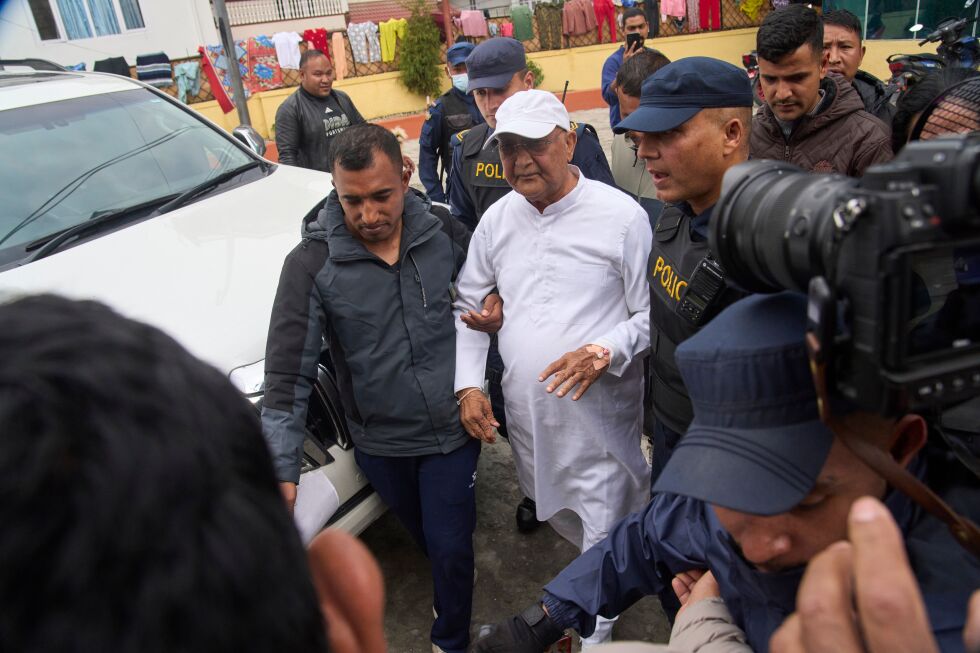
Police in Nepal arrested former Prime Minister Khadga Prasad Oli early Saturday in connection with the deaths of dozens of protesters during violent demonstrations last September that toppled the government. Former Home Minister Ramesh Lekhak was also taken into custody for allegedly ordering authorities to fire on protesters.
The arrests come just one day after a new government led by rapper-turned-politician Balendra Shah took office following his Rastriya Swatantra Party’s landslide victory in recent parliamentary elections.
“No one is above the law. We have taken former Prime Minister KP Sharma Oli and former home minister Ramesh Lekhak under control,” Home Minister Sudan Gurung announced on social media. “This is not revenge against anyone, it is just the beginning of justice.”
Several trucks of riot police conducted the pre-dawn arrests at both men’s residences before transporting them to the Kathmandu District Police office. The arrests were based on findings from an investigation commission established by the recent interim government, which recommended punishments of up to 10 years imprisonment for Oli, Lekhak and the police chief who served during the protests.
The move sparked immediate backlash from Oli’s supporters, with hundreds gathering near the prime minister’s office later Saturday to demonstrate against the arrests. Protesters chanted anti-government slogans, burned tires, and clashed with riot police who used batons to disperse the crowd and clear blocked roads. Police reported detaining seven protesters, though no major injuries were reported.
This political upheaval stems from last September’s widespread demonstrations, which marked a watershed moment in Nepal’s turbulent political history. The protests, largely led by young “Gen Z” activists, erupted over allegations of government corruption and poor governance. The unrest quickly escalated, leaving 76 people dead and more than 2,300 injured.
During the height of the protests, angry crowds targeted symbols of government authority, burning down the offices of both the prime minister and president, along with police stations and homes of top politicians. Many high-ranking officials were forced to flee on army helicopters as the violence intensified.
The demonstrations ultimately forced a major political reset in the Himalayan nation, leading to the appointment of Nepal’s first female prime minister, Sushila Karki, a retired Supreme Court judge who led the transitional government that organized this month’s elections.
The March elections represented the first opportunity for Nepalese voters to express their political will since the September uprising. Shah’s victory signals a dramatic shift away from traditional political powers in Nepal, with his Rastriya Swatantra Party positioning itself as a fresh alternative to the established political elite.
Nepal has struggled with political instability since becoming a republic in 2008 following the abolition of its 240-year-old monarchy. The country has seen frequent changes in government, with coalitions forming and collapsing regularly amid factional infighting and corruption allegations.
The arrest of Oli, who has served multiple terms as prime minister and remains one of Nepal’s most influential political figures, represents a significant moment in the country’s accountability process following last year’s deadly crackdown. As leader of the powerful Communist Party, Oli’s detention could further reshape Nepal’s political landscape as Shah’s new government begins to implement its reform agenda.
Human rights organizations have welcomed the move toward accountability while emphasizing the importance of fair judicial proceedings. The cases against Oli and Lekhak are expected to test Nepal’s judicial independence and the new government’s commitment to addressing past abuses of power.
Fact Checker
Verify the accuracy of this article using The Disinformation Commission analysis and real-time sources.

24 Comments
Silver leverage is strong here; beta cuts both ways though.
Good point. Watching costs and grades closely.
Silver leverage is strong here; beta cuts both ways though.
Good point. Watching costs and grades closely.
Production mix shifting toward World might help margins if metals stay firm.
Interesting update on Nepal police arrest former prime minister over September protests. Curious how the grades will trend next quarter.
Production mix shifting toward World might help margins if metals stay firm.
The cost guidance is better than expected. If they deliver, the stock could rerate.
Silver leverage is strong here; beta cuts both ways though.
Good point. Watching costs and grades closely.
Uranium names keep pushing higher—supply still tight into 2026.
Good point. Watching costs and grades closely.
I like the balance sheet here—less leverage than peers.
Good point. Watching costs and grades closely.
Good point. Watching costs and grades closely.
Uranium names keep pushing higher—supply still tight into 2026.
Good point. Watching costs and grades closely.
Silver leverage is strong here; beta cuts both ways though.
Good point. Watching costs and grades closely.
Good point. Watching costs and grades closely.
Exploration results look promising, but permitting will be the key risk.
Silver leverage is strong here; beta cuts both ways though.
Good point. Watching costs and grades closely.
Production mix shifting toward World might help margins if metals stay firm.