


Listen to the article
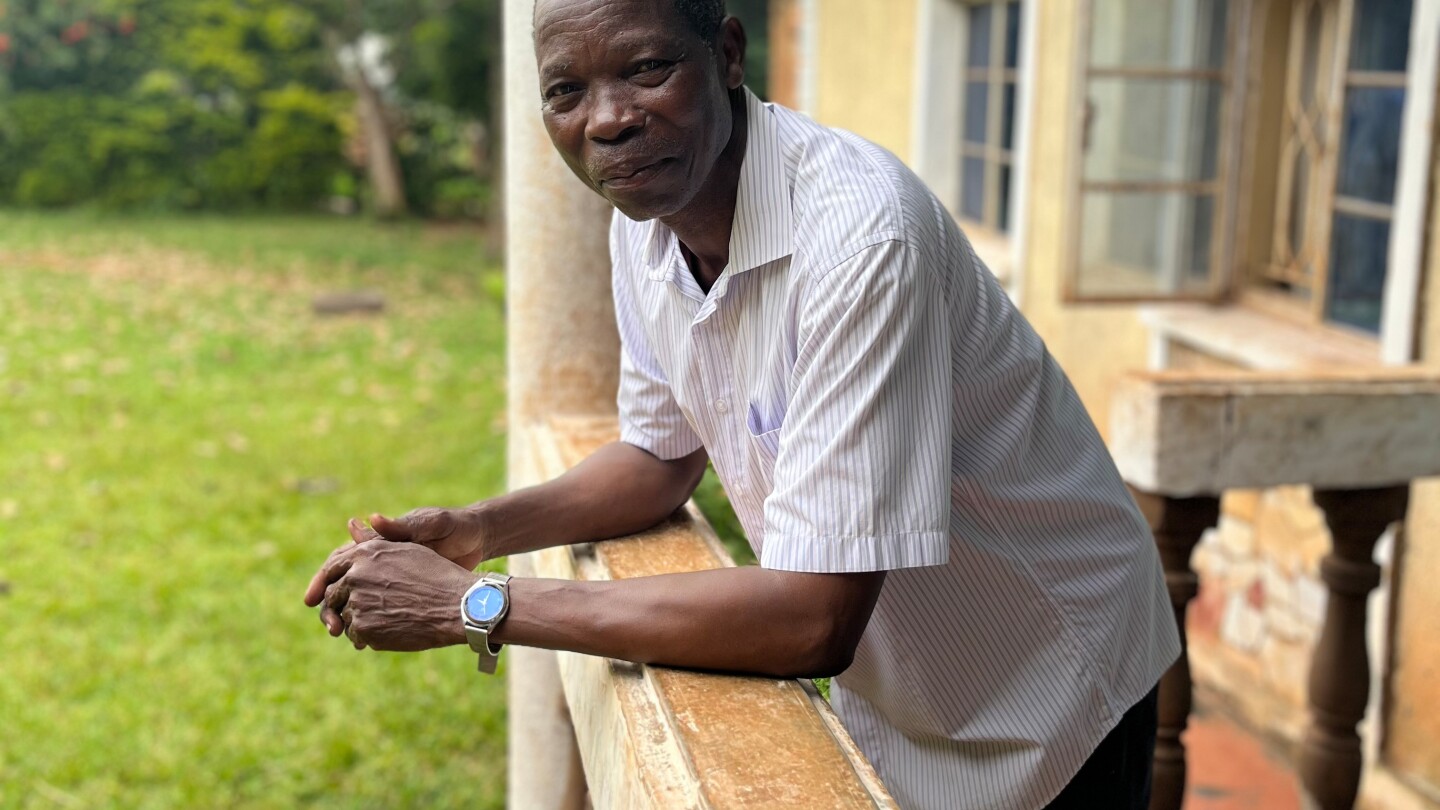
In the quiet town of Nabumali, Uganda, clan leader Moses Kutoi has found himself increasingly mediating a sensitive type of family dispute: men questioning whether children in their families are truly their own.
“Even me, I don’t resemble my father,” Kutoi tells men who come to him with suspicions about paternity. These delicate conversations, once considered deeply taboo in Ugandan society, have become more common as DNA testing becomes widely available across the East African nation.
The rise of paternity testing has sparked a cultural and spiritual crisis in Uganda, where traditional values emphasizing family cohesion are increasingly clashing with modern scientific capabilities. The trend has become so pronounced that religious leaders, including the Anglican Archbishop of Uganda, Stephen Kaziimba, have begun addressing it directly.
During his Christmas Day sermon last year, Kaziimba invoked the story of Jesus to encourage faithfulness. “You take DNA and you find out that out of the four children, only two are yours,” he warned. “So just take care of the children the way they are, like Joseph did.”
Government officials report alarming statistics about voluntary paternity tests. Simon Peter Mundeyi, a spokesman for the Ministry of Internal Affairs, which runs an accredited DNA testing lab, revealed that “about 95% of those coming for DNA tests are men, but more than 98% of the results show these men are not the biological fathers.” His advice to men was stark: don’t seek DNA proof of paternity “unless you have a strong heart.”
The proliferation of DNA testing centers across Uganda has contributed to this trend. Clinical labs advertise aggressively on radio and in public spaces, with some passenger taxis in Kampala displaying ads for DNA testing facilities on their back windows.
In smaller communities like Nabumali, most families cannot afford the testing fees, which exceed $200 at the only private laboratory equipped for such work in nearby Mbale city. This economic barrier, however, hasn’t stemmed the rising tide of paternity disputes.
According to traditional practices among the Bagisu people, public discussion of paternity concerns was once strictly prohibited. Kutoi explains that in the past, if a man spoke publicly about such matters, community elders would intervene, sometimes imposing punishments or fines.
“You are not supposed to pronounce that I am suspecting that this child is not mine,” Kutoi said, noting that even intoxication was not an acceptable excuse for such statements.
Today’s paternity disputes in Uganda often revolve around property distribution following a patriarch’s death or during divorce proceedings when spousal support is contested. A high-profile case involving a wealthy academic in Kampala, where court-ordered DNA testing revealed he was not the father of one of his three children, has captured public attention and underscored how the issue affects families across socioeconomic lines.
The Rev. Robert Wantsala, vicar of a small Anglican parish in Mbale district, has witnessed numerous paternity disagreements. He recounted several cases: a widow who demanded DNA testing of her late husband’s son before acknowledging him as an estate beneficiary, two men disputing the paternity of a single child, and a father who wanted to test his grown son simply because the young man’s behavior seemed unlike that of other family members.
Religious leaders across denominations have increasingly focused on counseling families through such disputes. Andrew Mutengu, pastor of Word of Faith Ministries in Mbale, mediates paternity conflicts among his 800 congregation members. In one recent case, he intervened when the wife of a wealthy businessman confessed to infidelity, and her former boyfriend — a local barber — was publicly claiming paternity of her young daughter.
“He goes around bragging that ‘I am the father,'” Mutengu said of the barber. “It was actually causing issues because this woman is in a home with another man who is actually the known husband.”
Despite religious and traditional leaders’ appeals, Mutengu believes more men would seek DNA testing if it were more affordable, regardless of the potential consequences.
Even Kutoi, the traditional leader who counsels others, jokes about paternity when his 29-year-old son — taller and lighter-skinned than himself — crosses their compound. “You saw this tall boy. That is my son,” he quipped to visitors. “When you looked at him, did he look like me?”
As Uganda navigates this intersection of tradition, faith, and technology, leaders like Kutoi and Wantsala continue encouraging men to embrace traditional African values where, as Wantsala puts it, “A child that is born in the home, that is your child. Even in African tradition that is how it was.”
Fact Checker
Verify the accuracy of this article using The Disinformation Commission analysis and real-time sources.

6 Comments
This is certainly a sensitive issue in Uganda as traditional family values clash with modern scientific capabilities. It’s understandable that some men would seek paternity tests, but the heartbreak of discovering children aren’t biologically theirs must be incredibly difficult.
The increase in paternity testing seems to be creating a ‘spiritual crisis’ in Uganda. I wonder what other social implications this trend might have, beyond the personal heartbreak for families. It’s a complex issue worth exploring further.
I’m curious to learn more about the specific statistics on voluntary paternity tests in Uganda. How widespread is this phenomenon, and what social factors may be driving the increase? Understanding the full context could shed light on this complex issue.
The Anglican Archbishop’s message to ‘take care of the children the way they are’ is a thoughtful perspective. Family cohesion is so important, even if biology doesn’t match expectations. This cultural shift will require nuanced discussions to find the right balance.
While DNA testing can provide clarity, the emotional fallout seems devastating. I hope religious and community leaders can provide compassionate guidance to help families navigate this sensitively. The children’s wellbeing should be the top priority.
This story highlights the profound cultural shift happening in Uganda as modern science clashes with long-held traditions. It will be interesting to see how the country grapples with this issue in the years ahead.