


Listen to the article
Turkish, Qatari and Egyptian officials convened in Cairo on Wednesday to discuss advancing the second phase of the Israel-Hamas ceasefire agreement, amid ongoing accusations of violations from both sides of the conflict.
The high-level meeting brought together intelligence chiefs from Turkey and Egypt along with Qatar’s prime minister, according to multiple sources familiar with the talks. The gathering focused on strengthening coordination through the Civil Military Coordination Center to ensure the durability of the fragile ceasefire.
“During the meeting, they also agreed to continue strengthening coordination and cooperation with the Civil Military Coordination Center to eliminate all obstacles to ensure the continuity of the ceasefire and to prevent further violations,” a Turkish source told Reuters. Participants reportedly discussed strategies for addressing what they characterized as Israeli violations of the existing agreement.
Despite mutual accusations from Hamas and Israel regarding ceasefire infractions, international mediators remain committed to progressing to the next stage of the U.S.-brokered peace process. The second phase entails several critical components, including the deployment of an international stabilization force to Gaza and the establishment of an international governing body for the territory.
A key element of the agreement requires the disarmament of Hamas, which has controlled Gaza since 2007. The plan also calls for Israeli forces to withdraw further from the designated “yellow line” boundary, allowing international forces to assume security responsibilities in those areas, according to The Times of Israel.
The talks come against the backdrop of continued hostage exchanges. On Tuesday, Israel returned the bodies of 15 Palestinians in exchange for the remains of Israeli hostage Dror Or. According to Israeli authorities, Or and his wife Yonat were killed during Hamas’ October 7, 2023, attack on Kibbutz Be’eri.
The Hostages and Missing Families Forum provided a poignant account of the couple’s final moments, stating that as their home caught fire during the attack, Dror and Yonat evacuated their children through a window in the safe room, saving their lives. The parents separated in an attempt to escape but were both killed by militants. Two of their children, Noam and Alma, were taken hostage.
In a remarkable coincidence that highlights the prolonged nature of this conflict, Noam and Alma were released exactly two years before their father’s remains were returned to Israel—both occurring on November 25, though two years apart.
The remains of two additional hostages—Israeli citizen Ran Gvili and Thai national Sudthisak Rinthalak—are still being held in Gaza. Hamas has pledged to fulfill its obligation to return both sets of remains but has not provided a timeline for doing so.
The ongoing prisoner and remains exchanges represent tangible progress in implementing the ceasefire agreement, though numerous challenges remain. The establishment of an international stabilization force will require significant cooperation between regional stakeholders and likely involvement from Western nations. The disarmament of Hamas presents perhaps the most formidable obstacle, as the militant group has historically resisted such measures.
Regional powers Turkey, Qatar, and Egypt have emerged as crucial intermediaries in this process, leveraging their respective relationships with both Israeli and Palestinian factions. Qatar, in particular, has hosted Hamas political leaders for years and has played a central role in facilitating negotiations.
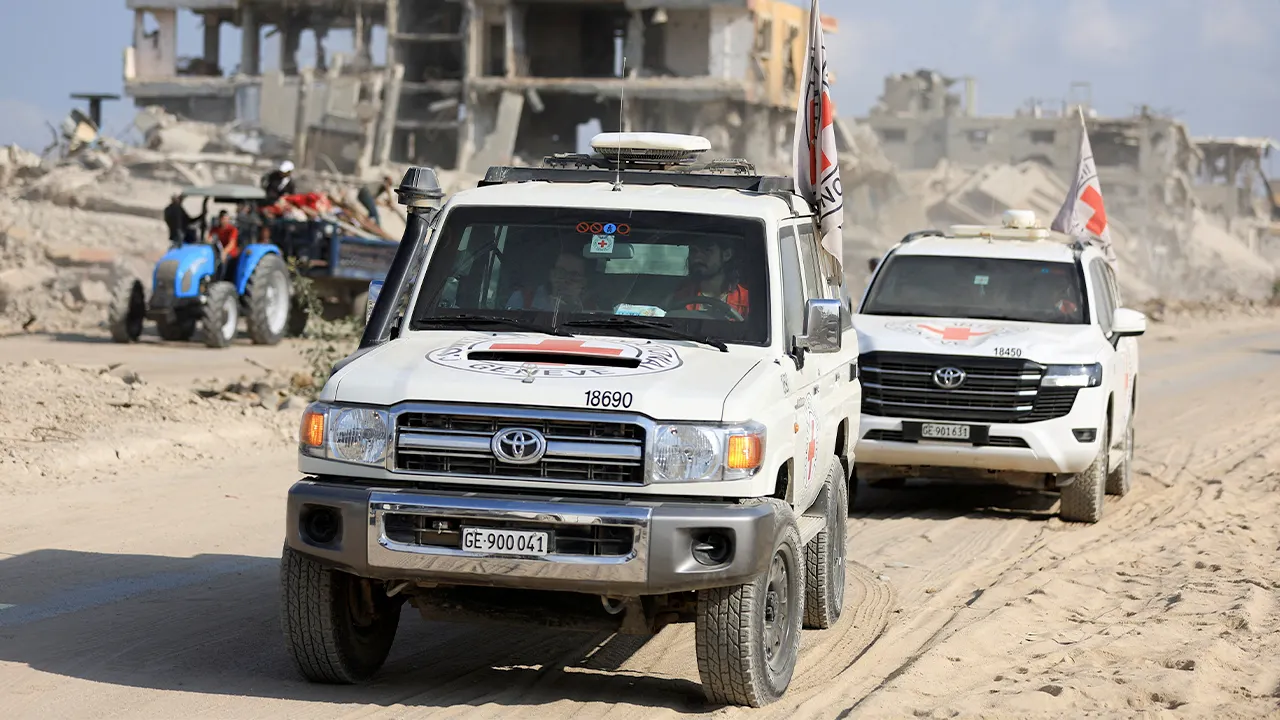
As discussions continue, the humanitarian situation in Gaza remains precarious, with ongoing concerns about aid delivery and reconstruction efforts in areas devastated by more than a year of conflict.
Fact Checker
Verify the accuracy of this article using The Disinformation Commission analysis and real-time sources.

33 Comments
Uranium names keep pushing higher—supply still tight into 2026.
Good point. Watching costs and grades closely.
Good point. Watching costs and grades closely.
The cost guidance is better than expected. If they deliver, the stock could rerate.
Good point. Watching costs and grades closely.
Good point. Watching costs and grades closely.
Silver leverage is strong here; beta cuts both ways though.
Production mix shifting toward World might help margins if metals stay firm.
Good point. Watching costs and grades closely.
Interesting update on Middle East Officials Plan Next Phase of Israel-Hamas Ceasefire as Two Hostages Remain in Gaza. Curious how the grades will trend next quarter.
Good point. Watching costs and grades closely.
Exploration results look promising, but permitting will be the key risk.
The cost guidance is better than expected. If they deliver, the stock could rerate.
Good point. Watching costs and grades closely.
Good point. Watching costs and grades closely.
Nice to see insider buying—usually a good signal in this space.
Good point. Watching costs and grades closely.
Good point. Watching costs and grades closely.
Uranium names keep pushing higher—supply still tight into 2026.
Good point. Watching costs and grades closely.
Nice to see insider buying—usually a good signal in this space.
Good point. Watching costs and grades closely.
The cost guidance is better than expected. If they deliver, the stock could rerate.
Good point. Watching costs and grades closely.
Good point. Watching costs and grades closely.
If AISC keeps dropping, this becomes investable for me.
Good point. Watching costs and grades closely.
The cost guidance is better than expected. If they deliver, the stock could rerate.
Good point. Watching costs and grades closely.
Exploration results look promising, but permitting will be the key risk.
Good point. Watching costs and grades closely.
Uranium names keep pushing higher—supply still tight into 2026.
Good point. Watching costs and grades closely.