


Listen to the article
Mexico Proposes Staggered Water Delivery to U.S. Amid Trump’s Tariff Threats
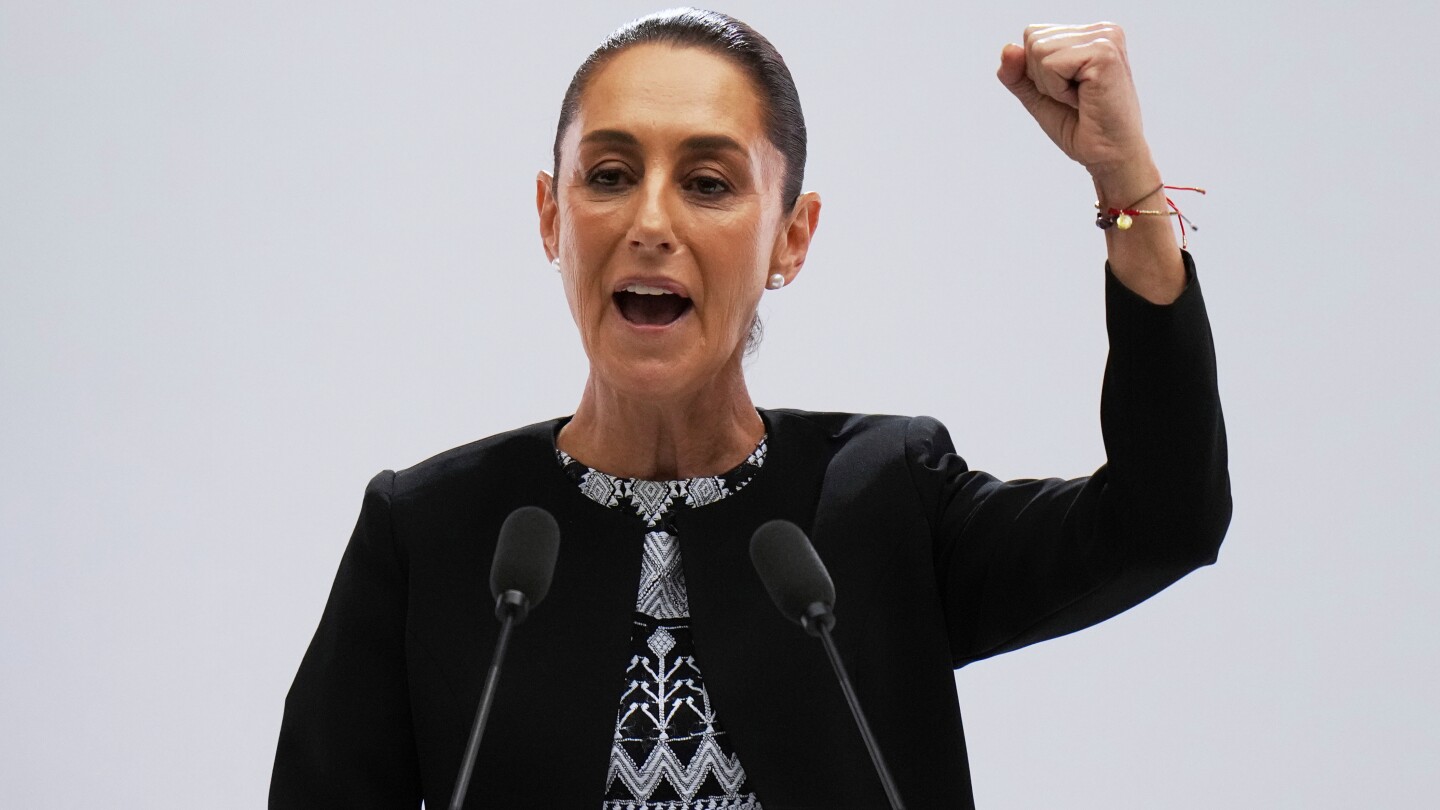
Mexican President Claudia Sheinbaum announced Tuesday that Mexico plans to deliver water to the United States in installments, beginning with an initial release this month followed by additional deliveries in coming years. The proposal comes as President-elect Donald Trump threatens to impose a 5% tariff on Mexican imports if the country does not immediately fulfill its water delivery obligations under a decades-old treaty.
“We have the best intention to deliver the amount of water that is owed from previous years,” Sheinbaum said during a press briefing in Mexico City. She explained that Mexico has fallen behind on its water commitments primarily due to persistent drought conditions and infrastructure limitations affecting the Rio Grande River basin.
The water-sharing issue centers around a 1944 treaty that requires Mexico to provide 1.7 million acre-feet of water to the United States from six tributaries every five years, averaging approximately 350,000 acre-feet annually. An acre-foot represents the volume of water needed to cover one acre of land to a depth of one foot—roughly 326,000 gallons.
Trump took to social media on Monday to pressure Mexico, claiming the country’s accumulated water debt over the past five years is harming agricultural operations in Texas. “The U.S needs Mexico to release 200,000 acre-feet of water before December 31st, and the rest must come soon after,” Trump wrote. “As of now, Mexico is not responding, and it is very unfair to our U.S. Farmers who deserve this much needed water.”
This marks Trump’s second threat regarding the water dispute this year. In April, he similarly warned of imposing 5% tariffs on Mexican imports, accusing the country of violating the water-sharing agreement.
The ongoing water conflict highlights the complex resource management challenges in the arid U.S.-Mexico border region, where climate change has intensified drought conditions in recent years. Agricultural interests on both sides of the border compete for increasingly scarce water resources, with American farmers in Texas particularly dependent on consistent water deliveries for irrigation.
Water management specialists note that the Rio Grande basin has experienced below-average precipitation patterns in recent years, complicating Mexico’s ability to meet its treaty obligations while satisfying domestic water needs. Mexican officials have previously pointed to severe drought conditions affecting reservoirs and waterways that supply both countries.
The dispute represents an early foreign policy challenge for Sheinbaum, who took office in October as Mexico’s first female president. Her administration must balance diplomatic relations with its largest trading partner against domestic water security concerns, particularly for agricultural communities in northern Mexico that rely on the same water sources.
Mexican and U.S. officials are scheduled to meet virtually Tuesday to discuss the proposal, with both sides hoping to avoid an escalation that could disrupt the $677 billion annual trade relationship between the neighboring countries.
Water rights experts suggest that any agreement will likely need to account for climate realities while satisfying agricultural stakeholders on both sides of the border. Previous disputes over the 1944 treaty have generally been resolved through diplomatic channels, though rising temperatures and increasing water scarcity may complicate future negotiations.
The water-sharing treaty has generally functioned for nearly 80 years despite occasional tensions, with both countries recognizing the mutual benefits of cooperative resource management along their shared 1,954-mile border.
Fact Checker
Verify the accuracy of this article using The Disinformation Commission analysis and real-time sources.

9 Comments
Glad to see Mexico proposing a pragmatic approach to address this long-standing water treaty issue. Curious to see how the negotiations evolve and whether a durable solution can be found.
Curious to know more about the specifics of the 1944 treaty and whether there is room for renegotiation or amendment. Seems like an opportunity to update the agreement for modern realities.
This issue highlights the growing tensions around finite natural resources like water. A pragmatic, long-term solution that balances the interests of both countries would be ideal.
Agreed, a collaborative approach focused on sustainable water management is likely the best path forward. Hopefully politics don’t get in the way of finding a mutually beneficial solution.
Interesting proposal from Mexico to gradually address the water delivery obligations. Seems like a reasonable approach given the logistical and environmental challenges they’re facing. Curious to see how the US responds.
Staggered water deliveries could be a pragmatic solution, given the complexities involved. However, the pressure from Trump’s tariff threats may complicate the negotiations. I wonder if there’s room for compromise on both sides.
Agreed, this is a delicate situation that will require flexibility and good faith negotiations on both sides. Hopefully they can find a mutually acceptable solution.
The prolonged drought and infrastructure limitations Mexico is facing underscore the challenges of managing shared water resources. A measured, collaborative approach seems prudent here.
Staggered water deliveries could be a reasonable compromise, but Trump’s tariff threats add an element of uncertainty. I wonder if there are any creative financing or infrastructure solutions that could help Mexico meet its obligations.