


Listen to the article
Mexico Claims One-Third of Missing People Show Signs of Life, Sparking Controversy
Mexico’s government announced Friday that approximately one-third of the country’s 130,000 officially missing people have shown signs of life in government records, igniting immediate criticism from search organizations who view it as an attempt to downplay the nation’s disappearance crisis.
The findings come amid a longstanding dispute over how Mexico tracks disappearances, which have surged since the beginning of the drug war in 2006. While authorities argue the numbers are inflated, families of the missing contend the actual figures are far higher, with both sides blaming local governments’ failures and pervasive impunity.
Marcela Figueroa, a senior security official, revealed that by cross-referencing vaccination records, birth and marriage registries, and tax filings, officials discovered that 40,367 people—about 31% of reported disappearances—showed activity in government systems since being reported missing. This data, she suggested, indicates these individuals might still be alive.
Through this methodology and consultation with search groups, Figueroa said the government located 5,269 people who could be marked as “found.” She characterized many disappearances as “voluntary absences,” citing examples such as men leaving partners for other relationships or women fleeing abusive situations.
“Not all disappearances are the same,” Figueroa stated, emphasizing the government’s ongoing efforts to locate missing persons.
However, search organizations have responded with skepticism. Héctor Flores, who leads a search collective in Jalisco state—a epicenter of Mexico’s disappearance crisis—called the report “misleading” and criticized its lack of methodological transparency.
“For us, it’s just another attempt by the administration to hide and downplay the numbers and continue to paint a picture that doesn’t reflect the reality of what we’re living through,” said Flores, whose 19-year-old son was forcibly disappeared by agents from the Jalisco state prosecutor’s office in 2021.
Groups like Flores’ have long accused the government of “trying to disappear the disappeared” to improve Mexico’s international image. Historical corruption and inadequate investigations have fueled deep distrust among families who fear that registry changes could remove legitimate cases and hinder search efforts.
According to Friday’s report, 46,000 people (36% of those registered as missing) had incomplete data such as missing names and dates, making searches impossible. Meanwhile, 43,128 individuals (33%) showed no registered activities in government databases. Alarmingly, less than 10% of these cases are under criminal investigation, which Figueroa acknowledged as a failure of Mexican authorities.
Figueroa said the government is more rigorously monitoring local prosecutors’ offices that have failed to investigate and document missing persons cases, and has worked to increase the number of cases under investigation.
“Society and the families can trust in the records and better tools to search for people,” she assured.
The reinterpreted figures are part of a broader initiative to organize what has become a complex and emotionally charged data set tied to a collective trauma in Mexico. Forcible disappearances have long been a tactic used by cartels to maintain control through terror while concealing homicide statistics. Some of Mexico’s most disturbing mass disappearance cases, including the vanishing of 43 students in central Mexico, have been linked to state actors.
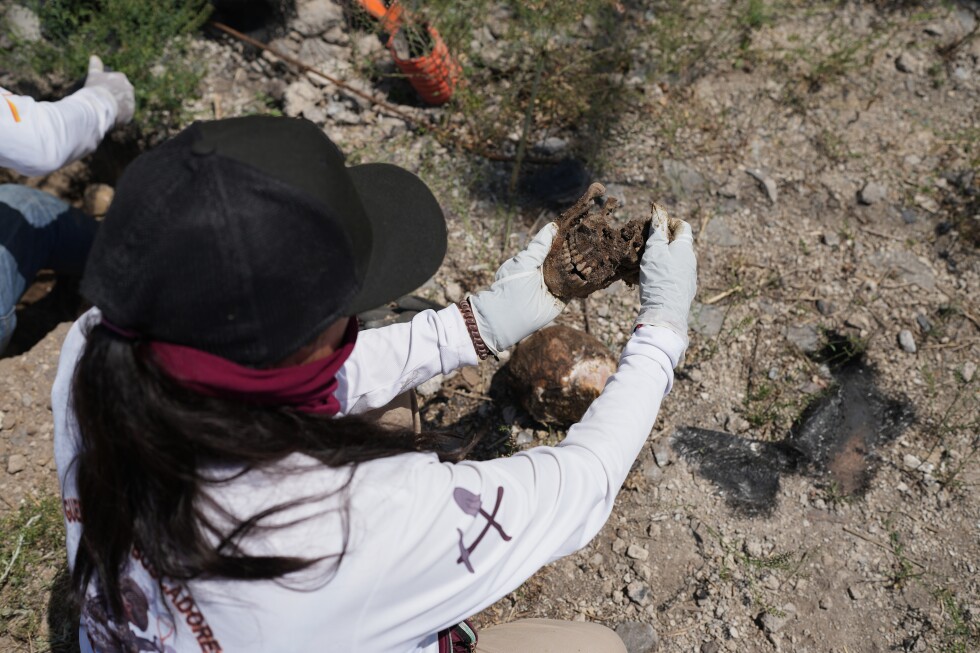
The 130,000 people registered as missing since 2006 would populate a small city, and flyers bearing the faces of missing individuals line the streets of major Mexican urban centers.
María Luisa Aguilar, director of the Miguel Agustín Pro Juárez Human Rights Center, which supports families searching for missing people, said each census revision has triggered fierce criticism and leaves families uncertain whether such changes will further hamper already difficult search processes.
The controversy intensified under former President Andrés Manuel López Obrador (2018-2024), whose government launched a census of the disappeared after claiming figures had been inflated to damage his administration. A wave of criticism in 2023 led to the resignation of the official leading the search for the disappeared.
While the Miguel Agustín Pro Juárez Human Rights Center welcomed efforts to improve data reliability, it criticized how officials presented the information, saying it “minimizes the state’s responsibility” in the disappearance crisis and offers little assistance to families who often must take search efforts into their own hands.
“Centering the conversation around a crisis of this magnitude on numbers is not the response that families of missing persons need after 20 years of such a sharp increase in disappearances,” Aguilar said. “When we see reports like the one today, it proves the victims right: What they want is to make the number of disappeared persons smaller.”
Fact Checker
Verify the accuracy of this article using The Disinformation Commission analysis and real-time sources.

9 Comments
This is a deeply troubling situation. While any positive news is welcome, the government’s methodology raises many questions. Continued dialogue and independent investigations will be crucial to uncovering the full truth and ensuring justice for the victims.
Addressing Mexico’s disappearance crisis requires a multi-faceted approach grounded in transparency and accountability. I hope the government can work closely with search organizations to provide clarity and support for affected families.
This is a complex and sensitive issue. While any positive news is welcome, the government’s methodology seems questionable. Transparency and collaboration with independent groups will be crucial to resolving Mexico’s disappearance crisis.
The high rate of missing persons in Mexico is truly alarming. I hope the government can work constructively with search organizations to provide clarity, support families, and take concrete steps to address this crisis.
I agree. Dismissing the concerns of search groups is concerning and could undermine efforts to locate the missing. An open and collaborative approach is needed to uncover the full truth and ensure justice.
The high number of missing persons in Mexico is deeply concerning. I hope the government can work closely with search groups and provide greater clarity on these findings to help locate the missing and support affected families.
Absolutely. Establishing accurate data and accountability should be the top priorities. Dismissing the concerns of search organizations is counterproductive and will only erode public trust.
This is a troubling and complex situation. While the government’s figures suggest some positive news, families of the missing deserve answers and accountability. Transparency and collaboration with search organizations will be crucial to addressing Mexico’s disappearance crisis effectively.
I agree. The government’s methodology in assessing the status of missing persons raises many questions and concerns. Continued dialogue and independent investigations will be needed to uncover the full truth and ensure justice for the victims and their loved ones.