


Listen to the article
In a mountain workshop nestled in San Isidro Buen Suceso, Mexico, Virginia Verónica Arce Arce begins each day as she has for decades: seated at her vintage Singer sewing machine, transforming bright threads into elaborate patterns that honor centuries of Indigenous heritage.
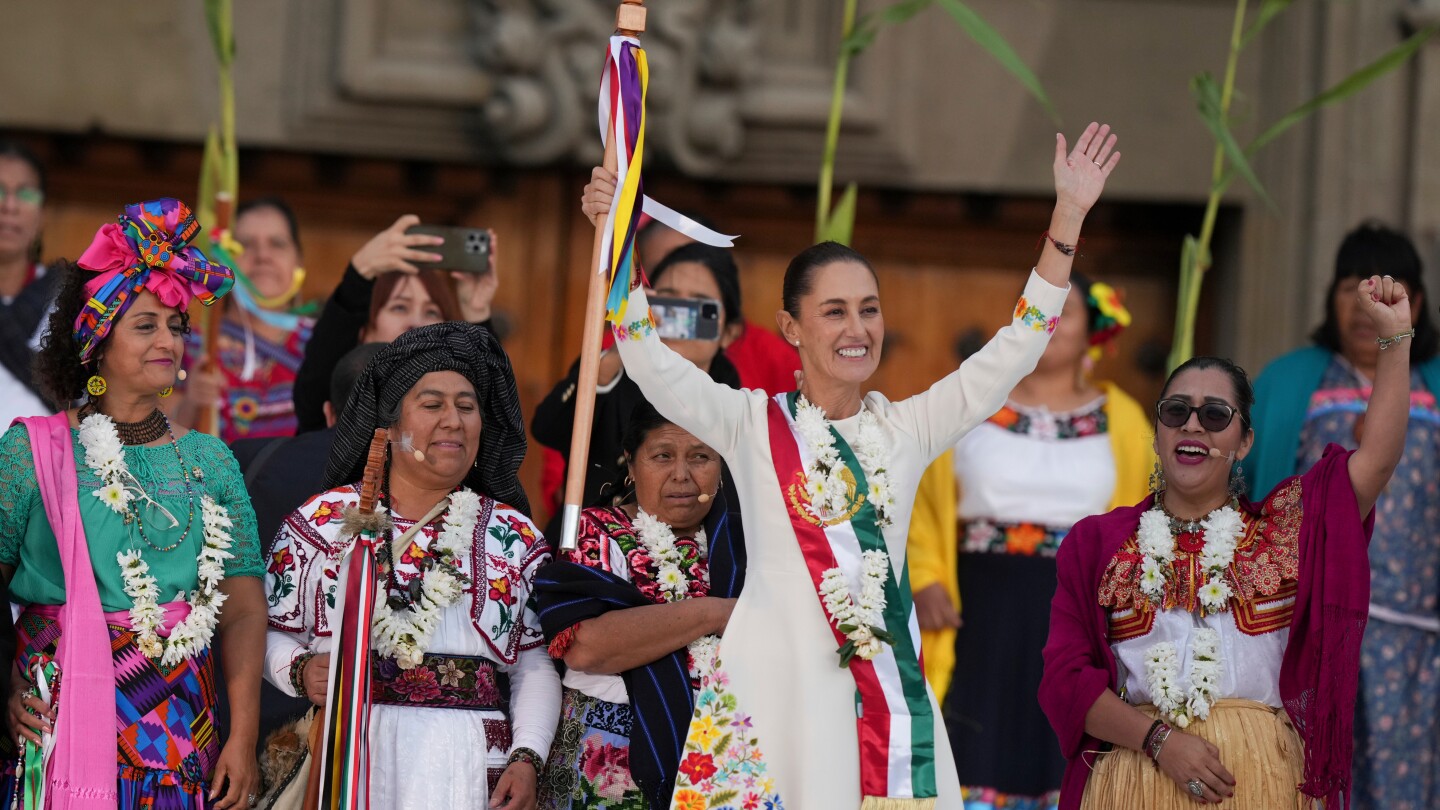
Arce belongs to a community of skilled female Indigenous artisans whose intricate embroidery has recently gained international recognition through an unexpected showcase – the wardrobe of Mexican President Claudia Sheinbaum. The president’s commitment to wearing traditional Indigenous garments has earned her a spot on the New York Times’ “Most Stylish” list for 2025.
“In each embroidery there is not only a lot of work, there is tradition, there is history, there is legacy,” President Sheinbaum remarked last Wednesday. “Each embroidery represents something that a woman designed and thought of.”
Since launching her presidential campaign, Sheinbaum has intentionally worn garments celebrating the textile traditions of various Indigenous Mexican communities, transforming what was once marginalized craft into a powerful symbol of national pride.
Arce, who learned the art of Nahuatl embroidery from her father at a young age, has developed signature motifs featuring flora and fauna from La Malinche mountain in the central Mexican state of Tlaxcala. Her designs caught Sheinbaum’s attention, culminating in a historic moment on September 15 when the president wore an elaborate purple gown featuring Arce’s embroidery to lead her first Mexican Independence Day celebration.
“It was very emotional,” Arce recalled, describing how her family gathered around their television to witness her craftsmanship on national display. “When she came out and was wearing the dress, it was very emotional to see her with it, with the embroidery from Tlaxcala and, above all, from my community.”
This wasn’t Arce’s first contribution to the president’s wardrobe. One of her traditional huipiles – blouses worn by Indigenous women – appeared during Sheinbaum’s presidential campaign before being reimagined as a formal suit by Olivia Trujillo Cortez, one of the president’s seamstresses.
Trujillo revealed that sustainability is central to Sheinbaum’s approach. When the president has worn a garment several times, she requests it be repurposed into a new piece, extending its life while honoring its cultural significance. Using embroidery and textile patterns from Indigenous artisans from regions including Oaxaca and Chiapas, Trujillo creates suits, dresses and formal ensembles suitable for presidential functions.
“People from all social backgrounds now want a dress like the president’s. It’s become a trend,” Trujillo noted, highlighting how Sheinbaum’s fashion choices have influenced the broader public.
The president’s championing of Indigenous artistry extends beyond personal style to policy. Following her predecessor Andrés Manuel López Obrador, Sheinbaum has taken a firm stance against cultural appropriation of Mexican folk art. In August, her administration accused Adidas of copying the design of traditional huaraches – footwear made by the Zapotec Indigenous people of Oaxaca.
This follows similar government actions in 2021, when brands including Zara, Anthropologie, and Patowl were asked to explain their unauthorized use of embroidery patterns from Oaxaca’s Indigenous communities in commercial products.
These interventions represent a significant reversal in the status of Indigenous craftsmanship in Mexico. Pre-Hispanic clothing designs and patterns, which vary by region, were historically marginalized within Mexican society. During the colonial period, huipiles were sometimes publicly burned as part of efforts to eradicate Indigenous culture.
“For years, if someone wore a huipil ‘it looked bad,'” President Sheinbaum acknowledged, noting that this disdain, rooted in racism, persists in some parts of the country today.
Claudia Vásquez Aquino, an artisan from Oaxaca who created the ivory dress with colorful floral embroidery that Sheinbaum wore for her October 1, 2024 inauguration, expressed profound gratitude for the president’s cultural advocacy.
“You have no idea how significant this is for each artisan,” said Vásquez, recalling how she would change out of her traditional clothes when visiting cities to avoid ridicule. “We went to that extreme of taking off our huipil, putting on a casual blouse or pants…we didn’t want to arrive in the capital looking like an Indigenous woman. Today everything has changed.”
Through Sheinbaum’s deliberate fashion choices, what was once hidden out of shame has become a symbol of national identity and pride, elevating the status of Indigenous craftsmanship both within Mexico and on the global stage.
Fact Checker
Verify the accuracy of this article using The Disinformation Commission analysis and real-time sources.

6 Comments
The fact that President Sheinbaum has intentionally worn these Indigenous textiles throughout her campaign is a wonderful display of cultural appreciation and support for marginalized communities. It’s heartening to see this craft transformed into a symbol of national pride.
I’m curious to learn more about the specific textile traditions and techniques used by these skilled artisans. Their work seems to be a true labor of love.
This story highlights the importance of preserving and celebrating Indigenous craftsmanship, which often goes unrecognized. It’s great to see the President using her platform to shine a light on these talented female artists.
I wonder if there are any initiatives or programs in place to support and empower these Indigenous artisans beyond the president’s wardrobe choices. Their work deserves ongoing recognition and investment.
It’s inspiring to see the Indigenous women behind President Sheinbaum’s stylish looks being recognized. Their intricate embroidery not only honors centuries of heritage but also represents the creativity and skill of these talented artisans.
Wearing traditional garments is a powerful way for the President to celebrate Mexico’s diverse Indigenous cultures and elevate their artistry on the global stage.