


Listen to the article
Israeli forces have replaced a crucifix that was vandalized by a soldier in southern Lebanon, amid ongoing tensions following the recent Israel-Hezbollah ceasefire. The incident, which occurred in the village of Debel, sparked international condemnation after images of the soldier destroying the religious symbol circulated widely online.
Houssam Naddaf, whose family owns the property where the crucifix stood, described his shock at seeing the footage. “I saw it on the internet like everyone else,” he said, explaining that movement restrictions imposed by Israeli forces had prevented him from visiting his home to assess the damage firsthand.
The Israeli military confirmed Tuesday that they had replaced the damaged sculpture and offered an apology to the family. The replacement ceremony was attended by local priests, though Naddaf’s family members were not present.
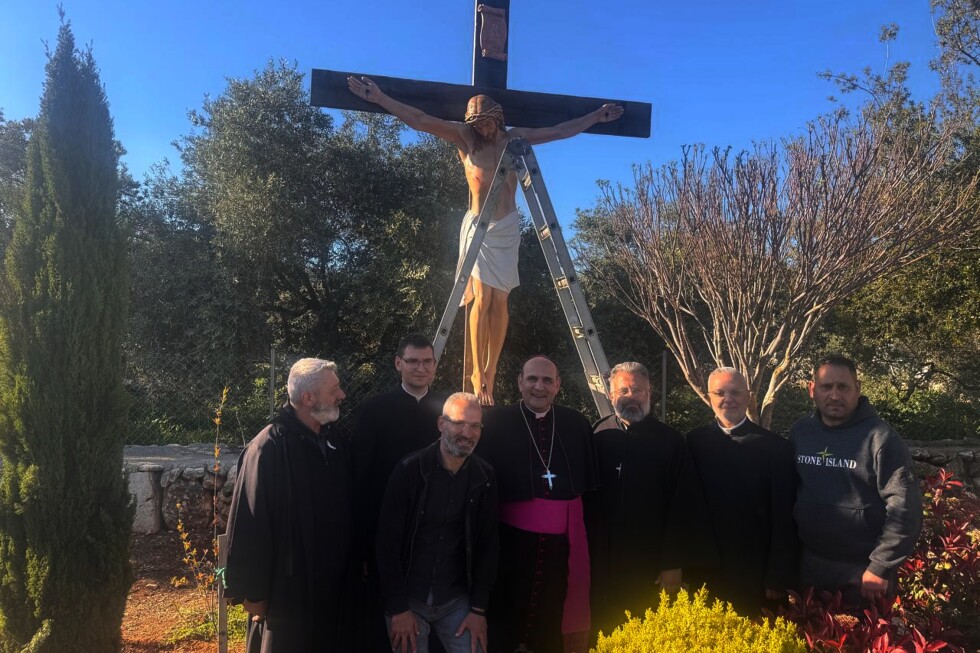
However, in a significant diplomatic gesture, Italy also offered to donate a replacement crucifix. The Naddaf family chose to accept the Italian donation, which was similar in size to their original statue, and donated the Israeli-provided one to a local church.
On Wednesday, a small ceremony took place to install the Italian-donated crucifix, attended by local priests, residents, UN peacekeepers, and members of the Naddaf family. Italian Prime Minister Giorgia Meloni sent a message describing the replacement as “a powerful message of peace, hope, and dialogue.”
The original crucifix had stood in the family’s garden since 2018, part of a shared property that Naddaf and his three brothers had divided into four apartments for their families. The home is situated on the outskirts of Debel, between the village and nearby Rmeish, an area considered more exposed to conflict than the village center.
Naddaf had relocated with his wife and three children to his parents’ home deeper inside Debel when hostilities between Hezbollah and Israel reignited on March 2. The conflict began when Hezbollah fired missiles across the border following the U.S. and Israel’s military action against Iran, leading to Israel’s ground invasion of southern Lebanon.
Despite last week’s ceasefire agreement, Israeli forces have been demolishing neighborhoods in towns and villages near the Lebanese-Israeli border. While the Israeli military maintains they only target buildings used by Hezbollah, the scale of destruction has raised concerns among Lebanese officials and residents about the feasibility of displaced people returning to their homes.
The Israeli military currently occupies a strip extending approximately 10 kilometers (6 miles) into Lebanese territory, which they describe as a necessary buffer zone to protect northern Israeli communities from Hezbollah rockets. This military presence continues despite the announced truce.
Unlike during previous conflicts, Naddaf’s family chose to remain in the village rather than evacuate to Beirut. “It was clear that the plan was expulsion, so we say good thing we didn’t leave this time,” he said, reflecting concerns shared by many Lebanese civilians about potential long-term displacement.
When Naddaf was finally able to visit his home during the crucifix installation, escorted by UN peacekeepers, he found it in “total mess.” Nevertheless, he expressed gratitude that his house remained standing, unlike several nearby homes that had been completely demolished.
The incident highlights the complex religious and cultural tensions that often accompany military conflicts in the region, as well as the ongoing humanitarian concerns for civilians caught in the crossfire of the Israel-Hezbollah war. The international response to the vandalism, particularly Italy’s intervention, also demonstrates how religious symbols can become focal points for diplomatic engagement even amid military hostilities.
Fact Checker
Verify the accuracy of this article using The Disinformation Commission analysis and real-time sources.

6 Comments
The destruction of religious symbols is always concerning, regardless of the context. I’m glad the Israeli military acknowledged the wrongdoing and worked to rectify the situation, but it’s unfortunate that the family had to experience this in the first place. Maintaining open dialogue and finding common ground is crucial for resolving such sensitive issues.
I agree. Open and respectful communication between all sides is essential for progress. Gestures like the Italian government’s offer to donate a replacement crucifix can help build bridges and foster greater understanding.
It’s good to see that the Israeli military took responsibility and made efforts to make amends, but the incident itself is regrettable. Religious and cultural sensitivities must be navigated with great care, especially in regions with longstanding tensions. I hope this leads to more constructive dialogue and a reduction in similar incidents going forward.
The destruction of religious symbols is always troubling, regardless of the context. I’m glad to see that the Israeli military took responsibility and worked to replace the crucifix, but it’s unfortunate that the family had to experience this in the first place. Fostering greater understanding and respect between all sides is crucial for resolving such sensitive issues.
This is a troubling incident that highlights the ongoing tensions and sensitivities in the region. While the Israeli military’s apology and replacement of the crucifix is a positive step, the damage to the family’s property is regrettable. I hope this leads to greater mutual understanding and respect between all parties involved.
This is a delicate situation that highlights the complexities of the region. While the military’s replacement of the crucifix is a positive step, the initial damage is still concerning. I hope this incident can serve as a catalyst for improved communication and mutual respect between all parties involved.