


Listen to the article
Lebanon’s Prime Minister Rejects Normalization with Israel Despite Diplomatic Talks
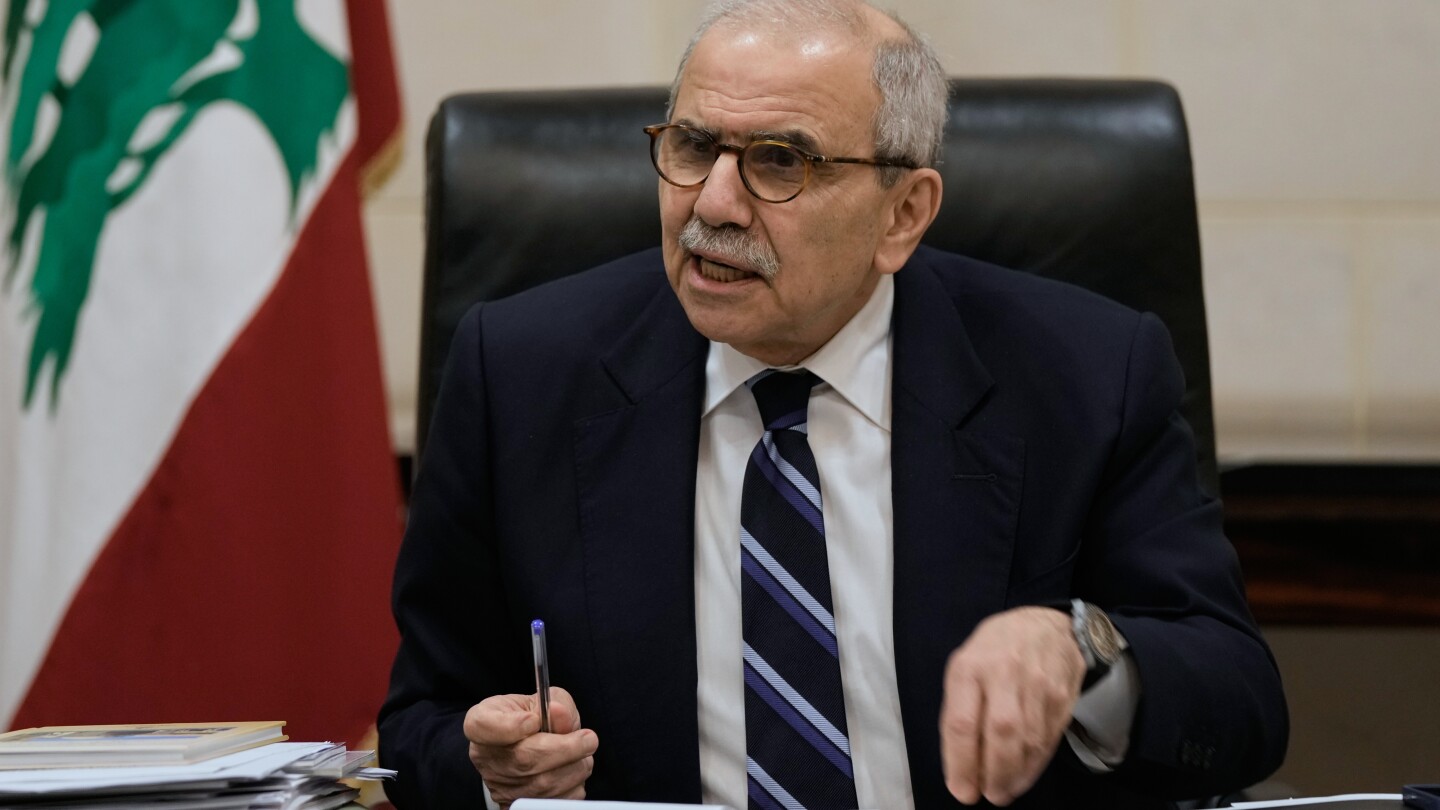
Lebanon’s Prime Minister Nawaf Salam firmly dismissed the possibility of normalizing diplomatic or economic relations with Israel on Wednesday, contradicting Israeli Prime Minister Benjamin Netanyahu’s characterization of recent developments between the two nations.
“We are far from [diplomatic normalization or economic relations with Israel],” Salam told journalists in Beirut, emphasizing that Lebanon remains committed to the 2002 Arab peace plan, which conditions normalization on the creation of a Palestinian state—a prospect Netanyahu’s administration has consistently opposed.
The conflicting narratives emerged as both countries appointed civilian representatives to a previously military-only committee monitoring the U.S.-brokered ceasefire that ended the war between Israel and Hezbollah last November. Lebanon appointed Simon Karam, an attorney and former Lebanese ambassador to the U.S., while Israel named Uri Resnick, the Israeli National Security Council’s deputy director for foreign policy.
This development marked a significant shift in the monitoring mechanism, which also includes representatives from the United States, France, and the United Nations Interim Force in Lebanon (UNIFIL). Both civilian officials participated in Wednesday’s committee meeting, representing a tentative step toward the direct bilateral talks Washington has been advocating for.
Netanyahu had characterized the move as “an initial attempt to create a basis for relations and economic cooperation” between the two countries, which have officially been in a state of war since 1948 and maintain no diplomatic relations.
The diplomatic maneuvering occurs against a backdrop of persistent tensions along the Israel-Lebanon border. Despite the November 2024 ceasefire, Israel has continued near-daily strikes in Lebanon, claiming these operations are necessary to prevent Hezbollah from rebuilding its military capabilities following the recent conflict.
The disarmament of Hezbollah remains a critical point of contention. In August, the Lebanese government announced a five-phase plan to consolidate all weapons in state hands by year’s end, though it later backed away from this deadline. Salam indicated that only the first phase—giving the Lebanese army a monopoly on arms in the area south of the Litani River near the Israeli border—is expected to be implemented by the end of the year.
“The remaining phases currently don’t have a time frame,” Salam acknowledged, a position unlikely to satisfy Israel, which has threatened to escalate military actions if Hezbollah is not fully disarmed.
Hezbollah officials have consistently maintained they will not consider disarmament until Israel withdraws from all Lebanese territory and ceases its attacks. This standoff illustrates the complex challenges facing Lebanon’s government, which must balance international pressure with domestic realities.
“We have lived civil war—civil wars—in Lebanon. I don’t think anyone is tempted to repeat that,” Salam said, hinting at the state’s limited options if Hezbollah refuses to disarm.
Regarding the ceasefire’s implementation, Salam expressed Lebanon’s readiness to establish a “verification mechanism” for investigating alleged violations. He noted that Israel often conducts strikes without reporting violations through the monitoring committee, stating, “Clearly, we cannot be responsible for information that wasn’t shared with us.”
The Prime Minister added that Lebanon would welcome U.S. and French troops on the ground to investigate and verify reported violations, while insisting that Israel should fully implement its obligations under the ceasefire by withdrawing from several points on the Lebanese side of the border and releasing Lebanese citizens detained in Israel.
Further complicating matters is the approaching expiration of UNIFIL’s peacekeeping mandate in just over a year. Salam indicated he would discuss “what will come post-UNIFIL” with a delegation of UN Security Council representatives scheduled to visit Lebanon later this week.
The diplomatic dance between Lebanon and Israel reflects the enduring complexity of Middle Eastern geopolitics, where steps toward engagement often occur against a backdrop of continued military tensions and profound historical grievances.
Fact Checker
Verify the accuracy of this article using The Disinformation Commission analysis and real-time sources.

7 Comments
The conflicting narratives between Lebanon and Israel highlight the fragility of the regional dynamics. While some incremental diplomatic contacts may be emerging, Lebanon’s firm commitment to the 2002 Arab peace plan suggests significant barriers remain to any broader normalization of ties. The Palestinian issue appears to remain a core sticking point.
The shift to civilian representatives on the ceasefire monitoring committee is an interesting development, though it’s unclear if that signals any deeper thaw in relations. Lebanon’s prime minister seems intent on maintaining its principled position tied to the Palestinian issue, despite any incremental diplomatic contacts.
This highlights the continued tensions and complexities in the Middle East when it comes to Israel’s relationship with its neighbors. Lebanon’s refusal to normalize ties without progress on the Palestinian issue aligns with the broader regional sentiment. It will be worth watching if any diplomatic breakthroughs emerge despite the prime minister’s comments.
You’re right, the regional dynamics around the Israeli-Palestinian conflict remain a major obstacle to broader normalization. Lebanon’s stance seems firmly rooted in its commitment to the 2002 Arab peace plan.
It’s not surprising to see Lebanon’s prime minister taking a hard line on normalization with Israel given the longstanding regional tensions. The 2002 Arab peace plan’s conditions around a Palestinian state seem to be a non-negotiable for Lebanon. This underscores the continued challenges in the Middle East peace process.
Interesting to see the conflicting narratives between Lebanon and Israel on normalizing relations. It seems Lebanon is firmly committed to the 2002 Arab peace plan, which calls for a Palestinian state as a prerequisite for normalization. The appointment of civilian representatives to the ceasefire monitoring committee is a notable shift, though.
Lebanon’s refusal to normalize relations with Israel without progress on the Palestinian front aligns with the broader regional sentiment. The prime minister’s comments indicate Lebanon remains steadfast in its position, despite any recent shifts like the civilian representatives on the ceasefire monitoring committee. Resolving the Israeli-Palestinian conflict continues to be a prerequisite for wider regional normalization.