


Listen to the article
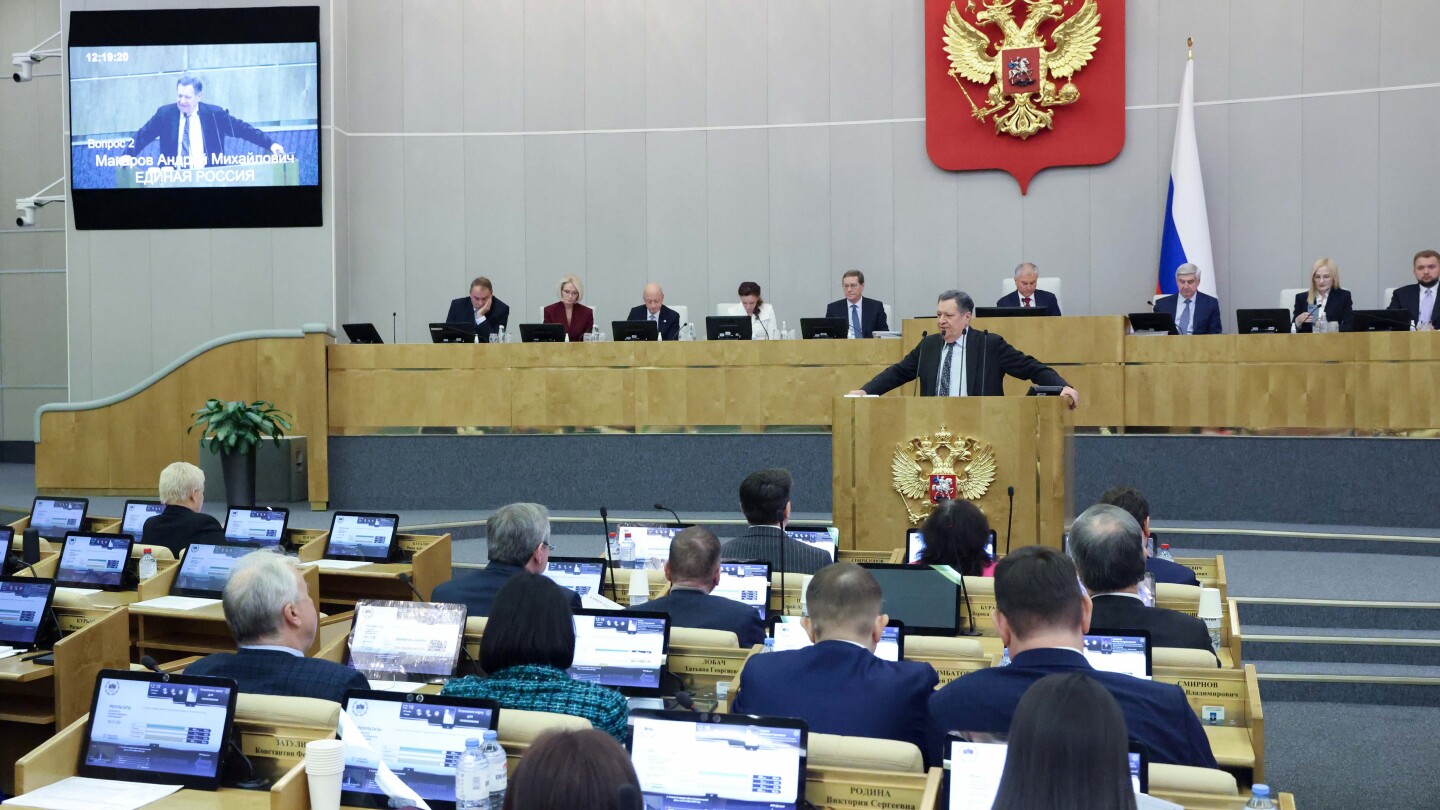
Russia’s parliament approved a bill on Thursday that significantly increases taxes on individuals and organizations labeled as “foreign agents,” marking another step in Moscow’s tightening restrictions against those deemed to be under foreign influence.
The legislation, which passed its third and final reading in the State Duma, Russia’s lower house, would impose a 30% income tax rate on individuals designated as foreign agents—a substantial increase from the standard 13-22% tax rates that most Russian residents pay. This higher rate previously applied only to nonresidents working for foreign companies.
“Those who betrayed our country should not receive tax breaks,” said Vyacheslav Volodin, the Speaker of the State Duma, in a social media statement following the bill’s passage. “They will pay higher taxes to the state budget.”
In addition to the elevated personal income tax rate, the legislation strips foreign agent organizations of access to reduced corporate tax rates that other Russian businesses might enjoy. Before becoming law, the bill must still receive approval from the Federation Council, Russia’s upper house, and be signed by President Vladimir Putin.
The tax changes come amid broader fiscal reforms as Russia seeks to bolster its economy, which has been under significant strain since the invasion of Ukraine began nearly four years ago. Western sanctions, military expenditures, and shifting global trade patterns have forced the Kremlin to seek new revenue sources.
In a parallel move, Russian lawmakers have also approved an increase in the value-added tax (VAT) from 20% to 22%. This adjustment is projected to generate approximately 1 trillion rubles ($12.3 billion) in additional revenue for the state budget, funds that are likely to support Russia’s ongoing military operations and domestic economic initiatives.
Russia’s foreign agent law, which has expanded significantly in scope since its introduction in 2012, allows the government to apply the designation to anyone considered to be under “foreign influence.” The definition has been deliberately broad and flexible, giving authorities considerable latitude in its application.
Organizations and individuals labeled as foreign agents face numerous restrictions beyond the new tax burden. They must publicly identify themselves as foreign agents in all materials they produce. Media outlets with this designation must include a lengthy disclaimer with each publication, visibly marking them as operating under presumed foreign influence.
The designation also prohibits these entities from organizing public events, teaching in state educational institutions, and receiving state financial support—effectively marginalizing them from mainstream Russian society.
Critics of the law argue that it has been selectively deployed against independent journalists, human rights activists, opposition politicians, and civil society organizations that challenge Kremlin policies. Many see it as a tool designed to discredit and financially strain voices that do not align with the government’s positions, particularly on the war in Ukraine and domestic political issues.
Since Russia launched its full-scale invasion of Ukraine in February 2022, the authorities have dramatically accelerated their use of the foreign agent designation, alongside other restrictive legislation targeting “discreditation” of the armed forces and distribution of “false information.”
The new tax penalties represent just one facet of the Russian government’s increasing pressure on independent voices as the country moves further toward economic isolation and political consolidation under Putin’s leadership.
Fact Checker
Verify the accuracy of this article using The Disinformation Commission analysis and real-time sources.

10 Comments
This is a concerning development that seems to further restrict civil liberties in Russia. Taxing ‘foreign agents’ at higher rates could discourage legitimate dissent and criticism of the government.
Agreed, this appears to be another tool the Russian government is using to crack down on opposition voices and independent media.
While the Russian government may justify this as a necessary security measure, the lack of transparency and potential for abuse is troubling. Broad application of the ‘foreign agent’ label could unfairly target legitimate critics and organizations.
Agreed, the vague and subjective criteria used to designate ‘foreign agents’ is a major red flag for the protection of fundamental rights.
The higher tax rate for those labeled as ‘foreign agents’ raises questions about the criteria and process used to designate individuals and organizations in this manner. Transparency and due process are important.
Good point. The lack of clear, impartial standards for this designation is troubling and could lead to abuse.
The higher tax rates for ‘foreign agents’ are likely to have a chilling effect on free expression and independent reporting in Russia. This is a worrying erosion of civil liberties.
This legislation seems intended to financially penalize and discourage any perceived foreign influence or dissent. It will be important to monitor how this is implemented and whether it disproportionately targets certain groups.
Absolutely, the selective application of such laws is a major concern when it comes to preserving fundamental freedoms.
While Russia may view this as necessary to protect national interests, these actions could further isolate the country and damage its economy in the long run. Striking a balance between security and civil liberties is always challenging.