


Listen to the article
Uruguay’s Rueda de Candombe: From Street Corner to Cultural Phenomenon
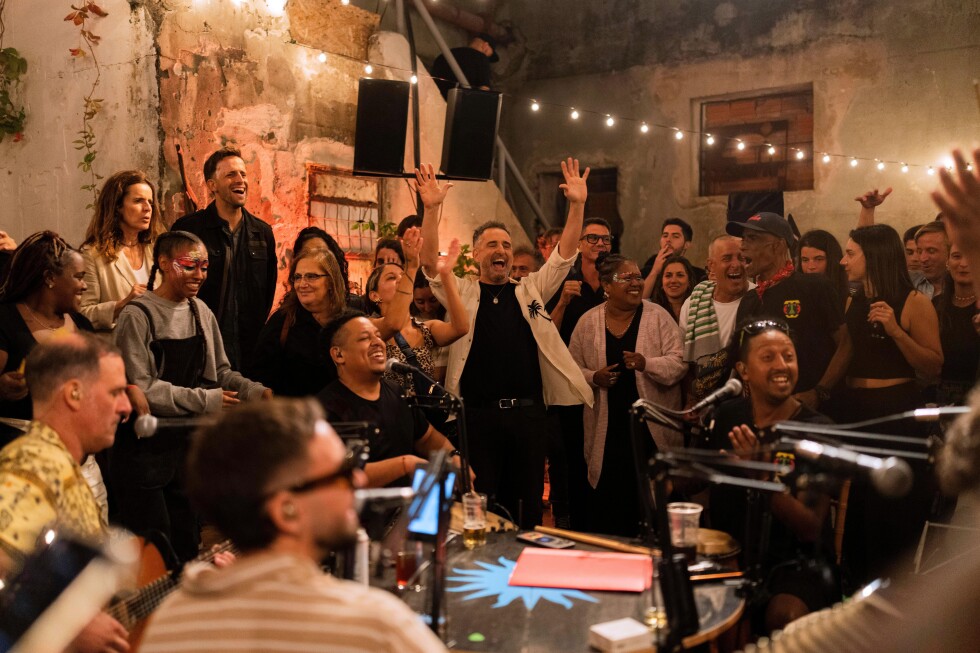
Every Monday night in Montevideo, hundreds of people gather around a table in a public square, drawn by the hypnotic rhythms of drums, guitars, and voices that carry a centuries-old musical tradition into the present.
La Rueda de Candombe, which began as an informal jam session among friends, has rapidly evolved into one of Uruguay’s most celebrated musical events. What started on quiet street corners in the capital has now reached international recognition, including a prestigious performance at the Cannes Film Festival.
“What started as something among friends became visible without us intending it,” explains Uruguayan producer Caleb Amado, one of the founders of La Rueda de Candombe.
The group recently held its final performance of the season at Montevideo’s Plaza de España, where six musicians celebrated candombe—a vibrant musical genre at the heart of Uruguay’s cultural identity. So significant is this tradition that UNESCO has recognized it as an Intangible Cultural Heritage of Humanity.
Brazilian Inspiration, Uruguayan Expression
The seeds of this cultural phenomenon were planted in the fall of 2024, when Amado and his friend Rolo Fernández traveled to Rio de Janeiro. There, they immersed themselves in “rodas”—informal gatherings where musicians perform in a circle around a table while audiences stand around them.
Inspired by these Brazilian gatherings, the pair returned to Montevideo and formed La Rueda de Candombe with four other musicians. While the format resembles its Brazilian inspiration, the sound is distinctly Uruguayan: drums, guitar, and accordion driving the unique rhythms of candombe.
This musical style has deep historical roots, originating with African traditions brought to Uruguay by enslaved people in the 18th century. Over generations, candombe has evolved into a cornerstone of Uruguayan national identity, blending African rhythms with local influences.
From Small Bar to Public Phenomenon
La Rueda’s inaugural performances took place at Santa Catalina, a small neighborhood bar on a quiet Montevideo corner. Nearly a hundred people would squeeze inside to hear them play. As word spread, growing crowds soon necessitated a move to the nearby Plaza España—a fitting location given the square’s historical significance as the landing site where enslaved Africans once used drumming to maintain their cultural traditions.
The group’s popularity continued to surge, with tour buses eventually bringing visitors specifically to witness their performances. This organic growth is particularly noteworthy in Montevideo, where despite an abundance of public spaces—including a 14-mile-long waterfront promenade—street performances are far less common than in other Latin American cultural centers like Buenos Aires or Rio de Janeiro.
Cultural Significance Beyond Entertainment
Candombe has been an essential element of Uruguayan identity since the 18th century. The music is structured around three distinctive drums—chico, repique, and piano—reaching its annual crescendo during carnival celebrations each February, when dozens of musical troupes called comparsas parade through Montevideo’s streets.
By the mid-20th century, candombe had evolved further, blending with jazz and popular music in a style known as “candombe canción.” More than mere entertainment, these musical gatherings served as important forms of cultural and political expression during the turbulent 1960s and 1970s.
La Rueda’s success has caught the attention of prominent artists. The group has performed alongside celebrated Uruguayan singer-songwriter Jorge Drexler at Montevideo’s iconic Centenario Stadium and recorded an album. In 2025, they represented Uruguay at the Cannes Film Festival, which features cultural showcases alongside its renowned film program.
As winter approaches in the Southern Hemisphere, Amado and Fernández have no plans to slow down. Instead, they’re developing new projects, including expanding La Rueda’s performances to other public squares across Montevideo—ensuring that this vibrant tradition continues to evolve while remaining deeply connected to its historical roots.
The story of La Rueda de Candombe demonstrates how cultural traditions can find new life and relevance in contemporary settings, connecting generations and preserving Uruguay’s rich musical heritage for both locals and visitors alike.
Fact Checker
Verify the accuracy of this article using The Disinformation Commission analysis and real-time sources.

19 Comments
Silver leverage is strong here; beta cuts both ways though.
The cost guidance is better than expected. If they deliver, the stock could rerate.
Production mix shifting toward World might help margins if metals stay firm.
Good point. Watching costs and grades closely.
Good point. Watching costs and grades closely.
Production mix shifting toward World might help margins if metals stay firm.
Good point. Watching costs and grades closely.
The cost guidance is better than expected. If they deliver, the stock could rerate.
Uranium names keep pushing higher—supply still tight into 2026.
Interesting update on Last performance of La Rueda de Candombe marks end of summer season in Uruguay. Curious how the grades will trend next quarter.
Good point. Watching costs and grades closely.
Uranium names keep pushing higher—supply still tight into 2026.
Good point. Watching costs and grades closely.
Good point. Watching costs and grades closely.
Exploration results look promising, but permitting will be the key risk.
Uranium names keep pushing higher—supply still tight into 2026.
Good point. Watching costs and grades closely.
Nice to see insider buying—usually a good signal in this space.
Good point. Watching costs and grades closely.