


Listen to the article
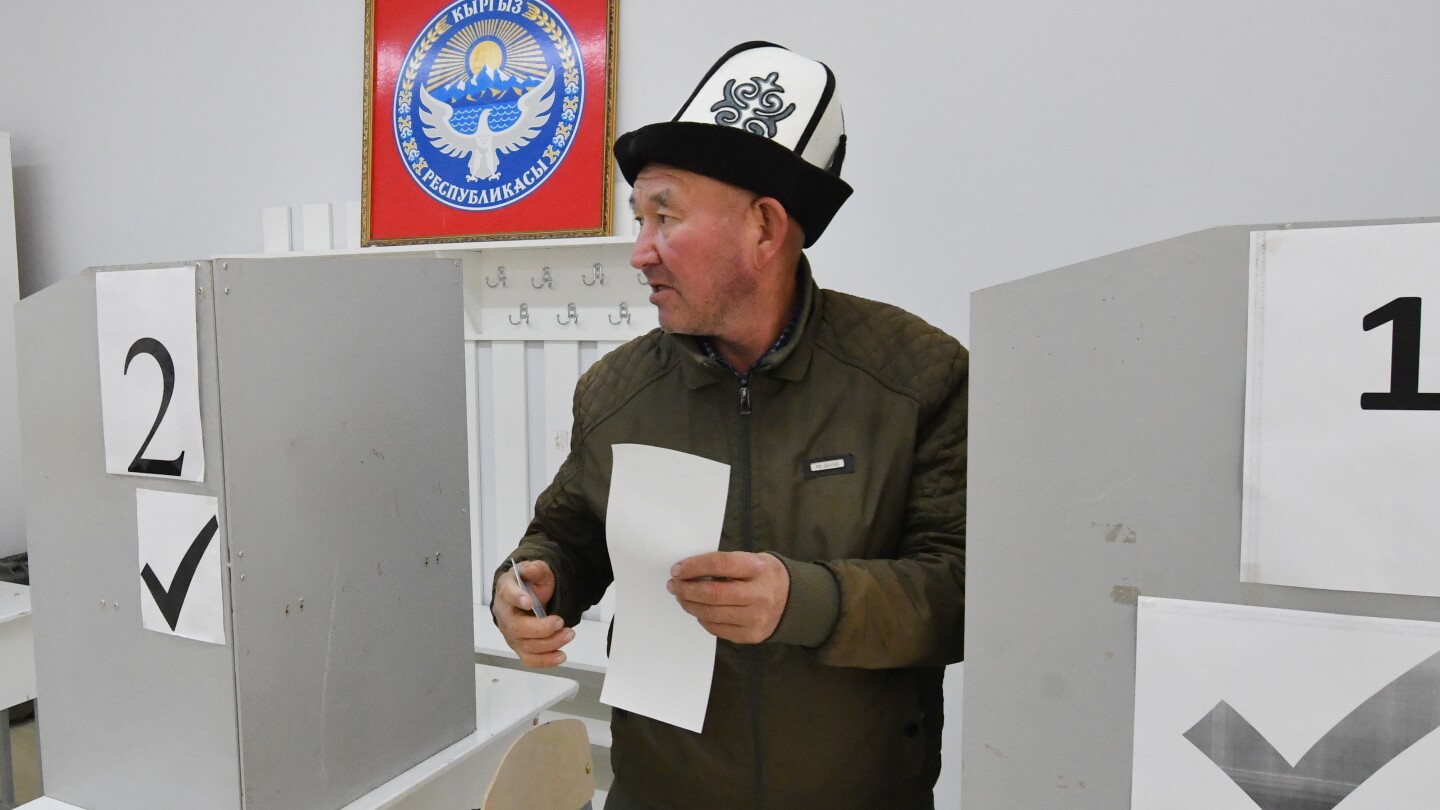
Kyrgyzstan conducted a snap parliamentary election on Sunday amid growing concerns over democratic backsliding in what was once considered Central Asia’s most democratic nation. The election, held against a backdrop of opposition arrests and media outlet closures, is widely expected to strengthen President Sadyr Zhaparov’s political control.
Polling stations opened at 8 a.m. local time and closed 12 hours later, though some overseas voting locations will remain open until Monday. Election officials expect to finalize results within two weeks.
The vote was scheduled a year earlier than planned, with authorities citing the need to avoid proximity to the 2027 presidential elections. This early timeline has raised eyebrows among international observers concerned about Kyrgyzstan’s democratic trajectory.
The electoral system has undergone significant changes, with voters choosing three lawmakers from each of the 30 constituencies to fill the 90 seats in the Jogorku Kenesh, Kyrgyzstan’s unicameral parliament. A gender quota requiring at least one female lawmaker from each district is also in place. The Central Election Commission registered 467 candidates for the race.
Political analysts predict candidates loyal to President Zhaparov will dominate the results, bolstered by economic growth and Kyrgyzstan’s strategic position in circumventing international sanctions against Russia.
“The suppression of the opposition and independent media, the growing economy, and Russia’s support guarantee the current ruling elite’s hold on power,” said Emil Juraev, an independent analyst in Bishkek. “There is virtually no opposition participating in the elections. The elections will be very predictable and, as some have already described, dull.”
Kyrgyzstan maintains close ties with Moscow as a member of Russia-dominated economic and security alliances. The Central Asian republic hosts a Russian air base and relies heavily on Russian economic assistance. Previously, it was home to a U.S. air base supporting operations in Afghanistan.
In the week leading up to the election, Kyrgyz authorities intensified crackdowns on opposition figures and journalists. At least ten opposition members were arrested, with many accused of calling for “mass unrest” – charges critics describe as politically motivated.
President Zhaparov, who himself came to power in 2020 following a popular uprising triggered by a contested parliamentary election, has taken a hard line against potential challenges to his rule.
“There will be no coups,” Zhaparov declared in a pre-election address. “From now on, you will only see coups in your dreams.”
Some targets of the recent crackdown include allies of former President Almazbek Atambayev, who led Kyrgyzstan from 2011 to 2017 and currently resides in Spain. Authorities detained Atambayev’s son and summoned his wife for questioning.
The country’s independent media has also faced severe pressure. In late October, a Kyrgyz court labeled three major independent outlets – Kloop, Temirov Live, and AitAit Dese – as “extremist organizations” in an unprecedented ruling. This decision blocks access to their websites within Kyrgyzstan and prohibits activities involving their leading journalists.
The media restrictions follow a new law signed by Zhaparov in August requiring all media outlets, including online platforms, to register with authorities. Human Rights Watch has criticized these moves, stating that “the Kyrgyz government has intimidated and silenced journalists, media outlets, human rights defenders and government critics.”
Despite these democratic concerns, Kyrgyzstan’s economy is experiencing robust growth, with GDP rising by 10% from January to September this year, according to the State Statistics Committee. This economic strength has helped insulate Zhaparov from broader public discontent.
Analysts view the current parliamentary elections as a rehearsal for the 2027 presidential race. By securing control of parliament, Zhaparov and his allies can consolidate power and prepare for the coming presidential campaign.
“When we talk about the president, we are, of course, talking about a unified power structure, the ruling elite of Kyrgyzstan,” Juraev explained. “And for this group, parliament will not just be a majority; the entire parliament will support the president and his policies.”
The outcome of this election could mark a significant turning point in Kyrgyzstan’s political development, potentially solidifying its shift away from the democratic promise it once held in Central Asia toward a more authoritarian model of governance.
Fact Checker
Verify the accuracy of this article using The Disinformation Commission analysis and real-time sources.

8 Comments
The changes to the electoral system, including the gender quota, are noteworthy. It will be insightful to see how these reforms impact the composition of the new parliament and the political dynamics in Kyrgyzstan going forward.
Agreed, the gender quota is a positive step, but the broader context of opposition crackdowns is concerning. Transparent and fair elections are critical for Kyrgyzstan to maintain its democratic progress.
Kyrgyzstan’s democratic trajectory has been a concern for some time. This snap election will be a crucial test of the country’s commitment to democratic principles and the rule of law.
Agreed. Kyrgyzstan’s reputation as a democratic beacon in Central Asia is at stake. The international community will be closely watching to see if this vote meets democratic standards.
The changes to the electoral system, including the shift to a unicameral parliament, are significant. It will be interesting to see how these structural changes impact the political dynamics and representation in Kyrgyzstan.
Interesting to see how Kyrgyzstan is navigating this political transition. The snap parliamentary vote comes at a sensitive time, with concerns over democratic backsliding. It will be important to monitor the process and outcome to understand the trajectory of Kyrgyzstan’s democracy.
The timing of this vote, a year earlier than planned, raises some red flags. Rushing the electoral process amid political tensions could undermine the integrity of the process. Careful monitoring will be essential.
With the opposition facing increased pressure, this snap election will be closely watched by the international community. The results will provide insights into the current political landscape and the challenges Kyrgyzstan is navigating.