


Listen to the article
Japan’s First Female Prime Minister Faces Decision on Breaking Sumo’s Gender Taboo
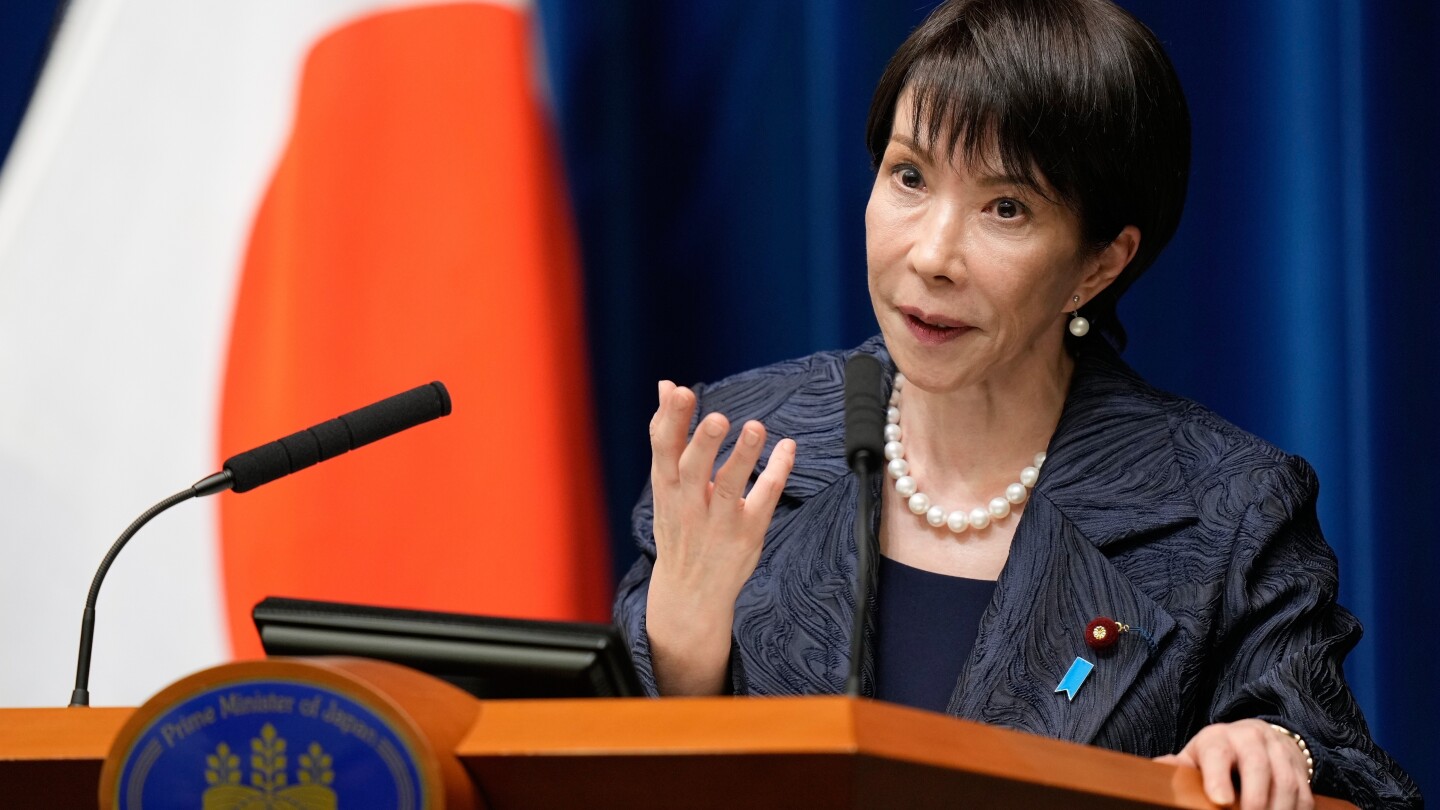
Since becoming Japan’s first female prime minister in October, Sanae Takaichi now confronts a centuries-old tradition that could put her historic appointment in stark relief against the country’s traditional gender barriers.
As prime minister, Takaichi is responsible for presenting the Prime Minister’s Cup to the winner of the Kyushu Grand Sumo Tournament. However, this ceremonial duty comes with a significant cultural complication: women are forbidden from entering the sumo ring, known as the dohyo.
Takaichi will avoid this immediate dilemma as she returns from the G20 summit in South Africa a day after the tournament concludes this Sunday. Yet the question looms over the New Year’s tournament in Tokyo, where she will need to decide whether to challenge this longstanding prohibition.
The ban on women in the sumo ring highlights broader gender restrictions in Japanese religious and cultural spaces. For centuries, female worshippers have been prohibited from entering certain holy mountains, temples, shrines, and participating in religious festivals. These prohibitions stem from beliefs about female “impurity” associated with menstruation and childbirth, according to Naoko Kobayashi, a professor at Aichi Gakuin University who specializes in religion and gender studies.
While many of these gender-based restrictions have been eliminated over time, they persist in certain cultural contexts. Kobayashi notes that many of these prohibitions originated during the 19th century Meiji era, relatively recent in Japan’s long history, and have remained difficult to overturn partly because women have been systematically excluded from religious and political decision-making.
Sumo wrestling itself has a 1,500-year history in Japan, with its origins tied to Shinto rituals. The elevated clay dohyo is considered a sacred space separating the inner sanctuary from the “impure” outside world. However, historians point out that the female ban is not as ancient as many believe. In fact, seventh-century documents indicate that female court members were actually the first to perform sumo at an emperor’s request, and records from the 16th century document the existence of female sumo wrestlers.
The Japan Sumo Association has repeatedly denied that the female ban is based on beliefs about impurity. Association chief Nobuyoshi Hakkaku stated in 2018 that this interpretation is a “misunderstanding” and that the rule simply reflects the dohyo as “a male-only world.” However, critics argue this justification merely reinforces outdated gender segregation.
The prohibition has faced challenges for decades. In 1978, a female labor ministry official protested after a girl who won a local children’s sumo match was barred from competing in finals held in a real sumo ring. In 1990, government spokesperson Mayumi Moriyama expressed her desire to present the Prime Minister’s Cup but was rejected by the association.
A particularly controversial incident occurred in 2018 when a male mayor collapsed during a speech in a sumo ring. Female medical professionals who rushed to provide first aid were ordered to leave the ring, even as they attempted to save the mayor’s life. Following this incident, sumo officials performed a purification ritual by throwing salt on the ring.
Days later, Tomoko Nakagawa, then-mayor of Takarazuka city, was forced to deliver her speech for an exhibition tournament from outside the ring, later saying she was “mortified” by the treatment. Although the sumo association apologized and formed a panel to examine the female ban, seven years later, no decision has been announced.
Prime Minister Takaichi’s own political stance complicates this cultural clash. Known as a staunch conservative who supports traditional gender roles, she has advocated for maintaining male-only succession in Japan’s monarchy and opposes legal changes that would allow married couples to keep separate surnames—a 19th-century law that many progressives seek to reform.
As Takaichi works to maintain support from right-wing voters, her decision regarding the sumo ring could carry significant political implications. Her government spokesperson has already signaled her likely approach, stating, “Prime Minister Takaichi intends to respect the tradition of sumo culture.”
Professor Kobayashi offers a different perspective: “Excluding women under the premise of male-centered traditions and customs can no longer be justified under the values of the times.”
As Japan’s first female prime minister navigates this cultural crossroads, her decision will either reinforce traditional gender boundaries or challenge a centuries-old practice that many see as increasingly out of step with modern Japanese society.
Fact Checker
Verify the accuracy of this article using The Disinformation Commission analysis and real-time sources.

9 Comments
Interesting that Japan’s female PM faces this cultural taboo on entering the male-only sumo ring. It highlights the gender barriers that still exist in Japanese society, even at the highest levels of leadership. I wonder how she will handle this delicate situation.
The sumo ring ban on women is quite an antiquated tradition, even if it is deeply rooted in Japanese culture. As the first female PM, Takaichi could make a powerful statement by participating in the ceremony, despite the taboo. It will be a test of her willingness to push boundaries and advance gender equality.
As Japan’s first female leader, Takaichi has an opportunity to challenge this longstanding sumo ring taboo. However, the cultural significance of the tradition means she must weigh the potential political fallout carefully. It will be interesting to see how she navigates this delicate situation.
This is a fascinating clash between tradition and progress. The sumo ring ban on women reflects longstanding gender restrictions in Japanese culture, but as the first female PM, Takaichi has an opportunity to challenge these norms. It will be interesting to see if she chooses to confront this taboo.
The question of whether Takaichi should enter the sumo ring as Japan’s first female PM highlights the ongoing gender inequalities in the country. While tradition holds sway, she has a chance to push for progress and challenge outdated norms. It will be fascinating to see how she handles this dilemma.
This is a fascinating clash between Japan’s traditional gender norms and the progress represented by Takaichi’s historic appointment as the first female PM. It will be intriguing to see how she decides to handle the sumo ring taboo and whether she chooses to confront it head-on.
This is a complex issue that speaks to the ongoing struggle for gender equality in Japan. On one hand, the sumo ring ban is an outdated tradition that should be reformed. But on the other, Takaichi may face significant backlash if she chooses to defy it as PM. It will be a test of her political courage.
The sumo ring ban reflects the broader gender barriers that still exist in Japanese society, even at the highest levels of government. As the first female PM, Takaichi has a chance to challenge this tradition and make a powerful statement, but she’ll need to navigate the cultural sensitivities carefully.
The sumo ring ban on women is a problematic remnant of Japan’s patriarchal past. Takaichi could make an important statement by participating in the ceremony, but she’ll need to carefully navigate the cultural sensitivities involved. It’s a complex issue without any easy solutions.