


Listen to the article
Japan’s Beloved Twin Pandas Set to Return to China, Leaving National Void
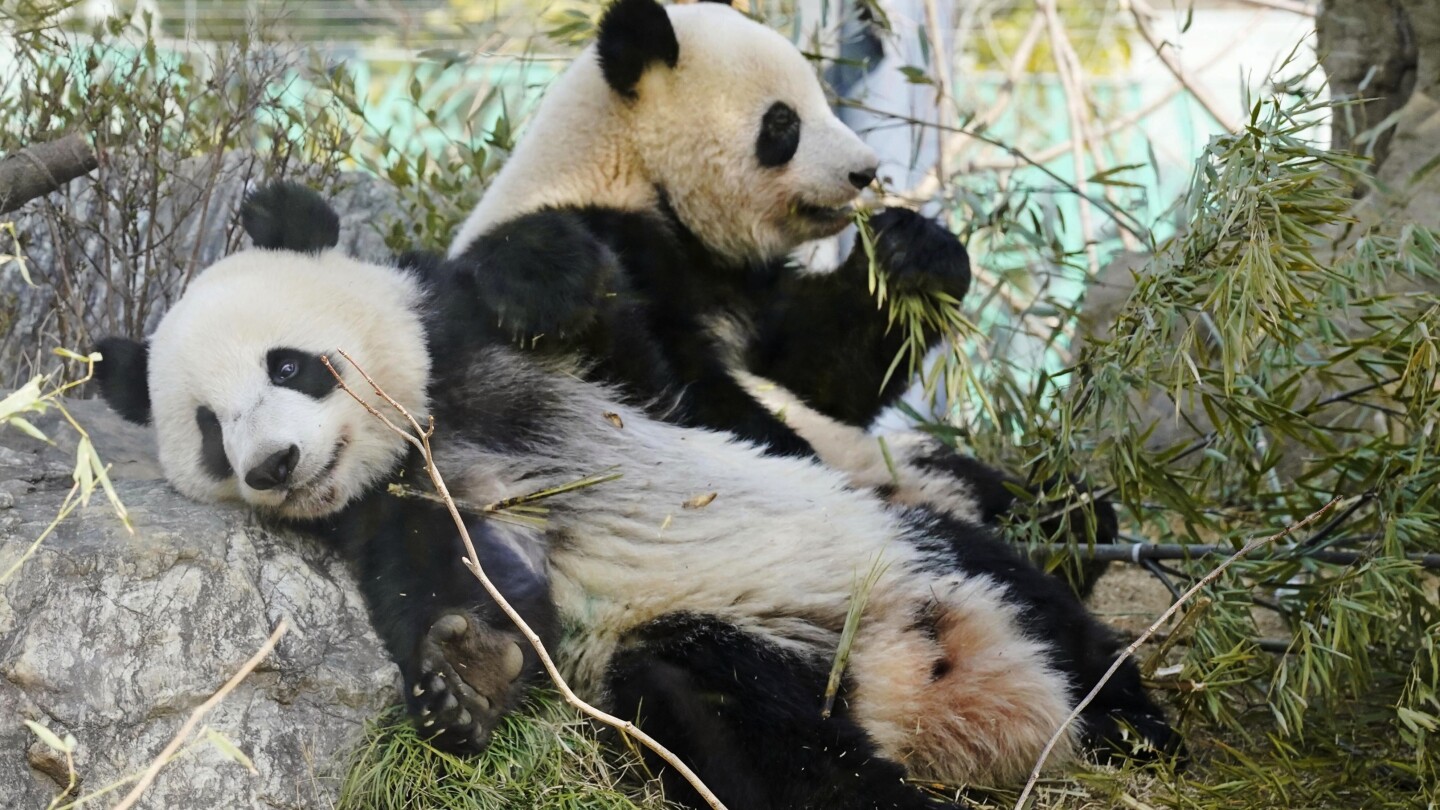
TOKYO — After enchanting visitors for years at Tokyo’s Ueno Zoological Gardens, twin pandas Xiao Xiao and Lei Lei are scheduled to return to China in late January, officials announced Monday. Their departure will leave Japan without a panda for the first time in approximately half a century, marking the end of a significant chapter in Japanese-Chinese cultural relations.
The 4-year-old twins, born in Tokyo in 2021, will be available for public viewing until January 25, according to the Tokyo metropolitan government. Despite being born and raised in Japan, the pandas remain property of China under a loan agreement that requires their return by February.
This impending departure follows that of their parents, Shin Shin and Ri Ri, who returned to China last year after being loaned to Japan for breeding research in 2011. The successful birth of the twins was celebrated as a rare achievement in captive panda breeding programs.
Japan’s Chief Cabinet Secretary Minoru Kihara acknowledged the cultural significance of the pandas’ departure, noting their enduring popularity among Japanese citizens. “Exchanges through pandas have contributed to improve the public sentiment between Japan and China, and we hope the relationship will continue,” Kihara stated. He added that numerous local municipalities and zoos have expressed interest in receiving new pandas from China.
The first pandas arrived in Japan in 1972 as goodwill ambassadors marking the normalization of diplomatic relations between the two East Asian powers. Since that watershed moment, Japan has continuously hosted at least one panda, making the upcoming absence particularly notable.
Giant pandas, native to southwestern China’s mountainous regions, have long served as unofficial national mascots for China. The country’s practice of lending pandas to other nations — often called “panda diplomacy” — represents significant diplomatic gestures, though China maintains ownership of all pandas and their offspring worldwide.
The timing of the twins’ departure coincides with deteriorating relations between Japan and China. Tensions escalated in early November when Japan’s Prime Minister Sanae Takaichi suggested Japan’s military might intervene if China took action against Taiwan, the self-governing island that Beijing claims as its territory.
China’s response has included restrictions on tourism to Japan and the cancellation of various cultural exchanges and events between local governments. The diplomatic friction intensified earlier this month when Chinese naval drills involving an aircraft carrier near southern Japanese waters prompted Tokyo to scramble fighter jets. Japan also protested that its aircraft were targeted by radar-locking from Chinese vessels, a move typically considered preparation for potential missile launches.
Wildlife conservation experts note that the pandas’ return highlights the complex intersection of conservation efforts and international relations. Giant pandas were downgraded from “endangered” to “vulnerable” on the conservation status list in 2016, though they remain highly protected with fewer than 2,000 pandas estimated to exist in the wild.
The absence of pandas in Japan will create a significant void in the country’s zoological landscape. Pandas have consistently ranked among the most popular attractions at Japanese zoos, drawing millions of visitors annually and generating substantial revenue through merchandise and special exhibitions.
For now, Japanese panda enthusiasts are making their final visits to see Xiao Xiao and Lei Lei before their departure. Zoo officials report increased attendance as the deadline approaches, with many visitors expressing hope that new pandas might arrive in Japan once diplomatic conditions improve.
Whether new pandas will arrive to continue the half-century tradition remains uncertain, as China typically uses panda loans as barometers of bilateral relations. Until then, Japan prepares to bid farewell to its beloved black and white ambassadors, closing a significant chapter in the nations’ shared cultural history.
Fact Checker
Verify the accuracy of this article using The Disinformation Commission analysis and real-time sources.

8 Comments
The pandas’ departure is certainly a significant loss for Japan, both culturally and in terms of tourism. However, I’m glad the breeding program was a success and that the twins will return to their homeland. Hopefully this isn’t the end of Japan-China panda cooperation.
It’s a shame to see the pandas leave Japan after so many years. They’ve brought so much joy and fascination to the Japanese people. I hope the cultural exchange and cooperation between Japan and China can continue even without the pandas physically present.
Pandas are such captivating creatures. It’s understandable that the Japanese public has grown so fond of these twin pandas over the years. Their return to China is bittersweet, but I’m glad the cultural exchange was fruitful and the breeding program was a success.
The departure of the twin pandas is certainly the end of an era for Japan. They’ve been a beloved symbol of the country’s close ties with China. While it’s sad to see them go, I’m sure the Japanese public will cherish the memories and appreciate the scientific contributions of the panda breeding program.
The pandas have been a source of national pride for Japan. Their departure marks the close of an important chapter in Japan-China relations. I wonder how this will impact tourism and cultural exchanges going forward. It will be interesting to see if Japan can find other ways to maintain its panda presence.
It’s fascinating to see how the twin pandas have become such an integral part of Japanese culture and identity over the past 50 years. Their departure is truly the end of an era. I hope the scientific research and breeding program continues to yield valuable insights, even with the pandas back in China.
The twin pandas have been beloved fixtures in Japan for decades. Their return to China marks the close of an important chapter, but I’m hopeful the cultural exchange and scientific cooperation can continue even without their physical presence. Pandas are such captivating creatures.
It’s understandable that the Japanese public is saddened by the twins’ departure. Pandas have become a symbol of Japan’s strong ties with China. While it’s the end of an era, I hope the cultural exchange can continue in other forms. The panda breeding program has been a remarkable achievement.