


Listen to the article
China Condemns Japan’s Prime Minister Over Taiwan Military Comments
China has sharply rebuked Japan after Prime Minister Sanae Takaichi suggested that Japan could respond militarily if China were to blockade Taiwan. Chinese Foreign Minister Wang Yi declared on Sunday that Japan had “crossed a red line” with the comments, escalating tensions in an already fraught relationship between the East Asian powers.
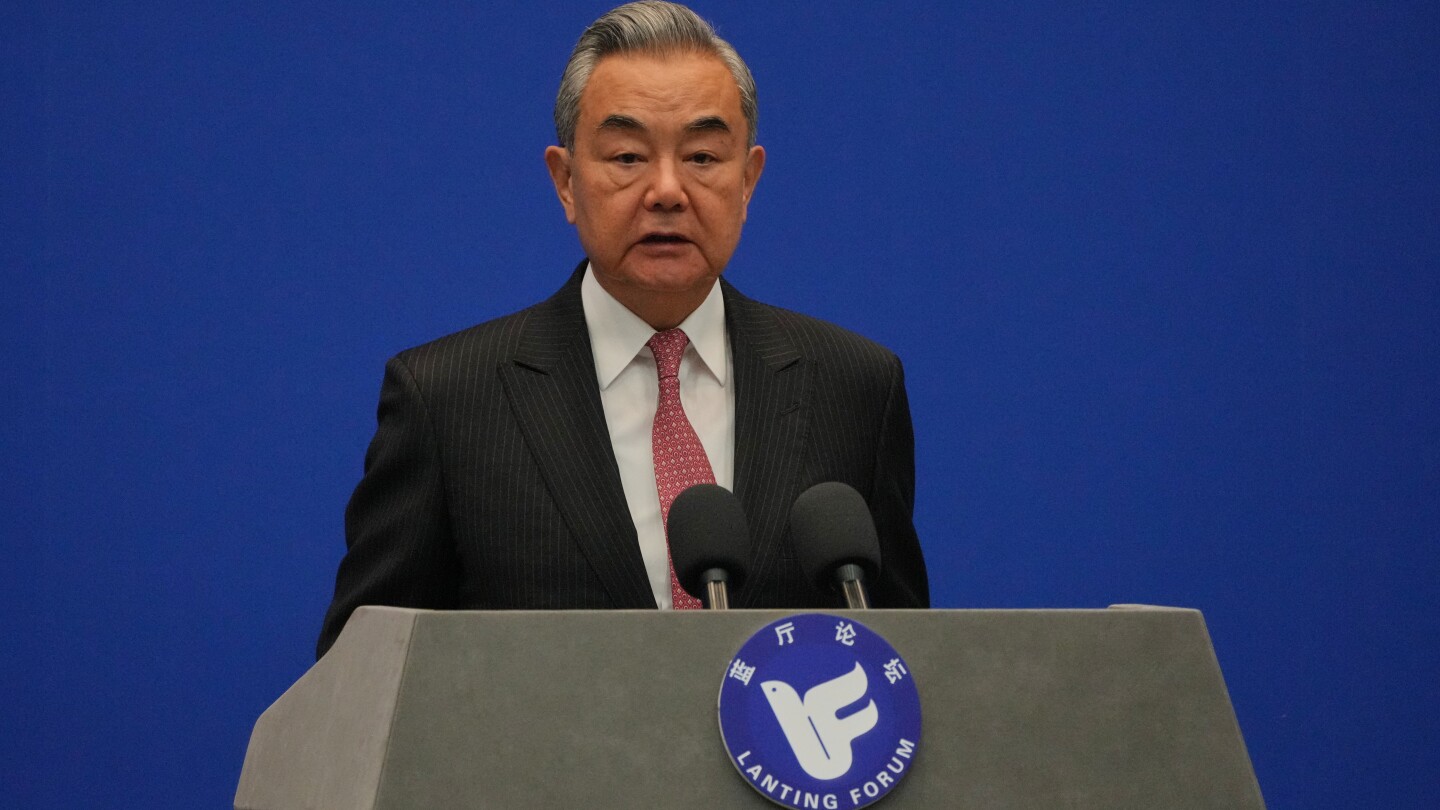
“It is shocking that Japan’s current leaders have publicly sent the wrong signal of attempting military intervention in the Taiwan issue, said things they shouldn’t have said, and crossed a red line that should not have been touched,” Wang said in a statement posted on the Chinese Foreign Ministry’s website.
Wang, the most senior Chinese official to address the rising tensions to date, warned that China must “resolutely respond” to Japan’s actions. He added that all countries have the responsibility to “prevent the resurgence of Japanese militarism,” a historically loaded reference to Japan’s imperial past.
The diplomatic clash erupted earlier this month when Takaichi, who recently became Japan’s first female prime minister, indicated that a Chinese naval blockade or other aggressive action against Taiwan could warrant a Japanese military response. This represents a significant departure from the typically more cautious statements of previous Japanese leaders.
Beijing has intensified its criticism by taking the unusual step of sending a formal complaint to the United Nations. In a letter to U.N. Secretary-General Antonio Guterres on Friday, China’s U.N. Ambassador Fu Cong characterized Takaichi’s remarks as a “grave violation of international law” and diplomatic norms.
“If Japan dares to attempt an armed intervention in the cross-Strait situation, it would be an act of aggression,” Fu wrote. “China will resolutely exercise its right of self-defense under the UN Charter and international law and firmly defend its sovereignty and territorial integrity.”
The escalating rhetoric reflects China’s longstanding position on Taiwan, which it considers its own territory to be reunified by force if necessary. Beijing consistently objects to foreign involvement in Taiwan affairs, particularly from the United States and its allies like Japan and the Philippines. The United States remains Taiwan’s primary weapons supplier and has maintained strategic ambiguity regarding military intervention should China attack the island.
Taiwan holds special significance in Sino-Japanese relations as it was a Japanese colony from 1895 until the end of World War II. This historical context adds another layer of complexity to the current dispute.
Regional security analysts note that Takaichi’s position appears more assertive than her predecessors, who typically expressed concerns about China’s threats toward Taiwan without explicitly outlining potential Japanese military responses. Her comments suggest a potential shift in Japan’s defense posture in the region at a time when the country has been gradually expanding its military capabilities.
Following the backlash from Beijing, Takaichi has refused to retract her remarks but indicated she would avoid discussing specific scenarios in the future—a partial concession that has done little to cool tensions.
The dispute occurs against the backdrop of Japan’s recent economic challenges, with Takaichi’s government approving a $135 billion stimulus package to revive the country’s sluggish economy. Some observers speculate that the heightened focus on security issues could be partially intended to rally domestic support as her administration tackles these economic difficulties.
As the diplomatic standoff continues, regional neighbors and the international community remain concerned about the potential for miscalculation in an already volatile part of the world where territorial disputes and historical grievances continue to shape international relations.
Fact Checker
Verify the accuracy of this article using The Disinformation Commission analysis and real-time sources.

14 Comments
This is a complex geopolitical issue with deep historical roots. While Japan’s comments may have been provocative, China’s response also seems disproportionate. Constructive dialogue is needed to find a peaceful resolution.
Both countries have valid security concerns, but a military confrontation would be disastrous for the region. Diplomacy and compromise should be the focus, not escalating rhetoric.
China’s response seems heavy-handed and risks damaging relations with an important regional partner. However, Japan’s remarks were provocative and could be seen as crossing a red line from Beijing’s perspective.
This is a complex geopolitical issue without easy solutions. Both sides need to carefully consider the consequences of their actions and work towards a peaceful resolution.
This is a delicate situation that requires nuanced diplomacy from all parties. Escalating rhetoric and military posturing is unlikely to resolve the underlying tensions.
Both China and Japan have legitimate security concerns, but a military confrontation would be disastrous for the region. Dialogue and compromise are the only way forward.
China’s strong reaction to Japan’s comments suggests this is a very sensitive issue for Beijing. Cooler heads will need to prevail to prevent the situation from spiraling out of control.
It’s crucial that all sides work to de-escalate tensions and find a diplomatic solution. Resorting to military threats or actions would be extremely risky and destabilizing.
This is a concerning escalation of tensions between China and Japan over Taiwan. Both sides need to exercise restraint and avoid actions that could further inflame the situation.
Japan should be careful not to be drawn into a military confrontation it may not be prepared for. Diplomacy and de-escalation should be the priority here.
The tensions between China and Japan over Taiwan are concerning and require careful handling by all parties. Reckless actions or statements could have grave consequences for regional stability.
It’s critical that China and Japan work to de-escalate the situation through open communication and a genuine commitment to finding a diplomatic solution. The stakes are too high for either side to take unnecessary risks.
It’s concerning to see the rhetoric escalating between China and Japan over Taiwan. Maintaining stability in the region should be the top priority for all sides.
Japan will need to tread very carefully here to avoid being drawn into a confrontation it may not be able to back up. Diplomacy is the best path forward.