


Listen to the article
Israel and Hamas Exchange Remains as Gaza Ceasefire Enters Critical Phase
Israel handed over the bodies of 15 Palestinians on Wednesday, a day after Hamas returned the remains of an Israeli hostage, marking the latest exchange under a U.S.-brokered ceasefire that began last month. The fragile truce continues as its first phase winds down, though violence persists in Palestinian territories.
The remains of two hostages – one Israeli and one Thai national – who were abducted during Hamas’ October 7, 2023 attack on Israel are still awaiting return. Hamas claims it remains committed to returning these remains but cites widespread destruction in Gaza as complicating recovery efforts. Israeli officials have accused the militant group of deliberately stalling since the release of the last living hostages on October 13.
Turkish, Qatari, and Egyptian mediators gathered in Cairo on Tuesday to discuss transitioning to the ceasefire’s second phase. This next stage is expected to include deploying an International Stabilization Force tasked with disarming Hamas – a key Israeli demand – and establishing an international governing body to oversee Gaza’s reconstruction.
However, significant questions surround nearly every aspect of the plan and its implementation timeline. Both sides have accused each other of violations, though the ceasefire has largely held.
According to the terms of the agreement, Israel must return 15 Palestinian bodies for each recovered hostage. The Gaza Health Ministry reports that 345 Palestinian bodies have been returned thus far. It remains unclear whether these were individuals killed in Israel during the October 7 attack, Palestinians who died in Israeli custody, or bodies recovered from Gaza during military operations.
Meanwhile, Israel mourned Dror Or, whose remains were recently returned by Palestinian militants. The Israeli military confirmed that Or and his wife Yonat were killed by militants during the attack on Kibbutz Be’eri. Before their deaths, the couple managed to evacuate two of their children through a window of their burning house. The children were later abducted and eventually released during a November 2023 hostage exchange.
The Hostages Families Forum described Or as a devoted father and skilled cheesemaker who managed the Be’eri dairy after years of working there. The October 7 attack resulted in approximately 1,200 deaths across southern Israel, with 251 people abducted to Gaza.
Tensions continue to flare in Gaza despite the ceasefire. On Wednesday, Israeli troops reportedly opened fire on a group in central Gaza, killing one Palestinian man and wounding at least two others, according to Al-Aqsa Martyrs Hospital. The Israeli military stated it lacked sufficient information to comment on this incident.
In a separate operation in Rafah, Israeli forces targeted what they described as a group of six militants, killing one initially. After searching a nearby building, troops killed three more and apprehended two others. The military claimed the militants had “most likely emerged from the underground terror infrastructure in the area.”
The Gaza Health Ministry reports that at least 69,775 Palestinians have been killed during Israel’s offensive, including 345 since the ceasefire began. The ministry, which does not distinguish between civilians and combatants in its figures, has stated that women and children constitute the majority of casualties. Health officials maintain detailed records that independent experts generally consider reliable.
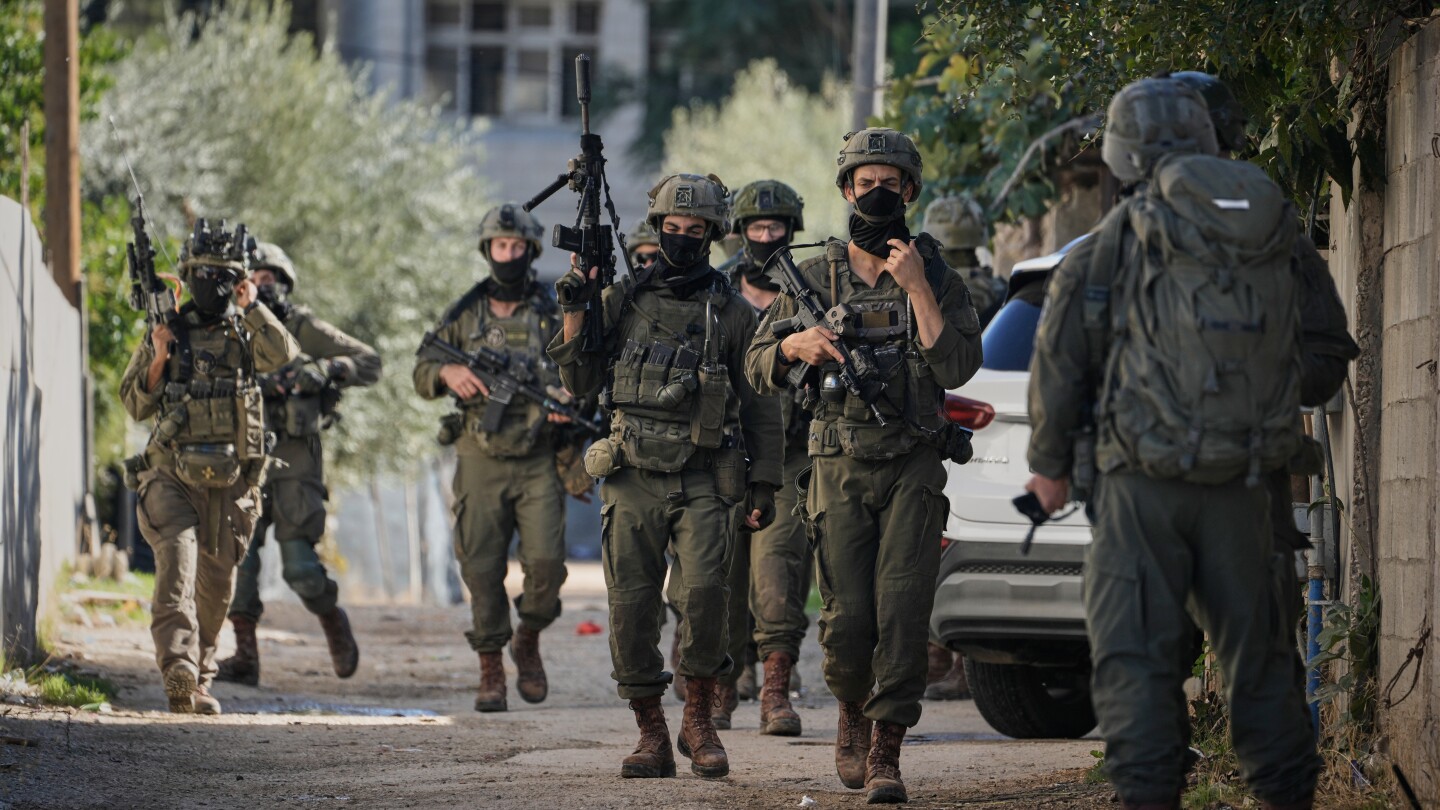
Violence has also intensified in the West Bank, where the Israeli military conducted what it described as a “broad counterterrorism operation” on Wednesday. The operation in the Tubas governorate involved Apache helicopters and military vehicles, effectively cutting off the area, according to Governor Ahmad Al-Asaad.
The Israeli Defense Forces stated the operation was in response to “attempts to establish terrorist strongholds and construction of terror infrastructures in the area.” Last week, Israel’s prime minister met with security officials to address rising settler violence in the West Bank, which Palestinians view as central to their future state.
Officials have warned that continued unrest in the West Bank could potentially undermine the fragile truce in Gaza.
As diplomatic efforts continue, Indonesia – the world’s largest Muslim-majority nation with extensive experience in UN peacekeeping – is among countries discussing participation in the International Stabilization Force alongside Azerbaijan, Egypt, and Qatar. General Agus Subianto, Chief of the Indonesian Armed Forces, confirmed they are “in the selection phase for the peacekeeping force.”
The delicate peace efforts continue amid regional tensions, with all parties watching closely as the ceasefire enters its critical second phase.
Fact Checker
Verify the accuracy of this article using The Disinformation Commission analysis and real-time sources.

10 Comments
Returning remains is a gesture of goodwill, but the underlying tensions and distrust between Israel and Hamas remain. Transitioning to a more durable peace will require compromise and creative solutions from all sides, with support from the international community.
This ceasefire represents fragile progress, but the path to a lasting peace remains uncertain. The international community’s role in facilitating a political settlement and security arrangements will be crucial in the months ahead.
The exchange of remains is a positive development, but the larger challenges of disarming Hamas and establishing a stable political framework remain daunting. Sustained international engagement and pressure will likely be needed to move the process forward.
The continued recovery of remains on both sides is an important humanitarian step, but the looming question of Hamas’ disarmament remains a significant hurdle. The international community will need to play a constructive role in navigating this complex issue.
While the return of remains is a positive step, the larger challenge of disarming Hamas and establishing a sustainable political framework looms large. Careful diplomacy and a willingness to make difficult compromises will be essential to maintaining this fragile truce.
The exchange of remains is a humanitarian gesture, but the deeper political and security issues underlying the conflict remain unresolved. Successful implementation of the ceasefire’s second phase will require buy-in and compromise from all parties involved.
The continued recovery of remains is an important humanitarian act, but the difficult path ahead in establishing a lasting ceasefire and political settlement is clear. Careful diplomacy and a willingness to make difficult compromises will be key.
While the return of remains is a welcome step, the looming question of Hamas’ disarmament casts a long shadow over the ceasefire negotiations. Navigating this issue will require nuanced diplomacy and a delicate balancing act between security concerns and political realities.
This ceasefire appears to be a cautious first step, but the long-term stability of the region will depend on resolving deeper political and security concerns. The deployment of an international force could help, but buy-in from all parties will be essential.
An interesting development in the delicate Israel-Gaza ceasefire negotiations. While the return of remains is a positive gesture, the sticking point of disarming Hamas will be a major challenge to overcome. Careful diplomacy will be critical to maintaining this fragile truce.