


Listen to the article
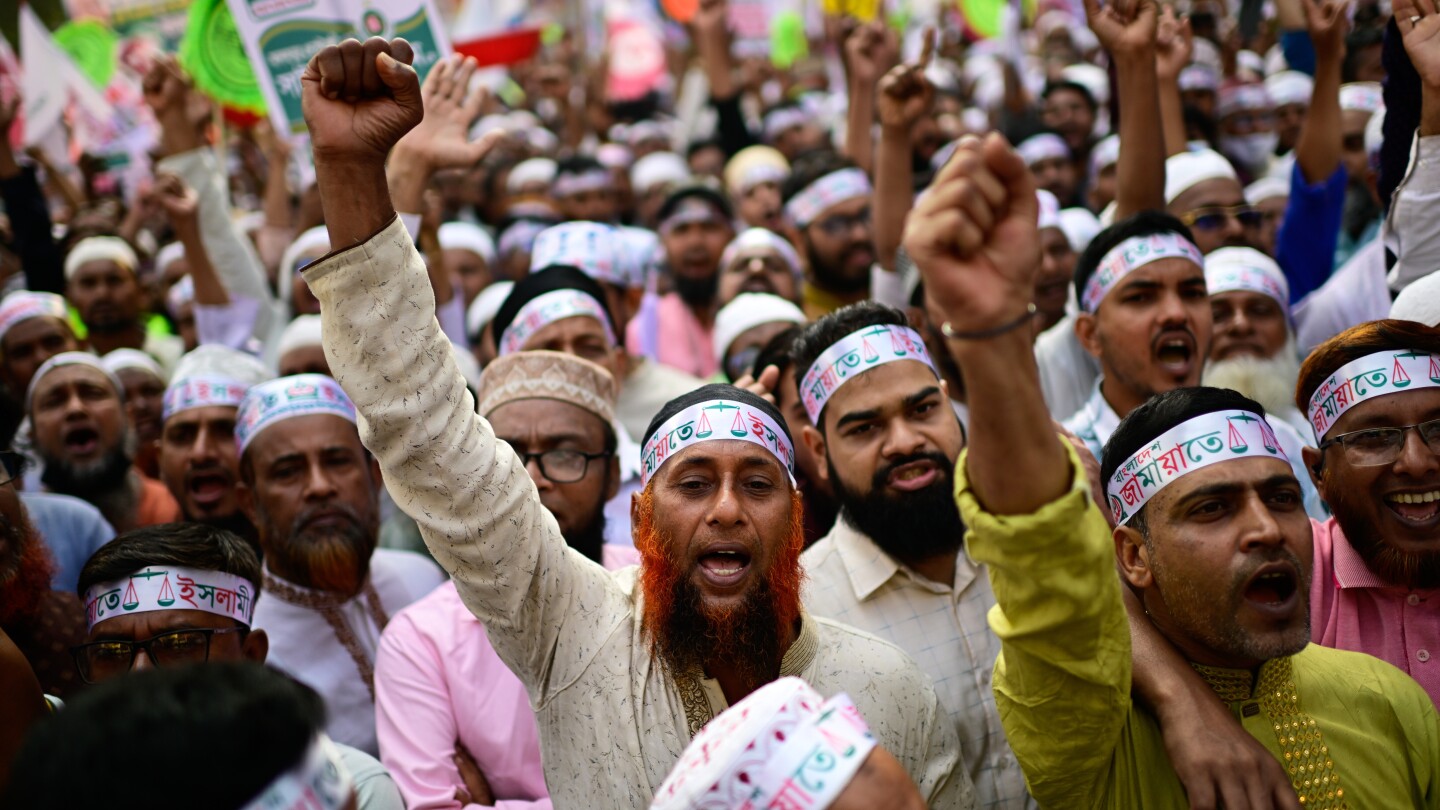
Thousands of Islamists gathered in Bangladesh’s capital Dhaka on Tuesday, demanding that the interim government legalize a national charter proposed after former Prime Minister Sheikh Hasina’s ouster last year. The demonstrators insist there can be no general election without a legally binding roadmap for political reforms.
The rally, organized by Jamaat-e-Islami—Bangladesh’s largest Islamist party—along with seven other political parties, called for a referendum on the “July National Charter,” named after the uprising that began in July 2023 and culminated in Hasina’s fall in August following her 15-year rule.
Protesters also demanded that the next election, expected in early 2026, be conducted under a proportional representation system rather than the current first-past-the-post model that has dominated Bangladesh’s electoral landscape.
The charter remains nonbinding, with supporters arguing a referendum is necessary to incorporate it into the constitution. Under Bangladesh’s parliamentary democracy system, only Parliament can amend the constitution—creating a procedural hurdle for the interim government led by Nobel Peace Prize laureate Muhammad Yunus, who took power three days after Hasina fled the country.
The proposed political reforms aim to introduce greater checks and balances to prevent the emergence of another authoritarian administration. Key provisions include strengthening the presidency to counterbalance the prime minister’s powers, implementing term limits for legislators, and establishing measures to combat corruption, money laundering, and conflicts of interest.
Bangladesh Nationalist Party (BNP), led by former Prime Minister Khaleda Zia, signed the charter on October 17 alongside 24 other political organizations. The country has 52 registered parties, with Hasina’s Awami League being the other major political force. However, the Awami League’s activities have been banned by the Yunus government, and Hasina herself faces trial for the deaths of hundreds of protesters during last year’s uprising.
Jamaat-e-Islami, which has a controversial history related to Bangladesh’s 1971 independence war when some of its leaders opposed separation from Pakistan, has signed the charter and is working to build a broader political coalition ahead of the next election. The party hopes to capitalize on the Awami League’s absence from the political scene.
At Tuesday’s rally, supporters emphatically stated there would be no election without first holding a referendum to make the charter legally binding—presenting a significant challenge to the interim government’s roadmap to restore democratic governance.
Meanwhile, a special tribunal dealing with crimes against humanity charges is scheduled to announce a date for a verdict against Hasina on Thursday. The former prime minister, now in exile in India, has denounced the proceedings as a “kangaroo court” lacking legitimacy and due process.
Bangladesh’s political landscape remains fragmented under Yunus’s interim government. Human rights organizations have criticized the current administration for allegedly violating the human and political rights of opposition figures, particularly Hasina’s supporters, raising concerns about the government’s commitment to democratic principles.
Hasina’s son recently told The Associated Press that only an inclusive election could bring stability to the nation of 170 million people, suggesting that excluding certain political forces might perpetuate the cycle of instability that has characterized Bangladesh’s politics for decades.
The current political standoff highlights the deep divisions within Bangladeshi society and the challenges facing the interim government as it attempts to navigate a path toward democratic elections while addressing demands for structural reforms to prevent the return of authoritarian governance.
Fact Checker
Verify the accuracy of this article using The Disinformation Commission analysis and real-time sources.

10 Comments
The Islamist demands for a referendum and changes to the electoral system highlight the ongoing political tensions in Bangladesh. The interim government will need to balance these demands with the need for stability and inclusive governance.
I’m curious to see how the interim government and other political actors in Bangladesh respond to these demands and whether they can find a compromise that addresses the concerns of the Islamist parties while maintaining a fair and democratic process.
The call for a proportional representation system is an interesting proposal that could potentially give more voice to minority political groups. However, it’s important to consider the potential tradeoffs and how it might impact the overall political landscape in Bangladesh.
It will be important for the international community to closely monitor the situation in Bangladesh and encourage a peaceful, democratic process that respects the rights and concerns of all citizens.
The situation in Bangladesh is certainly complex, with competing visions for the country’s political future. It will be important for all stakeholders to engage in a constructive dialogue and seek solutions that uphold democratic principles and respect the will of the Bangladeshi people.
I agree that the international community should closely follow these developments and provide support, if appropriate, to help facilitate a peaceful and inclusive political process in Bangladesh.
Interesting to see the Islamists in Bangladesh pushing for a referendum on the national charter before the next general election. It will be important to see how the interim government responds and whether they can find a path forward that balances political reforms and stability.
I’m curious to learn more about the specifics of the proposed charter and the reasoning behind the demand for a proportional representation system. These seem like significant changes that could impact the country’s political landscape.
The situation in Bangladesh seems complex, with competing demands for constitutional changes and the timing of the next general election. It will be crucial for the interim government to navigate these issues carefully to ensure a fair and inclusive political process.
I agree that a referendum on the national charter could be an important step, but it will also be important to consider the views of other political parties and civil society groups to ensure a balanced approach.